Communities across Guatemala’s Dry Corridor are strengthening local leadership and early warning systems to improve food security, protect their families, and prepare for the future.
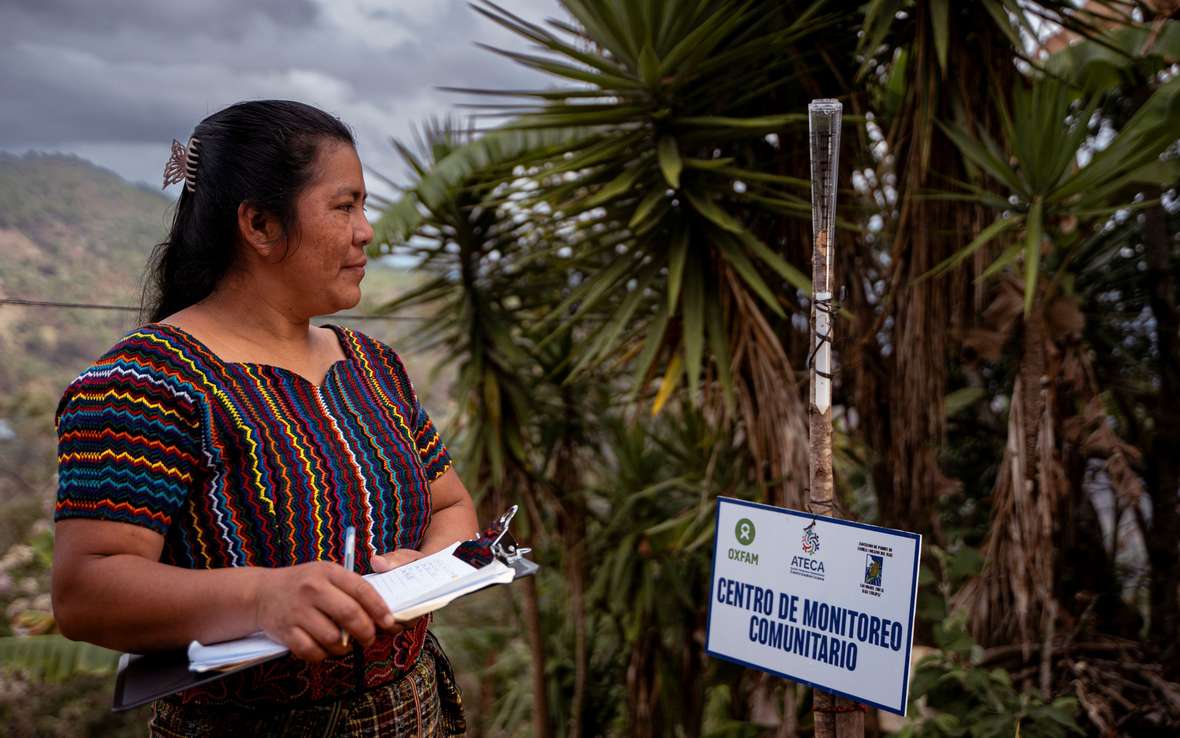
As the sun rises over Guatemala’s Dry Corridor, Doña Brenda Guanché Manuel steps outside her small hillside home in Chixím.
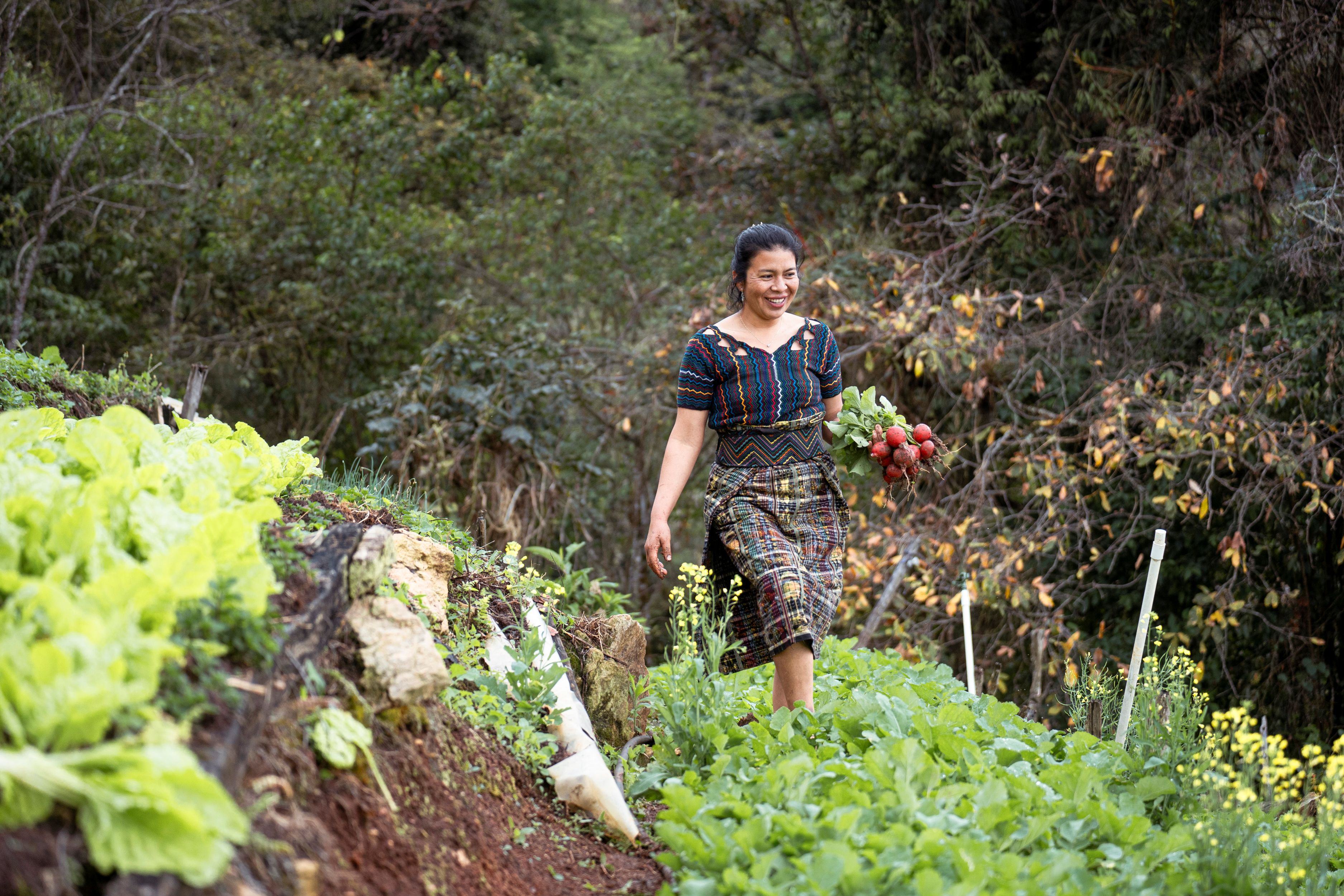
She pauses to gaze across the open horizon and the parched valley below before checking the rain gauge beside her veranda. She carefully records the rainfall, temperature, and humidity measurements before preparing breakfast, then makes her way down the green terraced plot where she tends maize, beans, and squash.
Once a dry, less productive patch of land, it now includes banana and peach trees that provide shade and fresh fruit for her three children, while chickens and a few dairy cows help diversify the family’s diet. Around lunchtime, Brenda returns to collect another set of measurements.
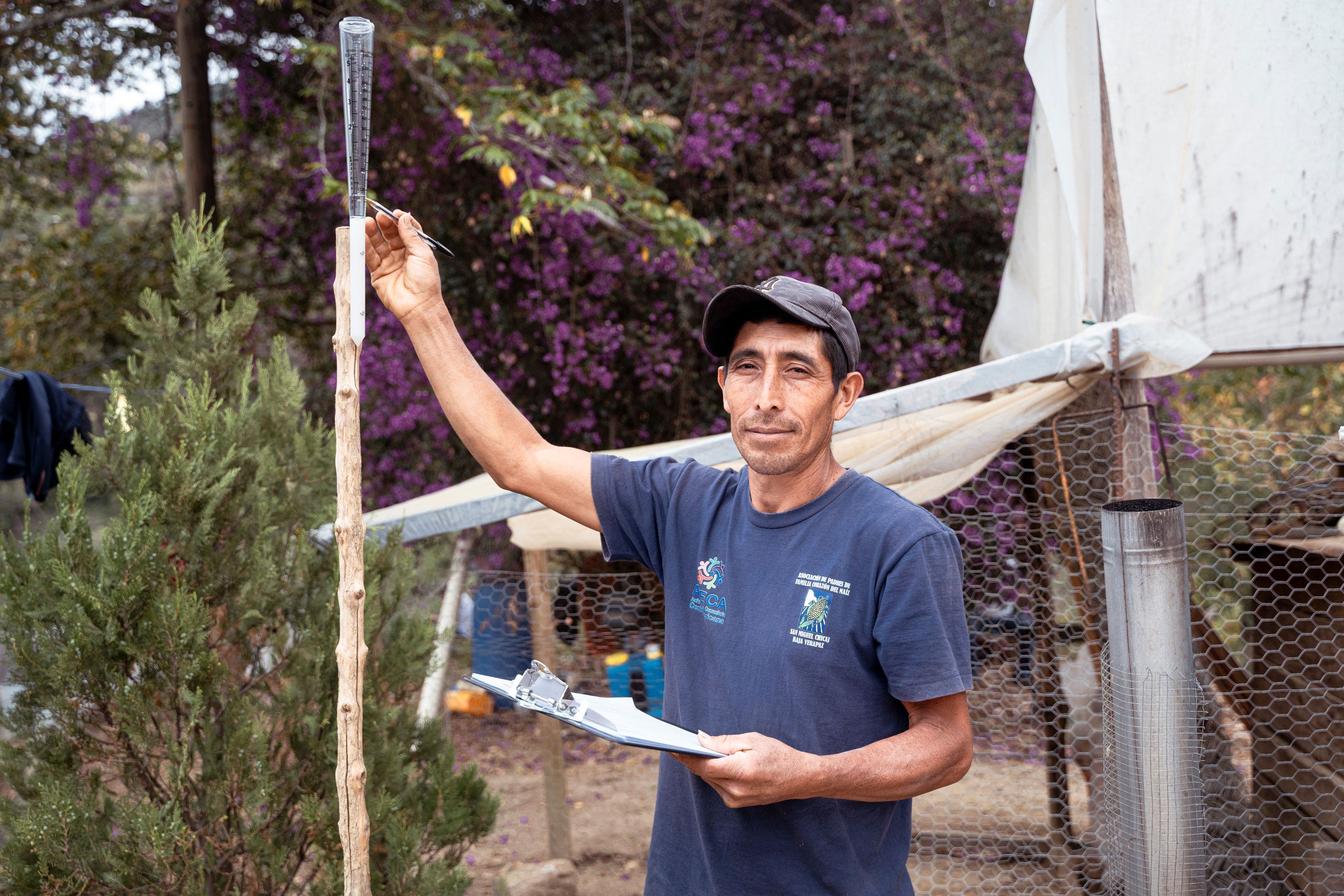
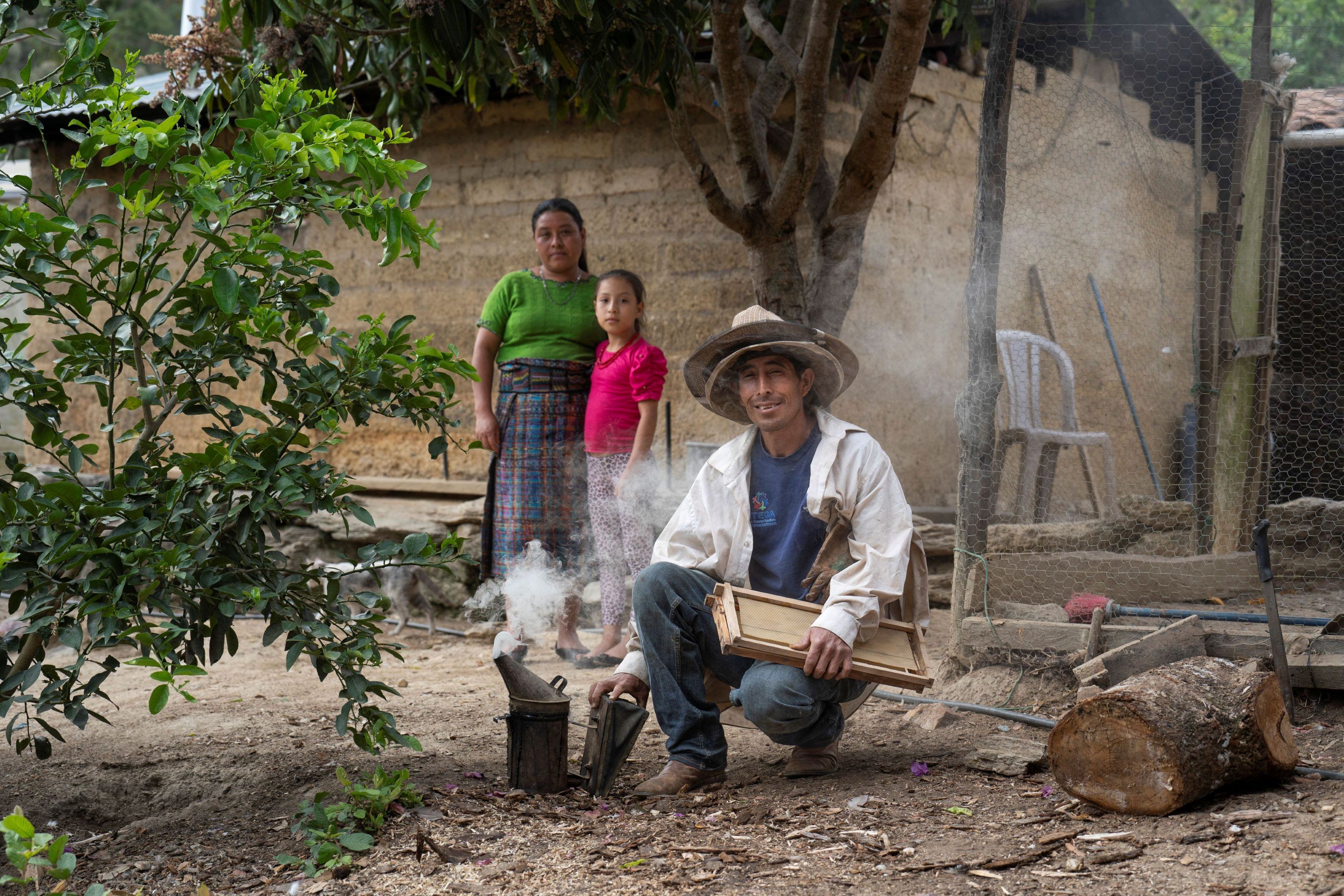
Farming on a dry hillside is never easy. Erosion and landslides are constant threats, making weather monitoring essential to protecting her family and their livelihoods. In the midlands community of Xesiguan, Don Mario René follows a similar routine before tending his tomato greenhouse and few beehives.
For Brenda, Mario, and dozens of other local weather observers across Baja Verapaz, weather monitoring is now as much part of a daily life as preparing meals or working on their crops. The information they collect helps communities monitor changing weather conditions, anticipate drought, and make better decisions about when to plant, fertilize and harvest.
Alongside them are local leaders like Doña Ingrid Karina Gunaché Manuel, who serves on the community water committee and leads several initiatives, including efforts to improve road access to her community.
When preparation means everything
Together, they are helping communities across Guatemala’s Dry Corridor prepare for drought before it becomes a crisis.
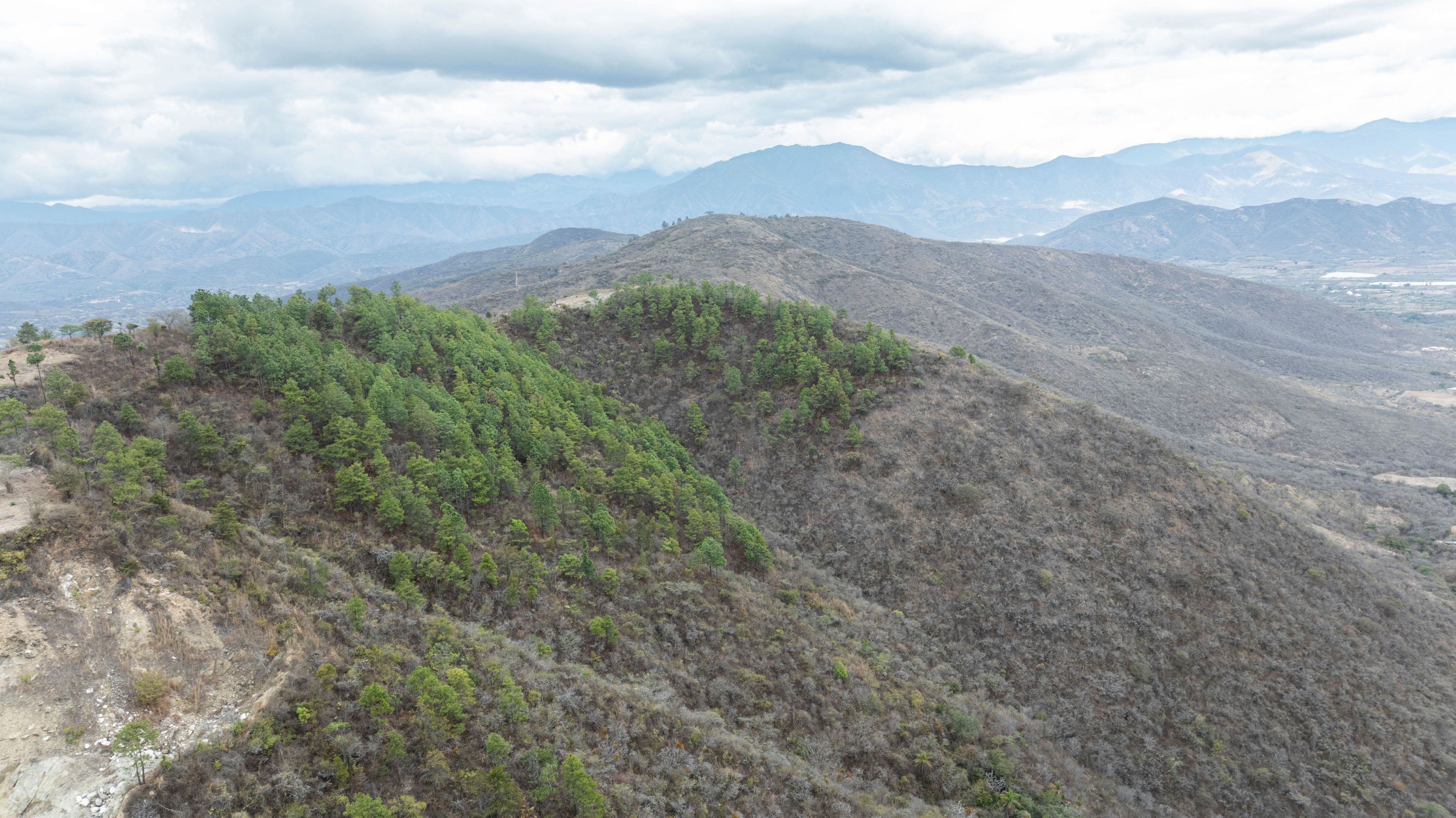
Back in 2017—before Oxfam's program was implemented in partnership with local organizations—these routines did not exist. When Oxfam and local partners carried out a capacity and vulnerability assessment across 48 communities in Guatemala’s Dry Corridor, many people did not perceive drought as a disaster or a recurring climate risk, they saw it as a reality they had always lived with. That reality often meant crop losses, food insecurity, and migration for families whose livelihoods depended on increasingly unpredictable rainfall.
Today, communities are better prepared and have the knowledge, confidence, and local systems to act before disaster strikes. “Thanks to the support and training we’ve received, leaders from the lower, middle, and upper communities came together to build this network of local weather observers,” says Don Mario. “Now we know how much rain falls in each community, and once we have that information, we are able to feed it directly into the Early Warning System.”
From Living with Drought to Leading Change
The transformation began when communities realized that drought was not simply an unavoidable part of life, but a recurring climate risk that they could anticipate and prepare for.
For generations, families across Guatemala’s Dry Corridor, mostly from Indigenous Achí and Chortí communities, relied on the ancestral Milpa system to grow maize, beans and squash. It was a way of farming passed down through generations. But as El Niño and La Niña brought increasingly irregular rainfall, longer droughts, and more unpredictable seasons, what had sustained families for centuries was no longer enough on its own.
Through ATECA (Acción Temprana en Centroamérica), Oxfam’s regional disaster risk reduction program in Guatemala and El Salvador, and in partnership with local organization Corazón de Maíz, ASEDECHI (Asociación de Servicios y Desarrollo Socioeconómico de Chiquimula), and community leaders, Oxfam has supported communities to strengthen local leadership, build community-based disaster risk reduction systems, and develop networks of local weather observers. By monitoring rainfall, temperature, and other climate information every day, communities are now identifying risks earlier, and taking action before drought becomes disaster.
Doña Brenda has experienced that transformation firsthand. “Before, we relied on traditional signs to decide when to plant. Now, through the rain gauge, we have learned when to plant and when not to.”
Instead of waiting until an entire harvest is at risk, communities use locally generated climate data to guide farming decisions and share information with their neighbors and municipal authorities. Don Mario has seen the difference in his own fields. “The Early Warning System helps us avoid losing more than we otherwise would lose,” he says.
Last year, his rainfall records showed there had not been enough rain for fertilizer to work effectively. “My notes told me the rainfall wasn’t enough. I decided not to fertilize. My neighbor did, and when harvest time came, I harvested more than he did.”
When Women and Youth Become Community Leaders
Building stronger disaster risk reduction systems also meant bringing more people into them. Through ATECA, women and youth became active participants and leaders in community early warning systems, local weather observer networks, and community emergency committees.
For Brenda, the change was both personal and collective: “Before, we didn’t participate as women. We were afraid to speak and to meet with other women.” She now serves as a local weather observer and member of her community’s emergency committee. “We have received leadership training. We involve other women, and we work for the benefit of the whole community.” She is now committed to teaching a young woman “so that in the future there will be another local weather observer in our community.”
Women’s Leadership Schools have helped 80 women between the ages of 19 and 45 build confidence, learn about their rights, and strengthen their knowledge of disaster risk reduction. Today, women lead alongside men in Community Emergency Committees across communities like Chixím. Across Baja Verapaz, 83% of women actively participate in community decision-making, while 68% represent their communities at the municipal level.
For Ingrid, leadership began with believing in herself. “I was learning, so I asked myself, ‘Why not put it into action?’” Today, Ingrid sees that change all around her. “Women now speak, women make proposals, and women also make decisions.”
The Future Can Be Greener in the Dry Corridor
Preparedness extends far beyond disaster response. It also means protecting livelihoods, improving nutrition, and creating more opportunities for families to remain on their land.
“We spend less because we grow more,” says Don Mario. “We are now harvesting fruit, vegetables, and greenhouse tomatoes. Tomatoes and honey have become our main sources of income, enough not only for food but also for school and clothing. These are big achievements, and we no longer feel the need to migrate.”
Across the 18 communities where ATECA works in Guatemala, reaching approximately 5,000 people, families are diversifying their livelihoods through home gardens, fruit trees, poultry, beekeeping, and climate-smart farming practices.
Brenda sees the impact every day on her own family. “Now we go to our garden and harvest greens, radishes, carrots, and eggs for our children. They have more balanced meals, and we grow this food with our own hands.”
For Ingrid, producing more has also meant greater food security and independence. “Now we harvest fruits, corn, and beans. We don’t have to buy everything at the market anymore. There are savings and income. In my family, we rarely face shortages because we find ways to produce.”
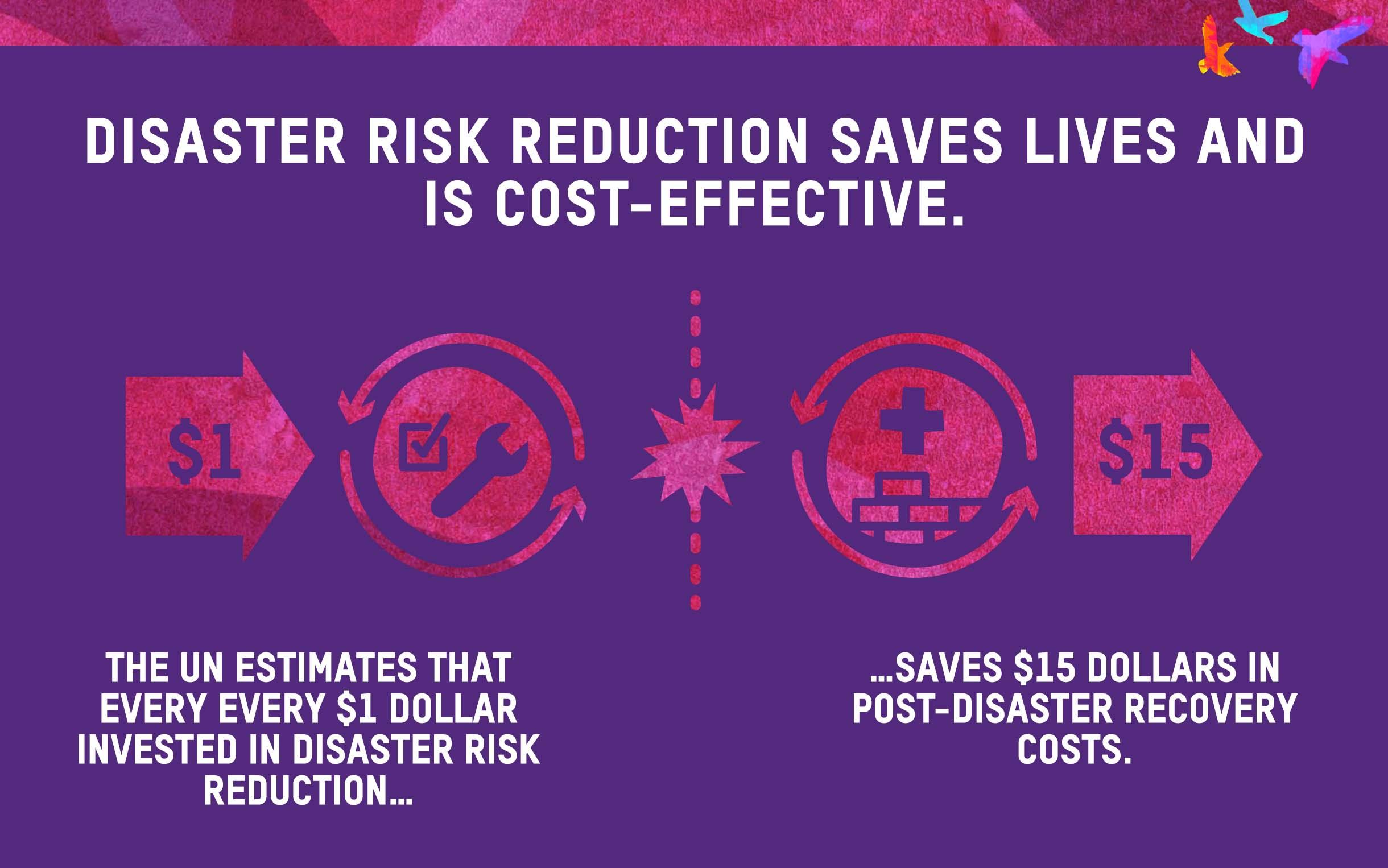
Across Guatemala’s Dry Corridor, that investment in people is helping communities build stronger local leadership, more effective disaster risk reduction systems, and more resilient livelihoods. Together, communities, local partners, and Oxfam are showing that disaster preparedness is not only about responding to crises. It is about creating the conditions for a greener, safer, and more resilient future before disaster strikes.