Rebuilding Gaza and reconnecting communities

Oxfam InuruID 396282 Palestinian Territory - Occupied 2026-05-16
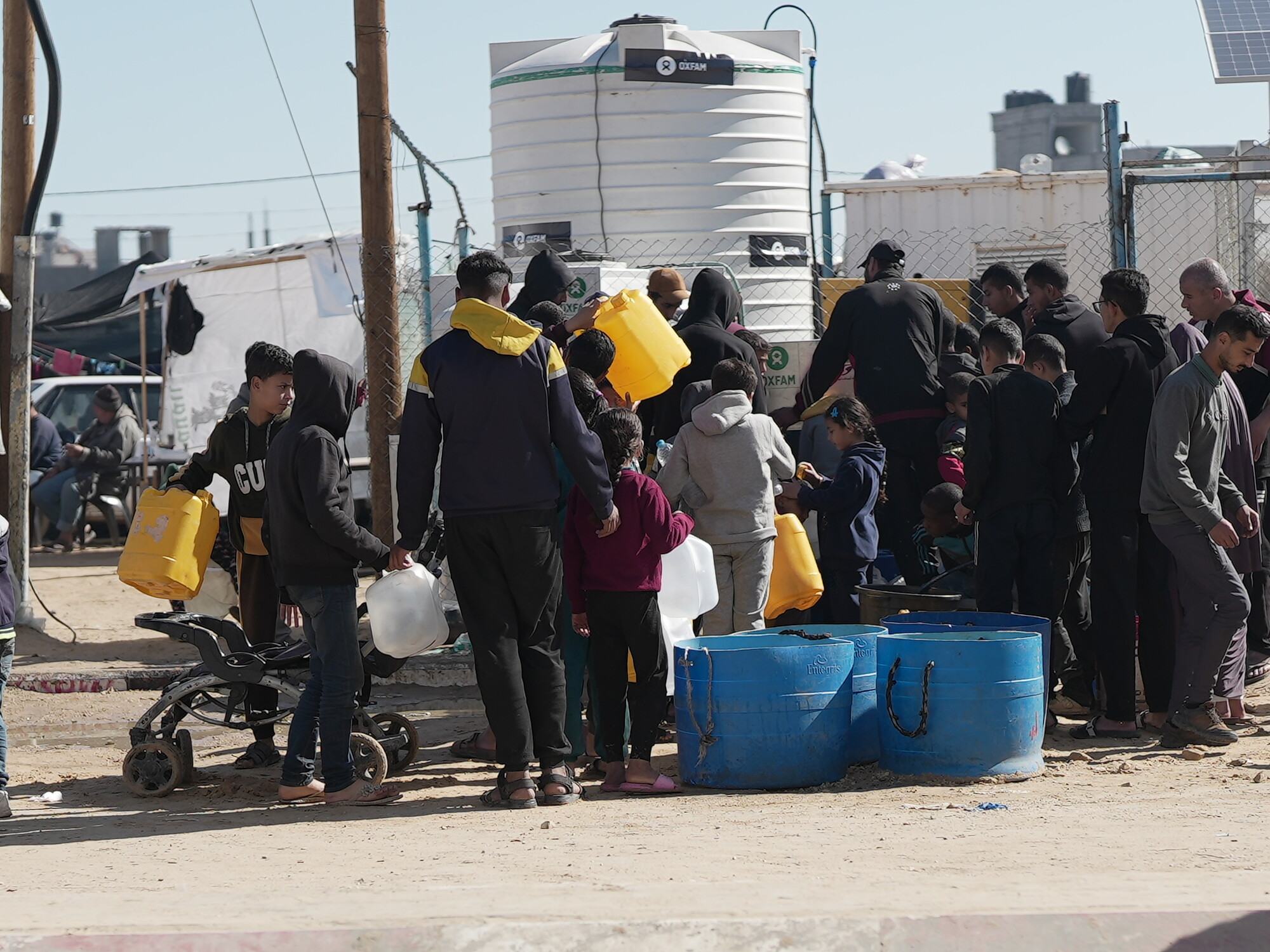
Palestinians must be at the center of recovery and reconstruction in Gaza. Alef ​Multimedia/​​Oxfam

Rebuilding Gaza means more than replacing what has been destroyed. It must restore homes, communities, livelihoods, and the conditions for a safe and dignified life, with Palestinians leading every step of the process.

Rebuilding must begin with people

Rebuilding Gaza must restore more than buildings. Palestinians must lead decisions about how homes, communities, livelihoods, and public institutions are rebuilt.

Building Gaza Anew, a report by Oxfam, the Palestine Economic Policy Research Institute (MAS), and the Palestine Trade Center (Paltrade), sets out a Palestinian-led path toward recovery, reconstruction, and economic self-reliance. It calls for Palestinians to have real authority over reconstruction priorities, resources, implementation, and oversight.

Gaza’s reconstruction needs are immense. But what has been lost is not simply buildings and infrastructure; it is an entire ecosystem built over decades of investment, innovation, and resilience by the people of Gaza. It is critical to understand the damage outside of the figures shown above.

Of the estimated $71.4 billion required over a decade, approximately $26.3 billion would be needed during the first 18 months.

What building anew means to Palestinians

The people who will live with the results of reconstruction must have the power to define their priorities. Palestinian ownership must include the authority to approve or reject projects that do not serve Palestinian rights and priorities. Hear from three Palestinians about what building Gaza anew means to them.

Shorouq’s vision of reconstruction begins with a home where she can navigate daily life independently. But it extends beyond her front door to the streets, gardens, and public parks that connect people to their communities.

For Hadeel, a home is more than a physical structure. It is the foundation for safety, stability, and a peaceful place to raise her children. Her story shows why recovery must respond to the realities of family life and the unequal burden displacement places on caregivers.

Ahmad is a civil engineering student determined to continue his education and help rebuild his community. His story reflects the knowledge, skills, and commitment that Gaza’s young people can bring to recovery, if they have the resources and opportunity to do so.

What are the next steps? 

A meaningful reconstruction process must situate Palestinian rights and agency at the center. This ownership must be operational, and not merely formal, and extended to local government, the private sector, civil society, and affected communities. Palestinians must have authority over what is rebuilt, how resources are used, and how decisions are made. Here are the main steps forward based on the report.

Real Palestinian decision-making power

Palestinians must control reconstruction priorities, planning, implementation, and oversight. This means more than just a consultative role.

Palestinians must be able to revise or reject projects that do not meet their rights, priorities, standards, or protection needs.

Rights and reparations

Reconstruction is a matter of rights and justice, not charity.

Plans must protect rights to housing, land, property, health, water, food, education, work, and participation in public affairs. Temporary shelter and recovery programs must facilitate safe and voluntary return to communities of origin, rather than create permanent zones of containment or separation.

Inclusive power from the start

Women, persons with disabilities, caregivers, women-headed households, displaced people, local organizations, and other affected communities must help govern reconstruction. The report calls for these groups to have resources, authority, accessible processes, and enforceable roles—not token representation after decisions are made. 

 Gaza_water_desalinationRS367661_lpr
Oxfam is working with the Coastal Municipalities Water Utility and Palestinian Environmental Friends Association to install 11 solar-powered water desalination units at wells that can serve 10,000 people displaced by the conflict in Gaza. Alef Multimedia Company/Oxfam

Palestinian livelihoods and economic capacity

Reconstruction should create opportunities and strengthen Palestinian economic capacity, not deepen dependence on outside contractors and intermediaries.

Local businesses, workers, farmers, and professionals should be central to implementation. Recovery also requires functioning crossings, banking, markets, communications, supply chains, and access to materials and equipment.

One Palestinian future

Gaza’s future must remain connected to the West Bank and a unified Palestinian national project. The report rejects models that treat Gaza as a separate territory or allow reconstruction to deepen political, economic, or geographic fragmentation.

FAQs

What is the Building Gaza Anew report?

Building Gaza Anew: Recovery Needs and Priorities, Palestinian Vision and Ownership is a report on Gaza’s recovery and reconstruction. It argues that rebuilding must do more than repair damaged buildings and services. It must be led by Palestinians, protect rights, include affected communities, and support a unified Palestinian future. The report was commissioned by Oxfam and developed with the Palestine Economic Policy Research Institute (MAS) and the Palestine Trade Centre (Paltrade).

Why must Palestinians lead Gaza’s reconstruction?

Palestinians must lead Gaza’s reconstruction because they are the people who will live with its results. The report says Palestinian ownership must be real at every stage: setting priorities, designing plans, managing funds, delivering projects, and monitoring results. This leadership should include Palestinian institutions, local governments, businesses, civil society groups, and communities in Gaza. Outside partners should support Palestinian decision-making, not replace it with externally imposed plans.

What are Gaza’s most urgent reconstruction needs?

Gaza’s urgent needs include safe shelter, clean water, sanitation, health care, education, electricity, roads, communications, and support for livelihoods. Our report also stresses the need to restore public institutions and local services, not only physical infrastructure. Immediate support must reach displaced families, people with injuries and disabilities, women and girls, children, older people, and people who have lost homes, income, documents, or access to essential services.

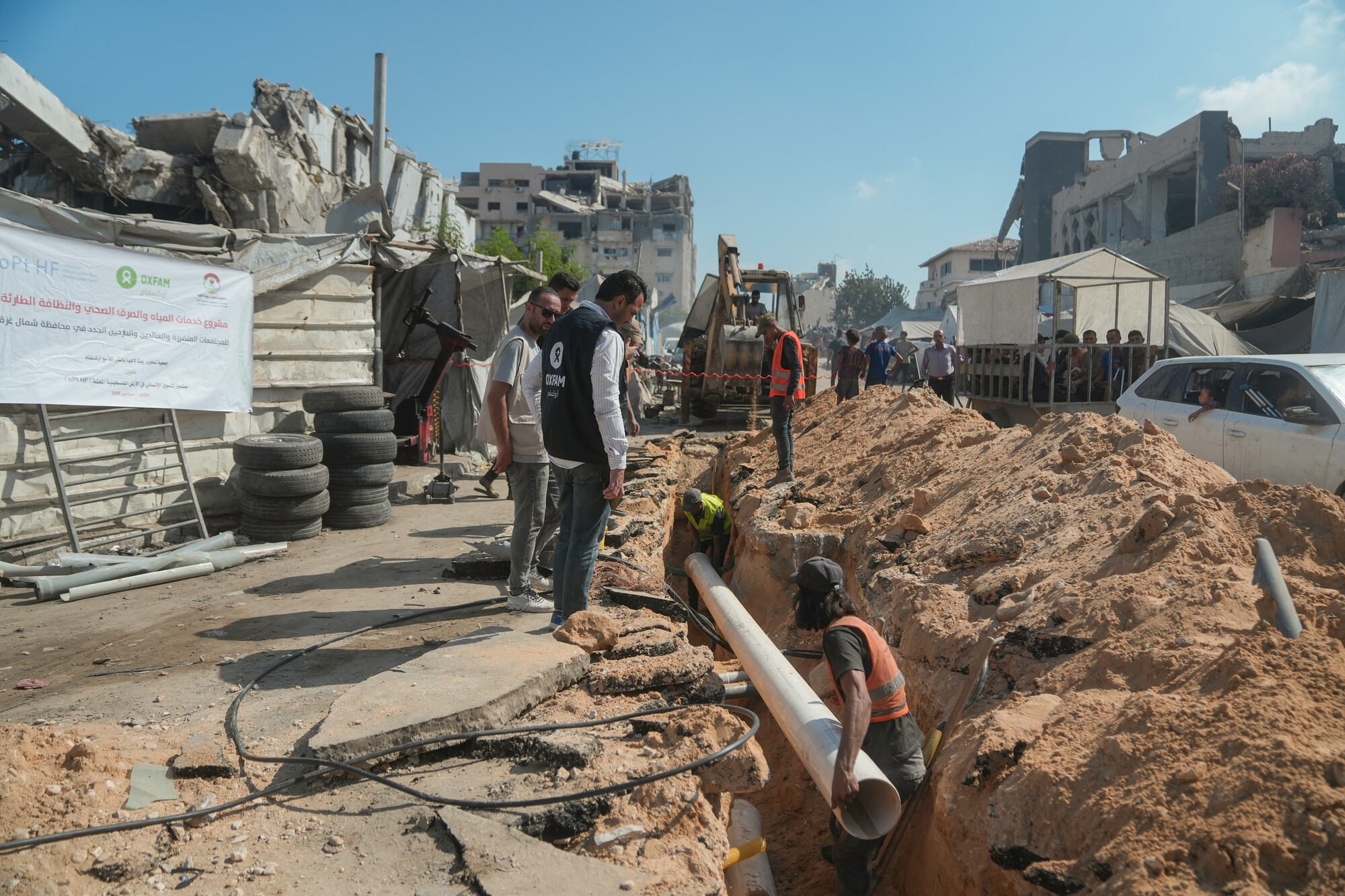
 Oxfam staff inspect repairs to municipal water supply pipeline in Gaza. Repairs to this pipeline will improve water access to an area with 40,000 people.
Oxfam staff inspect repairs to municipal water supply pipeline in Gaza. Repairs to this pipeline will improve water access to an area with 40,000 people. Alef Multimedia/Oxfam

How can reconstruction restore Gaza’s economy?

Reconstruction should create decent jobs, support Palestinian businesses, and restore the systems needed for trade and daily economic life. Our report calls for reliable access to construction materials, fuel, equipment, medical goods, and other essential supplies, alongside functioning crossings, roads, banking, markets, and supply chains. It also supports investment in local enterprises, workers, agriculture, and services so recovery builds long-term Palestinian economic capacity rather than dependence.

What should the United States do to support rebuilding Gaza?

The United States should use its diplomatic, security, and reconstruction leverage to ensure verified humanitarian access, civilian protection, and the transfer of governance to legitimate Palestinian public institutions. It should reject aid models based on surveillance, biometric screening, or population containment; support UN-led and Palestinian-led recovery efforts, including engagement with UNRWA; increase transparency around reconstruction funding; prevent forced displacement; and take concrete steps that advance Palestinian self-determination and long-term sovereignty.

What should donors and international partners do to support rebuilding Gaza?

Donors, UN agencies, governments, and humanitarian organizations should provide long-term, predictable support that follows Palestinian priorities. The report calls for grants that do not create new debt, support for Palestinian institutions and local capacity, and funding that reaches communities most affected by the crisis. International actors should help ensure access for humanitarian and reconstruction materials, respect Palestinian leadership, coordinate transparently, and avoid plans that weaken rights, accountability, or Palestinian self-determination.
How to help Gaza

  • Learn more: For updates on the situation, visit the UN OCHA website.

  • How to help Gaza: Actions you can take to help Palestinians in Gaza recover from the conflict