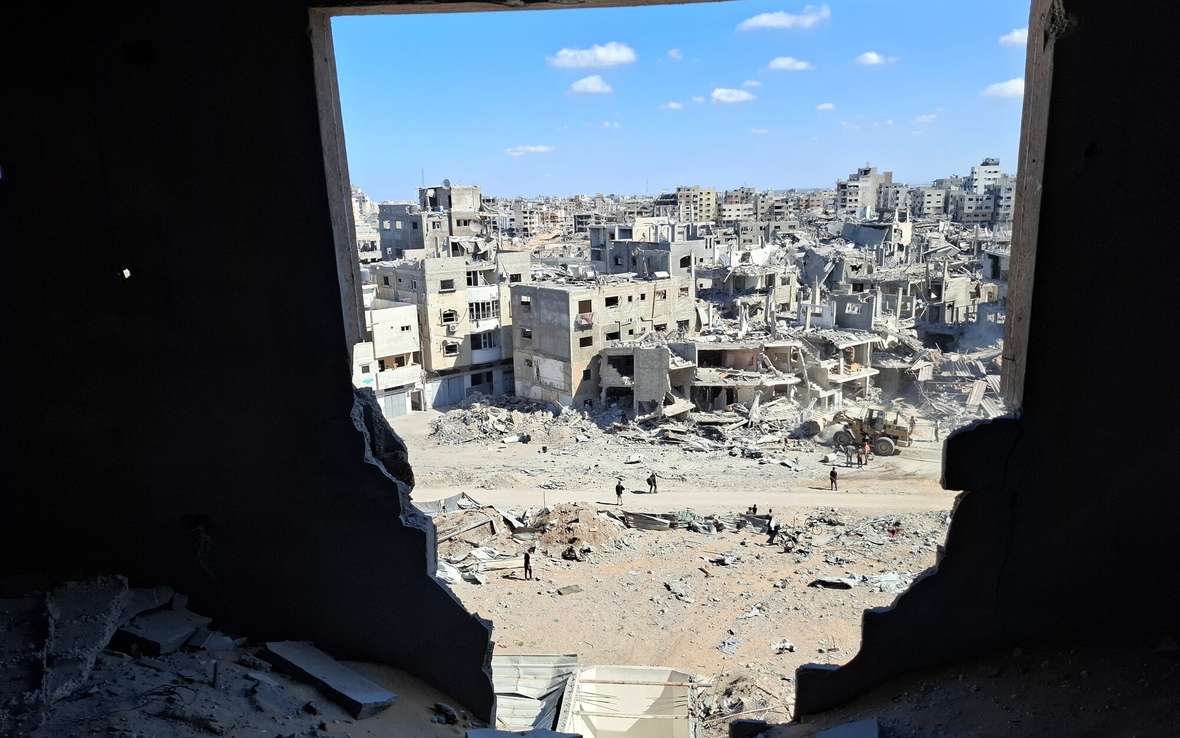
Decisions about the future of Gaza must be made by Palestinians, with respect for basic human rights and self-determination.
When Walaa Shablaq sees the rubble of a devastated neighborhood in Gaza, she says it is hard to recognize once-familiar places amid the destruction. “When I walk through the city, I depend on what remains in my memory,” she says. “When I stand before my destroyed home … I do not see it as rubble, but as the home where I lived for the past 30 years.”
Shablaq, an architect, is eager to see her home city rebuilt, but for now Gaza remains in a humanitarian crisis. Despite a ceasefire started in October 2025, more than 1,200 people have died in attacks by Israeli military, and more than 2,900 have been injured since the beginning of the ceasefire. About 1.9 million people (90% of the population of Gaza) have been displaced. More than 90% of households require shelter assistance, and the majority still lack access to clean water and basic sanitation. Humanitarian aid is still being systematically limited by the Israeli government, and more than 1.4 million people are projected to face crisis or emergency levels of food insecurity through December 2026.
What Oxfam is doing in Gaza
Since October 2023, Oxfam has been working with more than 25 organizations in Gaza to provide food, clean water, latrines and sanitation system repairs, and hygiene items to help Palestinians survive one of the most destructive military assaults in living memory.
Oxfam is also helping farmers to restart agricultural production, including 125 farmers in Sheikh Ajleen district where Oxfam installed a water pipeline that will allow cultivation of 127 acres of farmland. “This will make a real difference for us,” says Ahmad, one of the farmers in Sheikh Ajleen, where he says “many farmers have been deprived of water. This will help them begin to stand on their feet again.”
Since the beginning of the conflict in Gaza in 2023, Oxfam and partners have reached 1.5 million people with humanitarian assistance.
Looking to the future of Gaza
In the aftermath of the 2025 ceasefire, Oxfam and the Palestine Trade Center and the Palestine Economic Policy and Research Institute released a report Building Gaza Anew with recommendations for reconstruction and the role of the Palestinian people in key decisions about the future of Gaza.
In support of the recommendations in the report, Oxfam is urging the U.S. government to:
- Protect civilians and ensure humanitarian access: Use U.S. leverage to secure unrestricted humanitarian access, protect civilians, prevent forced displacement, and uphold international law.
- Support accountable, community-led recovery: Back transparent reconstruction efforts led by Palestinians and supported by trusted humanitarian partners, and reject aid models that politicize assistance or put Palestinians at risk.
- Advance Palestinian rights, freedom, self-determination: Put Palestinian human rights at the center of reconstruction and recognize the State of Palestine.
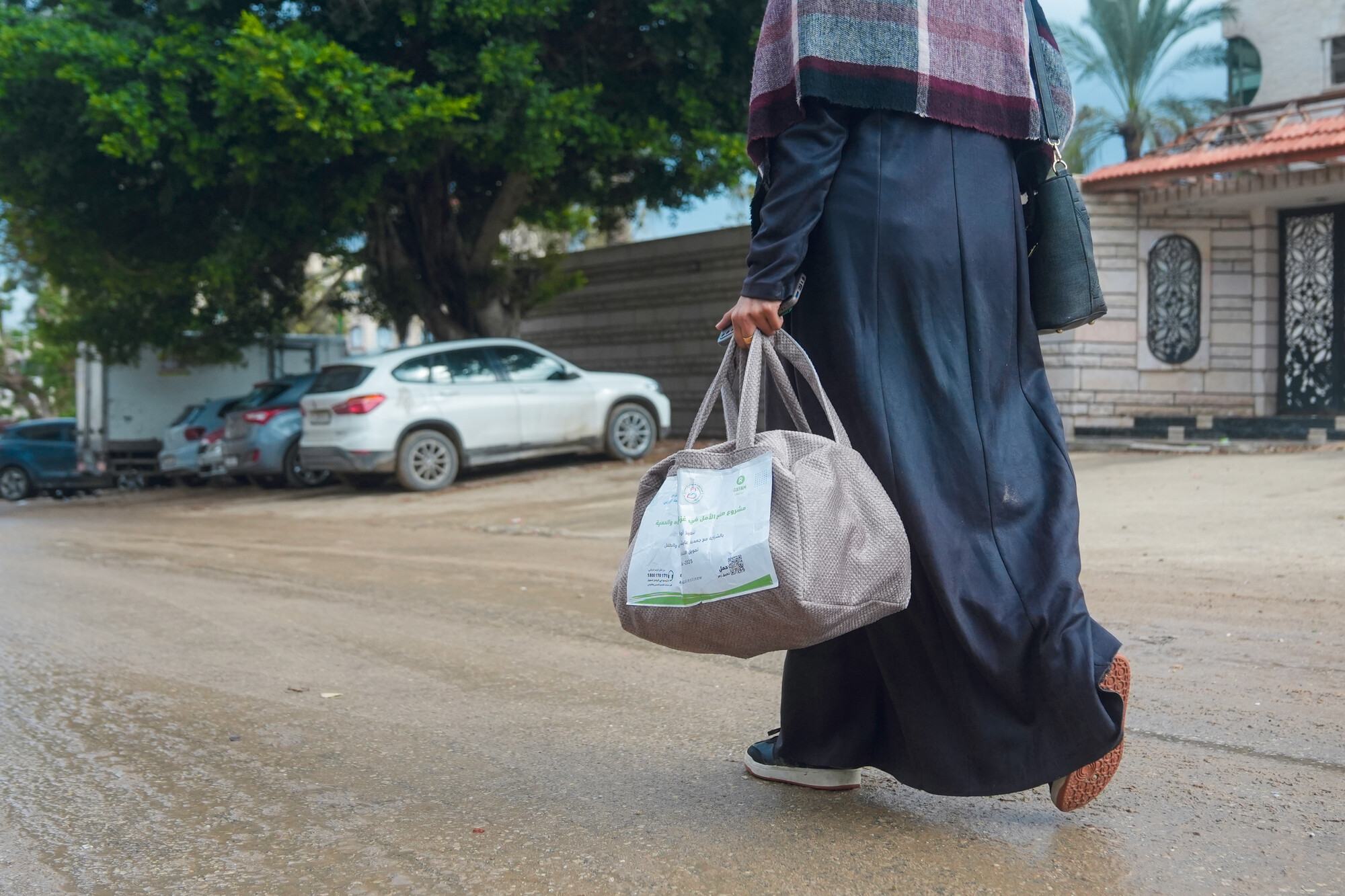
Respect for local experts
The effects of the three-year conflict in Gaza are everywhere, but like many in Gaza, Shablaq has a vision for the future and the role she and other Palestinian professionals can play to rebuild their home. “Local experts have a greater right to lead the reconstruction … because they understand the city,” she says, noting that reconstruction goes beyond the buildings, streets, and water and power utilities. Shablaq says that plans for the future of Gaza must also include addressing the “deeper dimensions, the value of this place to the city’s people … and the human needs within today’s social fabric...”
These dimensions go beyond buildings, streets, and water and power utilities, but also include institutions such as schools, libraries, hospitals, and universities. A lasting recovery for Gaza must ensure respect for human rights and the priorities of Palestinians – especially women, who continue to bear the burden of the conflict. More than 90% of women in Gaza are unemployed, many of them are heading households and must spend as much as 12 hours per day searching for water and providing care to children and injured people. Building Gaza Anew therefore recommends ensuring that women’s rights organizations and others representing care givers and people living with disabilities are involved in decisions about the future of Gaza.
“There are too many conversations about the future of Gaza happening without any meaningful participation from Palestinians,” says Gina Cummings, Oxfam America’s VP for policy. She says that decisions about the future of Gaza being made now will determine whether “Gaza’s reconstruction advances justice, dignity and lasting recovery.”