

As the Rohingya crisis enters its 10th year, refugees in Cox’s Bazar are growing food, learning trades, and earning income. But funding cuts threaten that progress.
Since 2017, the Rohingya people have fled violent conflict in Myanmar and settled as refugees in Cox’s Bazar in southeastern Bangladesh. Over the past nine years, their number has grown to more than 1.2 million people.
“There is nothing normal about more than 1 million people living for years in displacement,” said Anil Pant, interim country director of Oxfam in Bangladesh. “The greatest risk isn’t that the world has forgotten the crisis. It is that we have become accustomed to it.”
What began as an emergency is now one of the most complex refugee situations in the world. As the Rohingya crisis enters year 10, Oxfam and local leaders continue to support the systems that make daily life possible while also creating ways to build resilience for the future.
Early on, Oxfam prioritized food, water, and shelter, working alongside Rohingyas, local organizations, the Bangladeshi government, U.N. agencies, and donors. But the years-long response has necessarily become more complex.
Water systems support daily life
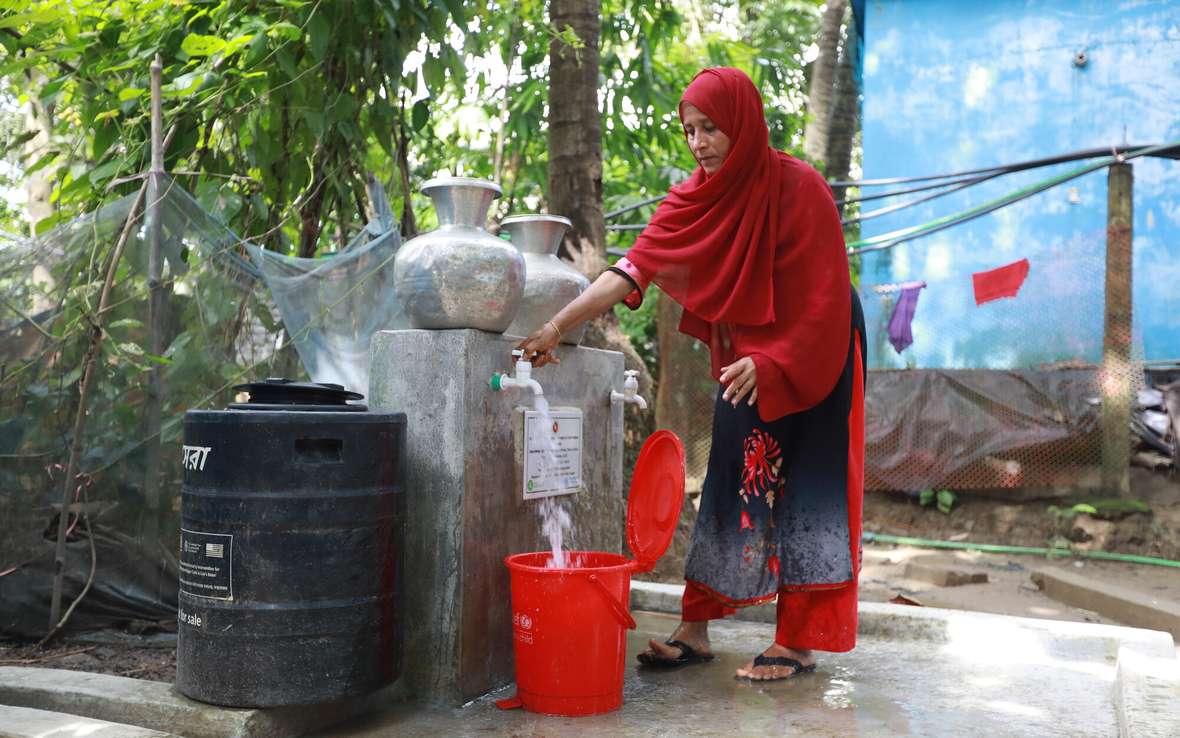
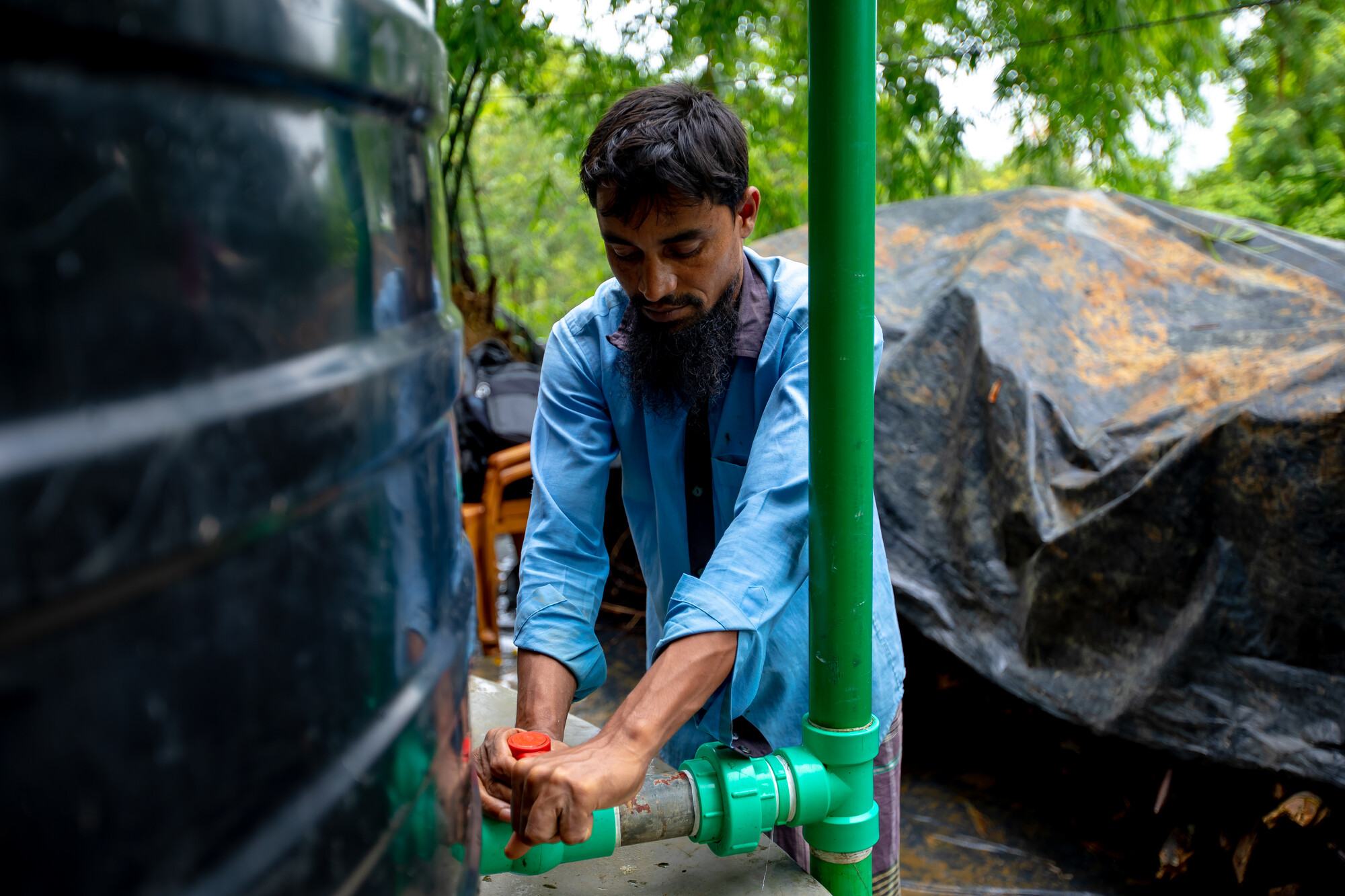
Water, sanitation and hygiene (WASH) efforts, for example, have evolved from emergency latrines into vast systems of water networks, water treatment plants, and solid waste systems. Nearly 50,000 latrines and 26,000 bathing facilities have been constructed, supported by the largest fecal sludge treatment systems ever built in camp settings anywhere in the world.
“Within Oxfam’s wider response work, WASH is one of the foundations that keep everyday life functioning,” said Anil Pant, interim country director of Oxfam in Bangladesh. “In Cox’s Bazar, WASH means much more than water, toilets, and hygiene. It protects people from disease, supports the safety and dignity of women and girls, and strengthens resilience to monsoons, flooding, and other shocks.”
Maintaining the systems that sustain daily life is only part of the response. In addition to deep investments in physical infrastructure, Oxfam and local partners are also investing in the skills, knowledge, and income-generating opportunities that help people build greater independence and resilience.
Families grow gardens on tin rooftops
When the Rohingya fled Myanmar, they left their jobs and trades and have had few ways to earn money beyond initial emergency cash-for-work programs.
One of the most promising developments has been the expansion of climate-smart and household-based livelihood opportunities. As refugees experience displacement over time, building skills is one of the most valuable assets they can carry into the future. Across the camps, for example, families are finding innovative ways to produce food despite severe land constraints and climate challenges. Small patches of green are beginning to appear beside shelters, in narrow corners, and even on tin rooftops. These gardens provide not just nutritious food, but opportunity.
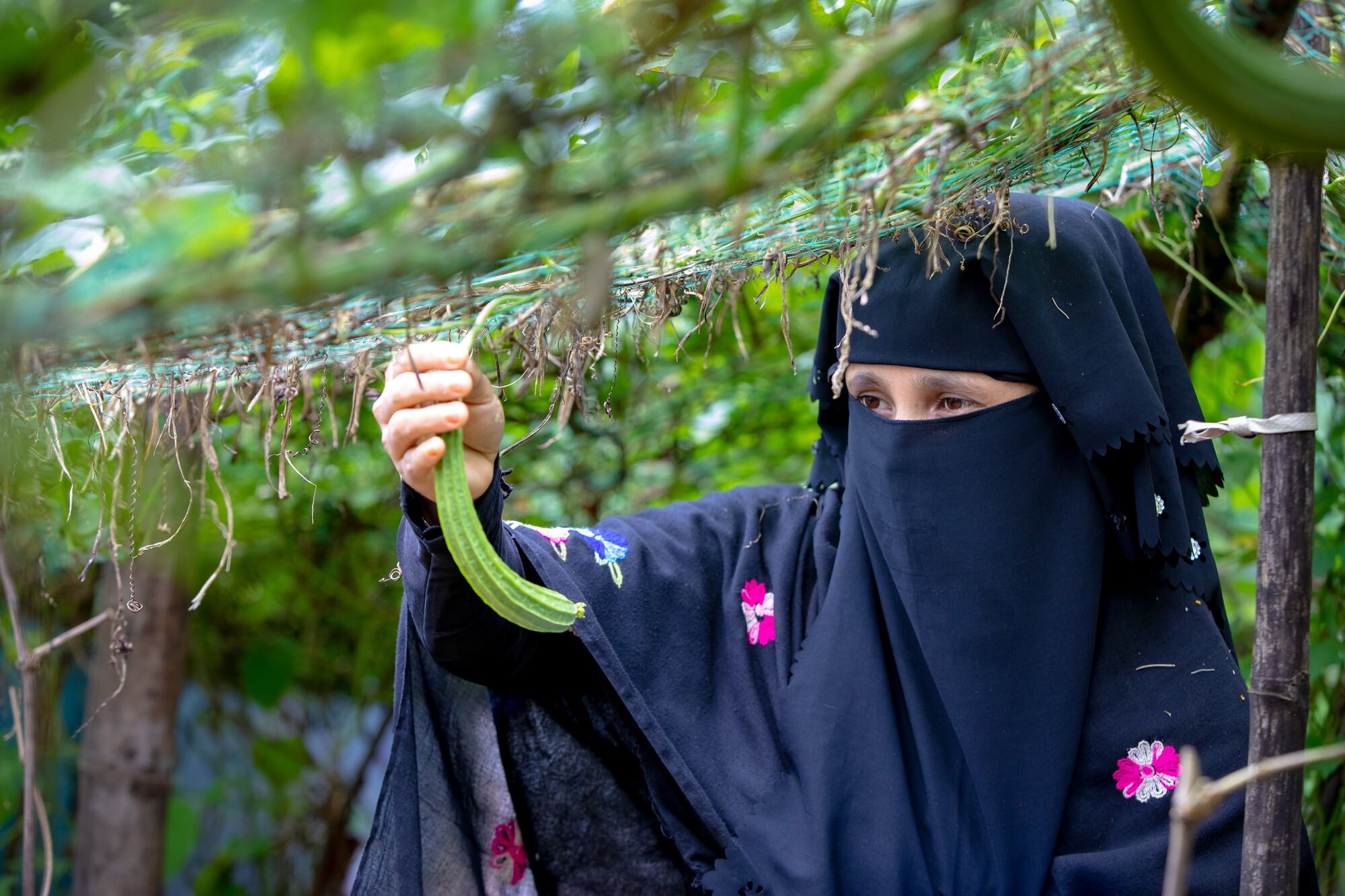
More than 4,100 families across five camps have established climate-resilient vegetable gardens through a program designed to work with the physical limitations of the camps. Families with space beside their shelters use small plots, while others grow vegetables in sacks, including on tin roofs. Participants receive training on sowing seeds and caring for plants, along with seeds and compost-filled sacks.
Noor Bahar, 58, started a garden beside her shelter. “Before, I did not have a garden, and ... I did not always have enough money to buy them [vegetables] from the market,” she said. “Now I can grow vegetables beside my shelter and feed them to my children.”
Compost and mushroom production are also emerging as valuable practices in the camps. Households produce organic compost from biodegradable waste, which improves the fertility of the soil and reduces pollution.
Skills that strengthen independence
Making handicrafts is another way people are learning marketable skills and generating incomes. When Senowara Begum left Myanmar, for example, she had no assets or specialized skills. Financial uncertainty weighed heavily on her and led to arguments with her husband.
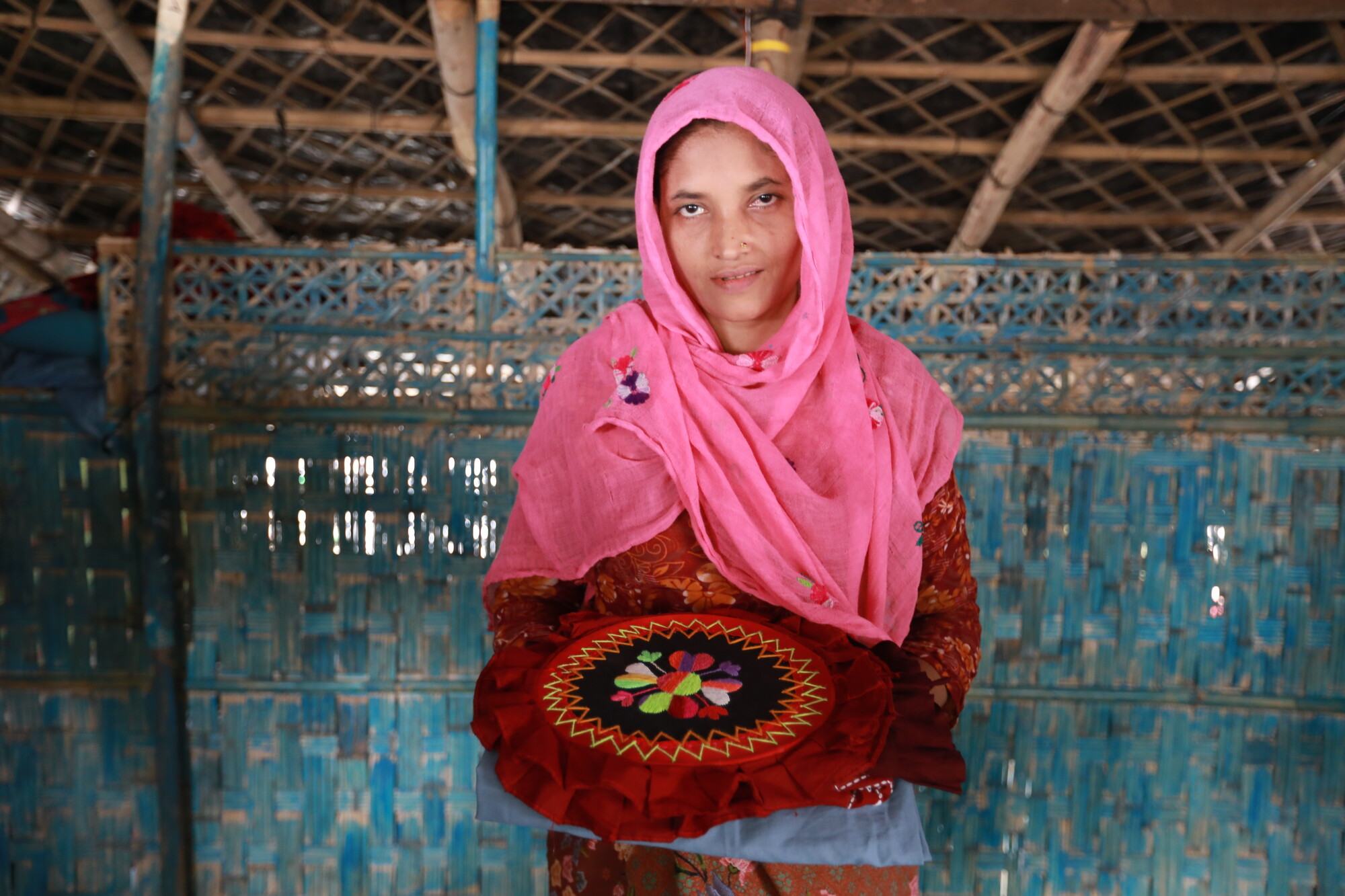
Begum joined a skills development training Oxfam and local partners hold on nakshi kantha, a traditional embroidered quilt from Bangladesh. She and other women learned to make jute bags, macramè, candles, and other handicrafts, and the training also helped them find ways to market their products in the camps.
Begum began making and selling handmade products and with her income, she bought items for her four children and raw materials for her future work. Over the past nine years, more than 1,500 women have participated in this training.
Begum now plays a more important role in family decision-making. “I finally feel that my voice is respected,” she said.
Protecting progress
For nearly a decade, Oxfam has worked with refugees and local organizations to sustain essential services while expanding opportunities for people to build more secure futures. Thanks to your support, there are concrete improvements in the lives of thousands of Rohingya, though the needs are ongoing and immense, and global cuts to humanitarian funding threaten progress.
Oxfam and our partners are urging the global community to provide funding to protect these essential services and programs.