Fact sheets
Search fact sheets
-
Fact sheet
Billionaire Wealth in California
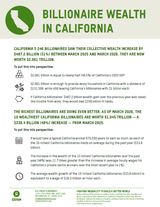
California’s 246 billionaires saw their collective wealth increase by $487.2 billion (31%) between March 2025 and March 2026. They are now worth $2.061 trillion. The richest billionaires are doing even better. As of March 2026, the 10 wealthiest California billionaires are worth $1.045 trillion — a $338.4 billion (48%) increase — from March 2025.
-
Fact sheet
US Government Foreign Assistance Cuts Examples of Impact
The abrupt cuts to U.S. Agency for International Development (USAID) funding has sent shockwaves through humanitarian systems worldwide, disrupting essential services that have saved lives and leaving millions at greater risk. Oxfam America does not take U.S. government funding, but the
effects of these funding cuts on the global aid system have forced organizations—including Oxfam—to scale back or shut down lifesaving programs in countries already facing extreme hardships. Local partners
and Oxfam teams are witnessing the immediate consequences and ripple effects. The following case studies from the Central African Republic, Syria, and Ethiopia highlight the human cost of these aid cuts while underscoring the urgent need for renewed U.S. leadership and sustained global support .

-
Fact sheet
Enhancing Corporate Transparency: Federal Policy Recommendations
Corporate structures as they exist today are undemocratic, by design, run by and in the interest of a small group of elites. The incessant need to earn a profit and benefit the few has come at a great cost to people and the planet. The damaging impacts of the increased concentration of wealth, the automation of industry, and climate catastrophe demand that companies change the way they operate.

-
Fact sheet
Reforming Corporate Tax Policy to Address Global Inequality: Federal Policy Recommendations
Big corporations engaging in tax avoidance will always be one step ahead of the game unless governments ‘walk the talk’ in tackling these dodges and loopholes, and cooperate to overhaul global tax rules. Previous attempts at tax reform have attempted to plug the holes in our international tax system with limited success. As a result, multinational corporations are still paying less tax than before the financial crisis in 2008, and continue to shift as much as 40% of their foreign profits to tax havens.

-
Fact sheet
Labor Relations Policies that Work for Workers: Federal Policy Recommendations
Policies protecting collective bargaining, including for workers employed under non-standard work arrangements (NSWAs) such as temporary, contract, seasonal, and gig positions, are essential to support workers and their families.

-
Fact sheet
Creating a Business Environment for Effective Worker Ownership: Federal Policy Recommendations
The damaging impacts of the increased concentration of wealth, the automation of industry, and climate catastrophe demand that we create a different way of doing business. Corporate structures as they exist today are undemocratic, by design, run by and in the interest of a small group of elites.
