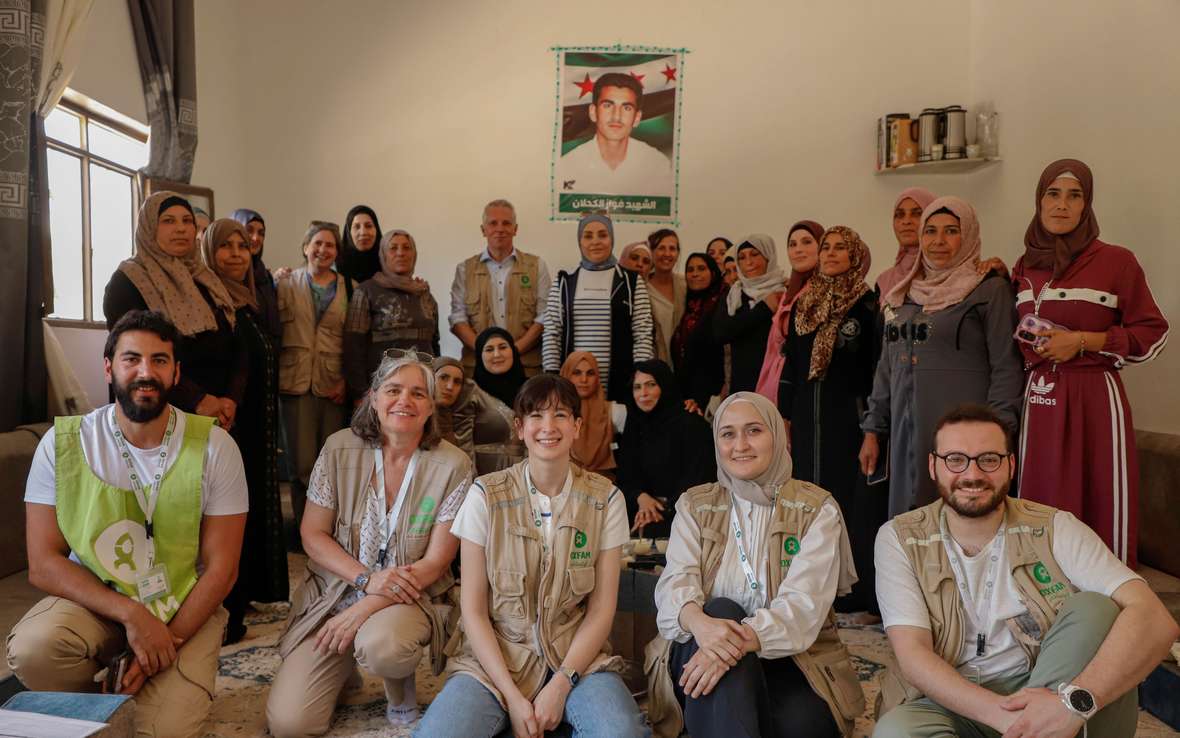
For World Humanitarian Day, an Oxfam Syria staff member reflects on resilience, recovery, and why solidarity still matters.
Every year on August 19, World Humanitarian Day honors humanitarian workers and shines a spotlight on people affected by crises around the world. It is also a reminder that protecting humanitarian workers also protects the communities that depend on them for food, water, shelter, and protection.
In Syria, that message carries particular weight. Since the change of government in December 2024, the country has entered a new and uncertain phase. But for millions of people, daily life is still defined by the aftermath of war: damaged infrastructure, limited access to clean water and electricity, few opportunities to pursue livelihoods, and homes and schools that remain damaged or destroyed. More than 15.6 million people still need humanitarian assistance, while around 5.5 million people remain internally displaced.
This World Humanitarian Day, we spoke with Dania Kareh, an Oxfam staff member in Syria, about what recovery looks like after years of war, why local leadership matters, and what she wishes Oxfam supporters could understand about the people of Syria.
What is the humanitarian situation in Syria right now?
Kareh: Syria stands on the brink of a new era, one filled with hope, but also uncertainty for people who have endured nearly 14 years of war.
As a humanitarian worker, I carry the weight of knowing that two-thirds of the population still depend on assistance, while vast infrastructure remains damaged or in need of repair. I remember seeing entire neighborhoods in Deir ez-Zor reduced to rubble, a city that suffered under Islamic State (IS) control for almost three years and through many more years of conflict.
What stayed with me most was our own team members, many of them residents of the city, who continued working amid hardship. After field visits, we would drop colleagues off in their neighborhoods, places scarred by destruction where they too lived among the ruins. And still, families were returning, repairing corners of damaged apartments and making them livable again.
Despite the destruction, I remember the resilience of every woman and man I met there. They woke up each morning and did their best to navigate life without adequate access to basic services. That image of families rebuilding amid rubble feels like life emerging after death. It is a constant reminder of how resilient the people of my country are, and how deeply they deserve support to lead the rebuilding of their own future.
What is the reality on the ground that the world may not be seeing?
Kareh: Many families in Syria are still forced to make impossible choices: buying food or sending their children to school, paying for medicine or covering rent for a roof over their heads.
And yet, you can also feel the growing hope for a new Syria.
I remember speaking with young girls in rural Aleppo, standing beside a school that had been damaged. Oxfam had helped rehabilitate the washrooms, while another organization was repairing the rest of the building. The girls were excited simply to know that there would finally be a middle school in their town.
One girl told me that, until then, most of the children who continued their education were boys. There was no middle or high school nearby, and girls were expected to walk 40 minutes to the next town if they wanted to attend classes. Her parents were too afraid to let her make that journey alone. For her, having a school in her own community meant a chance to dream of a different future.
Listening to her, I felt both joy and frustration. Joy because of her hope. Frustration because I know hundreds of other children are still prevented from going to school, and nearly a third of schools are damaged or nonfunctional, with limited access to water and sanitation.
With every story I hear, there is struggle, but also hope. Some are happy stories that rise from difficult backgrounds. Others are stories of hardship that still carry a spark of resilience.
Why are you a humanitarian worker?
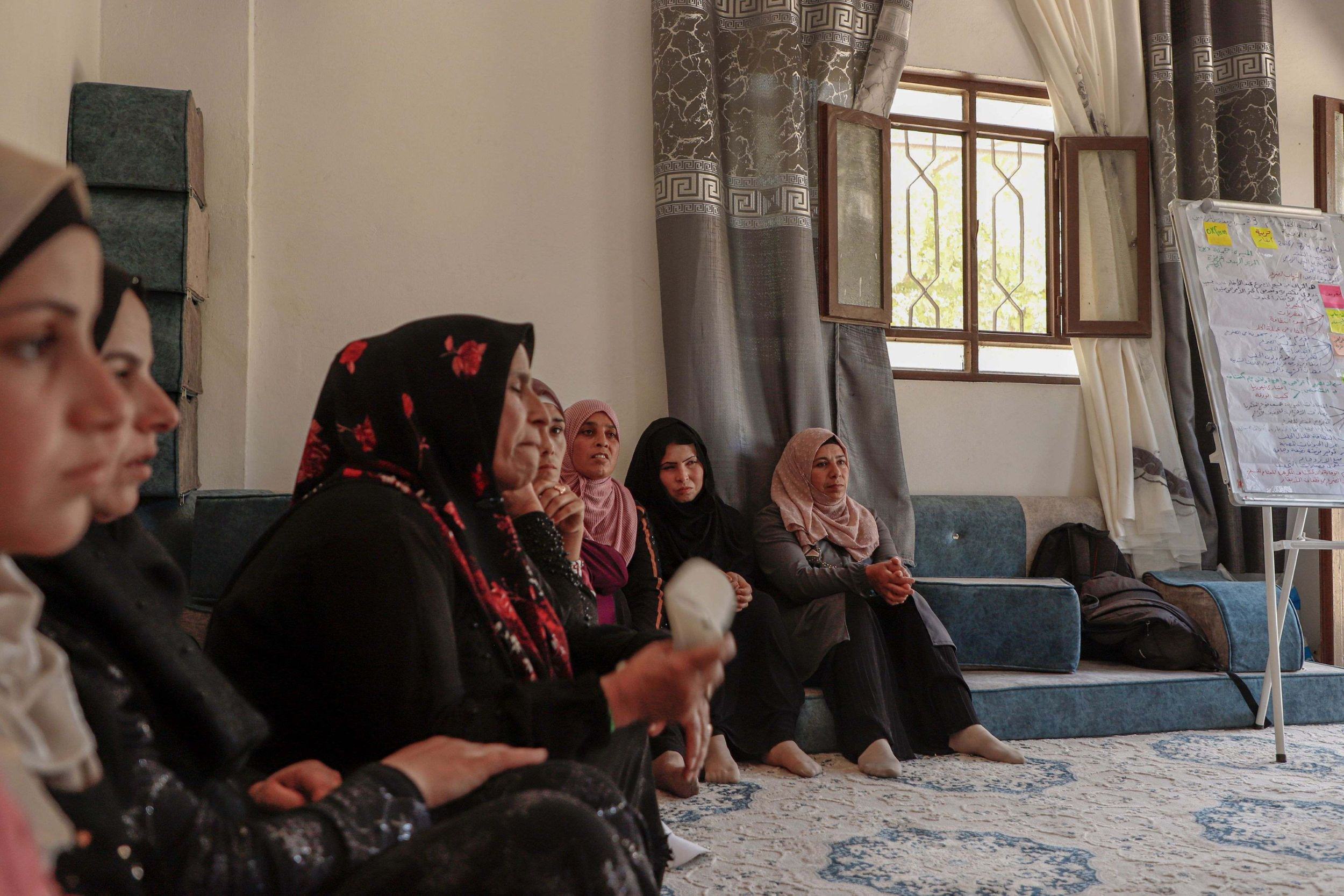
Kareh: After 12 years of working in the humanitarian sector in Syria, I have always felt privileged to access areas where, under normal circumstances, I would never have been able to go and help.
Over these years, I have met hundreds of Syrians and sat with them, sometimes on a sidewalk, under a tree, beside the rubble of their homes, in tents, or in the center of a city. Sometimes it was in freezing cold. Sometimes it was under the burning sun.
Each time, the simple fact that I wore a vest with the logo of a humanitarian organization helped people trust me. They opened up and shared their stories. They felt I might understand their perspective, and that I would stand with them. A humanitarian worker should first take the side of those who have endured the impact of war.
That trust makes me part of their small story, and one piece of a larger puzzle reflecting voices from different backgrounds across my country. I see myself as a voice for those who may never think of raising their own, because they are consumed by the details of daily survival.
Having access to people’s lives and being part of their stories feels deeply rewarding, but it is also a heavy responsibility: to carry the voices of witnesses to war in my own country and be their storyteller.
For me, World Humanitarian Day is a celebration of all those who have placed their faith in us, those who see a humanitarian worker as a sign that life can become a little easier, and that change may soon reach their community.
What are the biggest hurdles to helping people rebuild?
Kareh: Even after years of war, Syria still faces enormous hurdles in ensuring support reaches those trying to rebuild their lives.
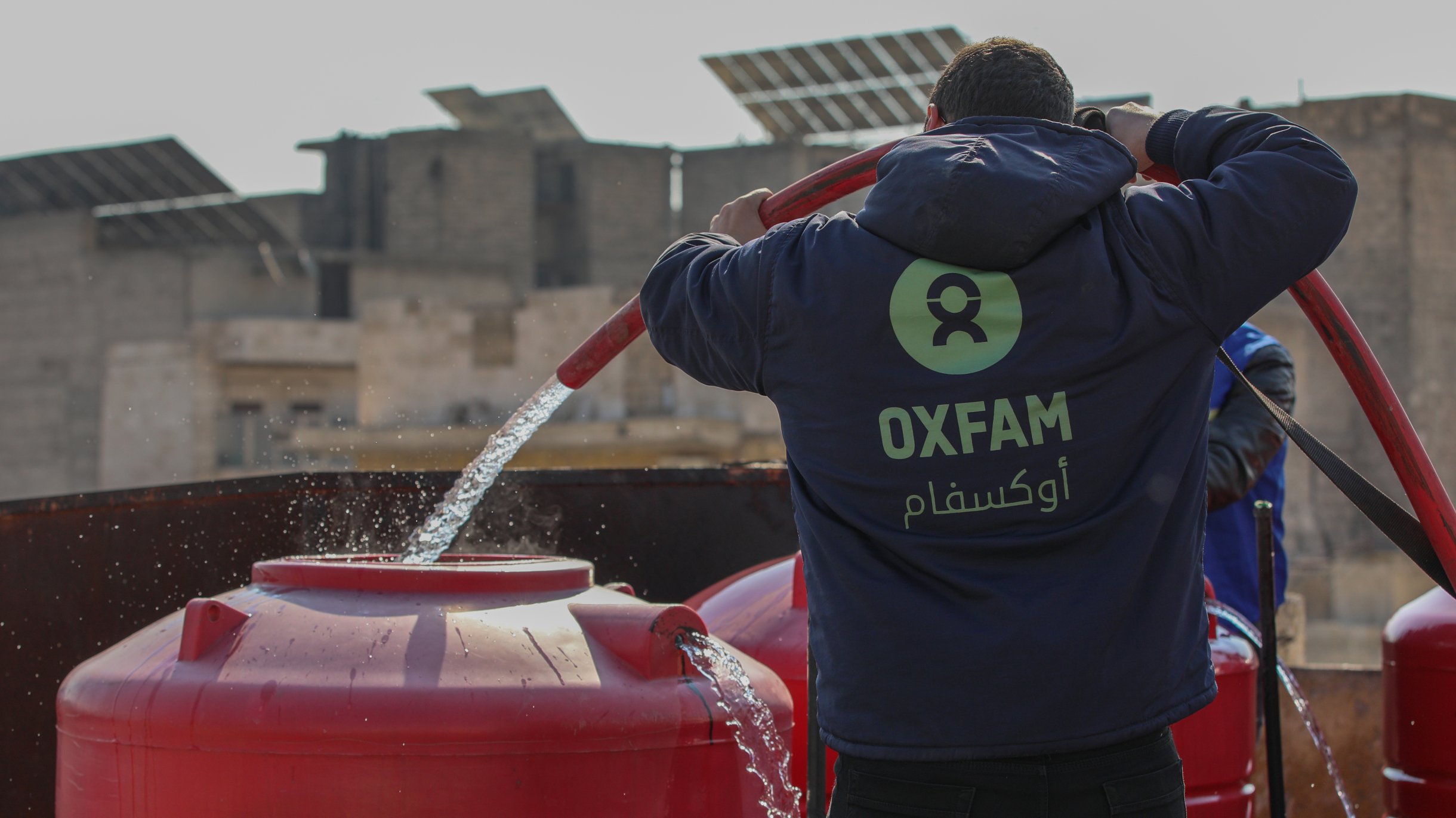
After years of conflict, basic services like water, electricity, and sanitation remain devastated. Without restoring this infrastructure, recovery is impossible. People cannot rebuild their lives or livelihoods if the foundations of daily survival are missing.
Another major challenge is chronic underfunding. More than 70% of Syrians still need humanitarian assistance, yet funding cuts continue to undermine recovery efforts. International donors must fully fund the Syria humanitarian response and support both urgent needs and longer-term recovery.
Most importantly, Syrians themselves must be at the center of every discussion about their country’s future. Recovery will only succeed if it reflects their voices, priorities, and hopes. Without this, rebuilding risks being incomplete and disconnected from the people it is meant to serve.
Oxfam works closely with local organizations in Syria. Why are local partnerships so important?
Kareh: Local partnerships allow us to reach people who might otherwise be left behind, especially in places where Oxfam does not have direct access.
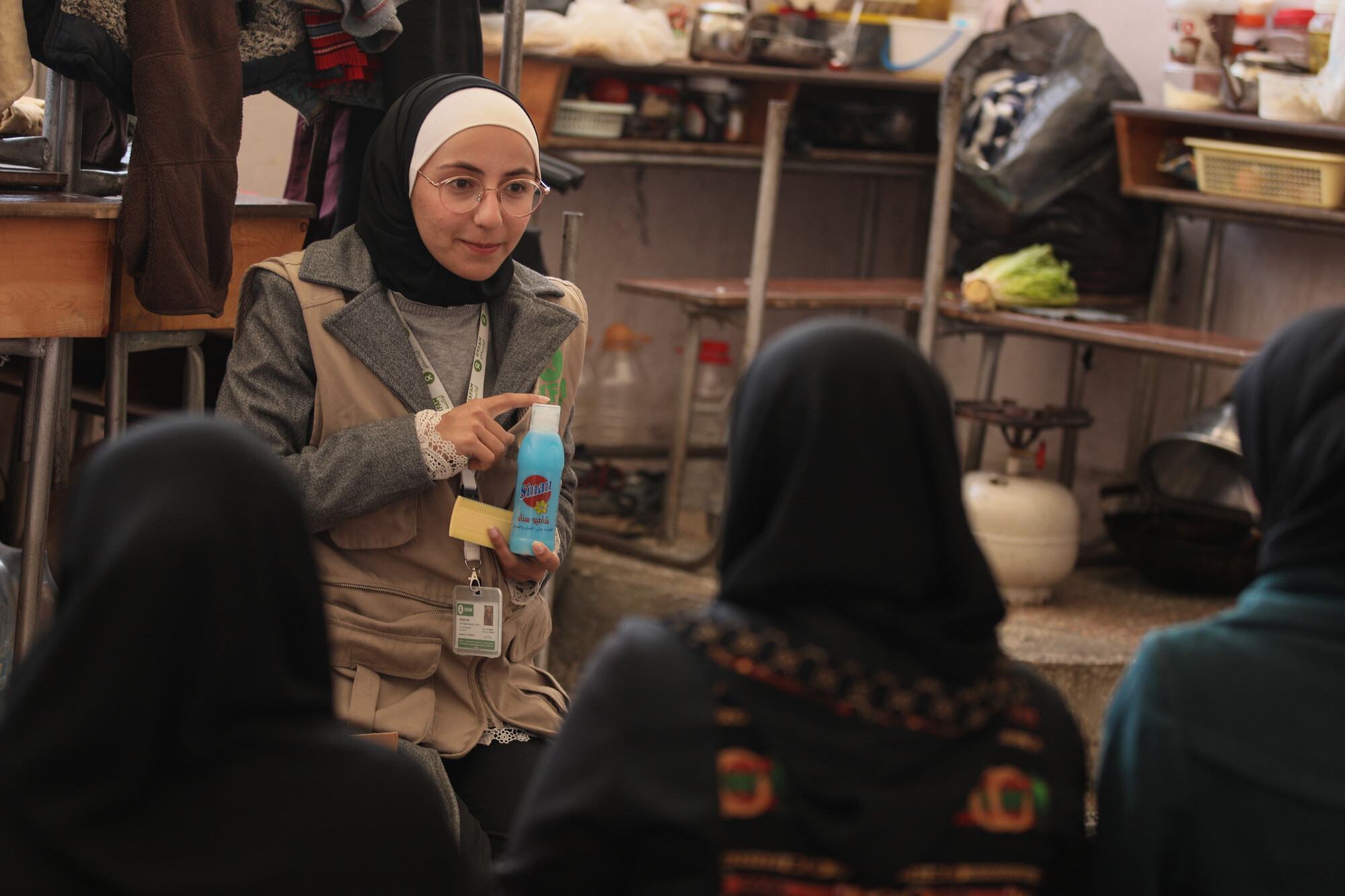
One recent example is our collaboration with a local partner during conflict in As‑Suweida and Al‑Hasakah governorates. Because Oxfam was not present in these areas, partnering with a local organization that was already embedded in the community made the intervention more relevant and efficient. Through this partnership, we were able to deliver urgent family hygiene kits to displaced families. We see partnerships as complementary, where local partners bring contextual knowledge, identify needs and deliver support in ways that are rooted in the community.
From your perspective, what is the most urgent unmet need right now?
Kareh: There is no single recipe that fits all communities in Syria.
Different parts of the country experienced the conflict in different ways, and their needs vary. The single most critical unmet need is sustained access to basic services, as prolonged gaps in food security, safe water, protected, and shelter deepen vulnerability.
Most Syrians I have spoken to share the same message: They are ready to provide for themselves and take the lead in shaping a more sustainable future. They want to decide how best to improve their lives. They are simply asking us to help them take the first step on the right path.

Can you share a story of someone you met that stayed with you?
Kareh: On the edge of a far village in Deir ez-Zor, I met a group of young women working in the fields. We spoke about one of Oxfam’s projects that provides agricultural assets, helping families buy the inputs they need to cultivate their land and escape the cycle of debt that consumes so much of their earnings.
The story of one young woman, Mona, has stayed with me. She is about 25 now. She was only 15 when IS dominated her town, one of the harshest periods for the people of Deir ez-Zor, especially for women.
Mona told me about her passion for chemistry and her dream of becoming a teacher, a dream even her parents supported at the time. But the hardships of life and the lack of access to education cut her off from pursuing it. In those years of fear, her parents arranged an early marriage, believing it was the only way to keep her safe.
Today, Mona is a mother of two lovely children. She speaks with determination about returning to her studies and reclaiming her dream. She knows that improving her income will help bring her closer to making that dream real.
If you could sit across from an Oxfam supporter, what would you want them to understand?
Kareh: I would say that Syria’s journey toward recovery is far from over, and the challenges remain immense. That is why the solidarity of Oxfam supporters is more vital today than ever.
This is a new era for Syrians, but without the right support it risks becoming a new struggle. Your continued commitment ensures Syrians are not left to face these challenges alone and helps keep alive their hope for a more sustainable future.
For me, as a Syrian, and for many from my country, I hope Syria will no longer be defined as a nation ravaged by war, but as a place where resilience and rebuilding can truly take root.