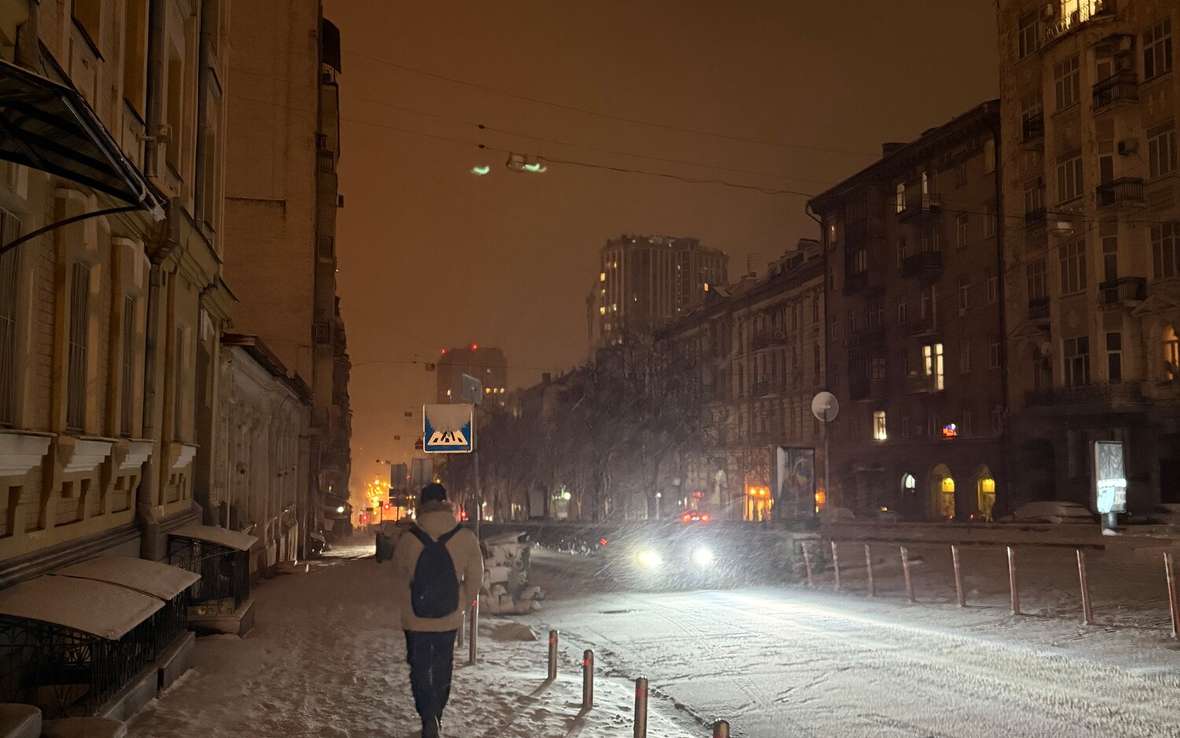
Ukrainian organizations are assisting people with help from Oxfam to survive the war’s harshest blackouts.
It’s 5 p.m. and Alisa Lahmanova sits indoors wearing her winter coat and mittens. When the sun goes down, her office in Kyiv goes dark, and the only light in the room comes from her laptop screen. On this day, and most days this week, Lahmanova and her team at the non-governmental organization Rokada have only a few hours of heat and power—just like thousands of people across Kyiv.
Since the invasion in 2022, Russia has been targeting Ukraine’s power stations each winter, leaving millions without electricity for weeks. This year’s power outages are the longest and harshest yet. Russian missiles hit an already exhausted system so often that 24/7 repairs can’t keep up. It is the coldest winter Ukrainians have seen in a decade: night-time temperatures drop to –25 C (about –12 F), while daytime highs hover around –15 C (8 F).
In this weather, communities rely on humanitarian support more than ever. On a video call with Oxfam staff, Lahmanova talks about one of their projects: Supporting a geriatric center in a remote town in western Ukraine.
The center cares for people with incurable illnesses. “When the power goes out, everything stops: no transport, no logistics, no normal operations,” she says. “And the kitchen staff has to cook for their patients over an open fire outside.”
Local organizations lead in Ukraine
As the cold season and prolonged blackouts continue, it’s the local organizations in Ukraine that are holding the humanitarian response together.
When the war started four years ago, Oxfam committed to supporting Ukrainian organizations and more than 30 other groups in Poland, Moldova, and Romania that were helping refugees. Now only working with groups in Ukraine, Oxfam is supporting seven strategic partners, including Rokada, Voice of Romni, Shchedryk, The Tenth of April, Women’s Consortium of Ukraine, Gay Alliance of Ukraine, and Peaceful Heaven of Kharkiv
These are organizations prioritizing assistance to women, people with disabilities, Roma and LGBTQIA people, and other groups normally overlooked in humanitarian assistance programs.
Since the beginning of the conflict, Oxfam partners have reached 2.5 million people, 1.5 million of whom are in Ukraine.
Oxfam’s support for Ukrainian organizations providing humanitarian assistance during the war is part of its commitment to helping local humanitarian groups get the technical skills, funds, and other resources to more effectively respond to emergencies.
Surviving the winter
“This is already the fourth year of war,” says Serhii Zhuravel, who works at The Tenth of April. “Winter, cold, sometimes no electricity … sometimes hunger. And all of this accumulates—it really affects people. People even go out to protest. Local authorities have to explain that this is an issue of the national energy system, which operates under constant attacks."
Even communities that are well-equipped with generators and other resources for survival are struggling. Weeks of cold and darkness, combined with the lack of water and light in their own homes, leave people frustrated and emotionally drained.
Many are leaving cities. Kyiv alone lost around 600,000 residents in January. But many humanitarian workers, like Alyona Grom, project manager of Voice of Romni, a Ukrainian partner organization working with Roma communities, choose to stay
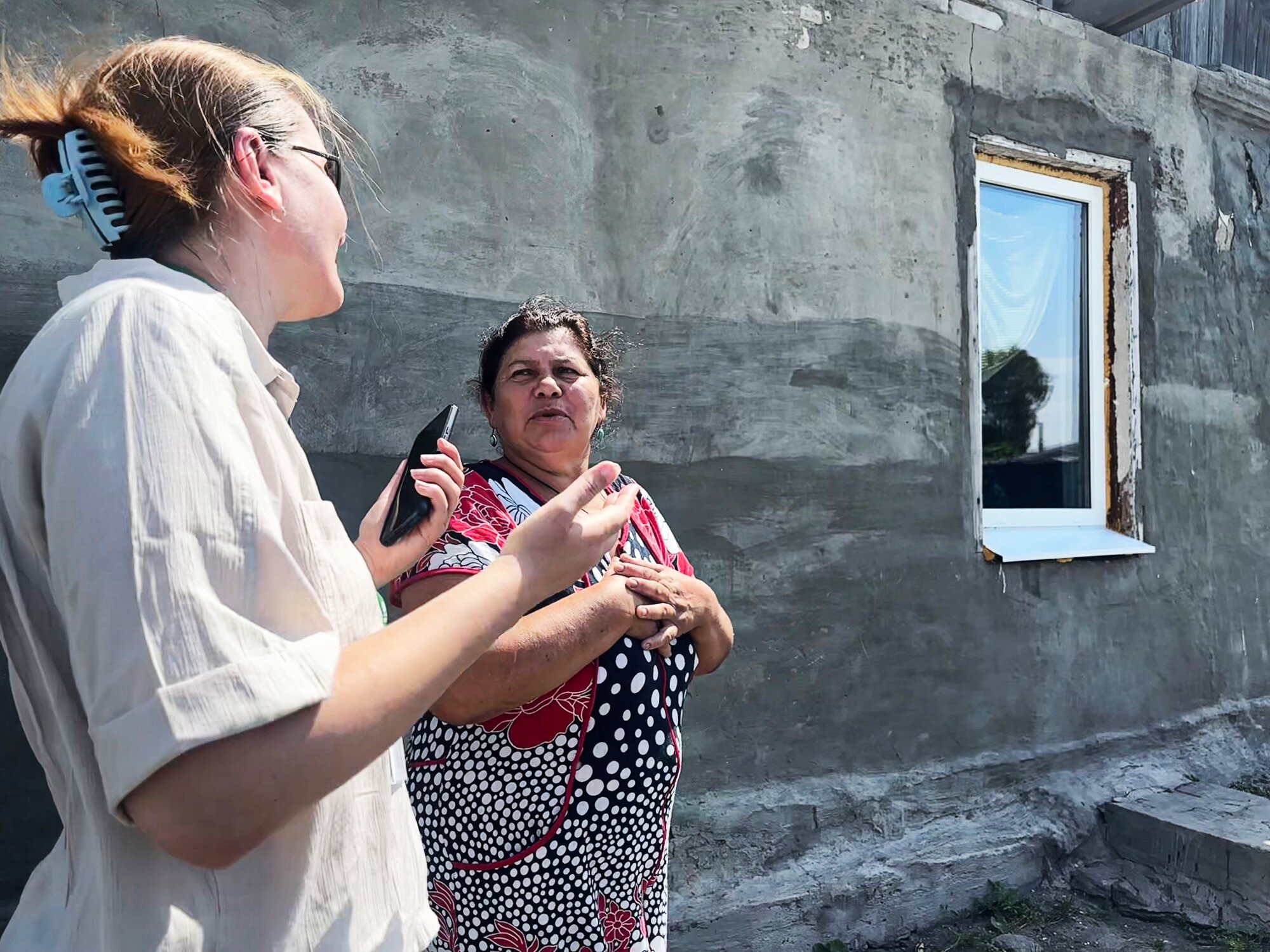
“Needs are not going away,” says Grom. “We continue to work. Because somewhere there are people in an even worse situation right now. And they need help."
Grom talks about how her staff juggles their own survival with continuing to provide support to others. “On the third day without electricity and heating, we have adapted. [We wear] two pairs of socks, warm clothes, and blankets. Darkness and cold have become the backdrop, and there is only one thought in my head—how to feed the children. When electricity appears, you first charge everything you can.”
Life in high-rise apartment buildings has become extremely difficult. Indoor temperatures drop to well below freezing; elevators and water pumps stop. One power station in Kyiv, which supplies more than 1,100 buildings, 72 kindergartens, and 18 medical institutions, is now completely shut down. No region has been spared from power cuts.
For Ukrainian aid workers, the line between personal survival and professional responsibility has grown thinner. Still, they continue showing up because the needs around them are immediate and visible every day. Vera Karaicheva, the communications manager at Women’s Consortium of Ukraine, recalls a moment when visiting representatives from an international donor organization experienced a night of heavy bombardment. She says they kept asking the same question.
“‘How do you survive?’ “How? How we survive and continue working is something books could be written about, and films could be made about. We survive, we carry on together, doing the work that needs to be done.”