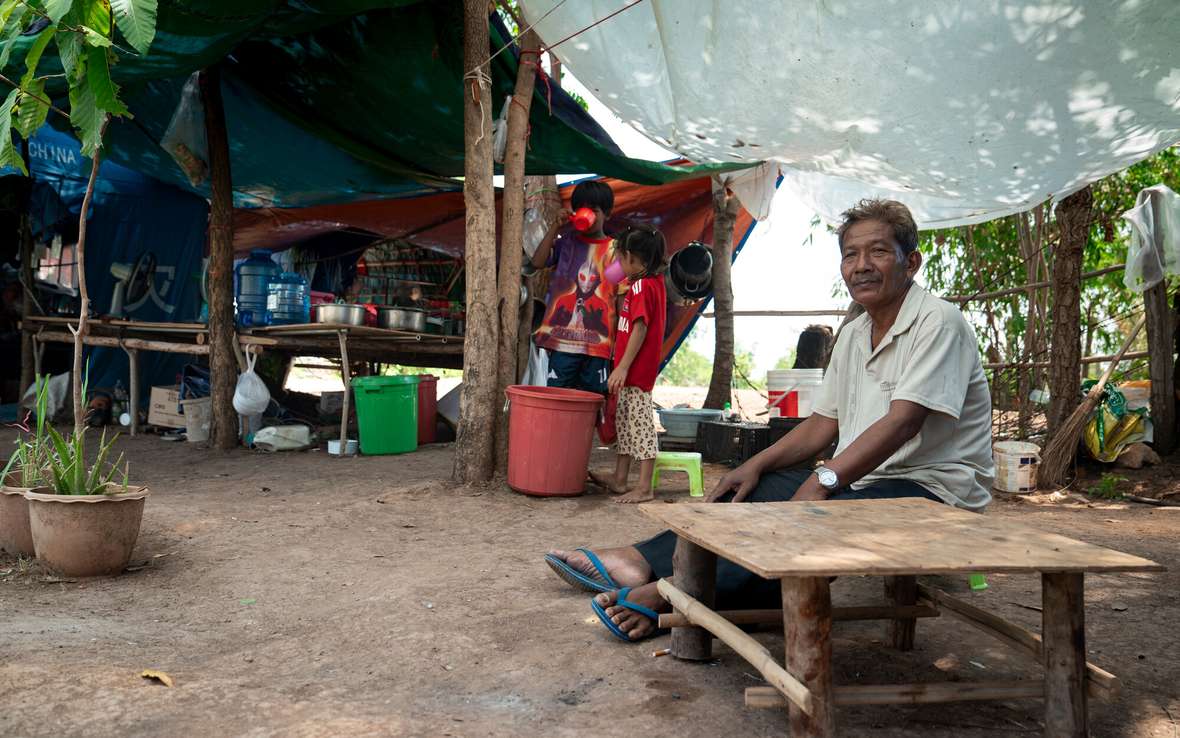
For 72-year-old Sam Nang, surviving displacement meant keeping his 21 grandchildren safe. That effort started with clean water.
When border clashes between Thailand and Cambodia reached the northwest Cambodian village of Prey Chan in January, 72-year-old Sam Nang quickly gathered his family and fled.
He, his six grown children, their spouses, and 21 grandchildren clustered under tarps, first at a safety center and later a temple. Their homes were destroyed, and continued shelling and military blockades make returning to their village impossible.
"We evacuated with nothing," he said. "We used the little money we had to buy what we needed to survive."
Life under tarps
Nang’s family settled with hundreds of other families onto temple grounds, sleeping on mats or on wooden platforms. His tent became the family hub, a place where grandchildren ran and played, where his daughter Nang Sokea and her husband, Ra Vin, tried to keep a household going for their two young children, and where small acts of care repeated themselves: rationing soap, sharing a bowl of soup, boiling water when there was fuel.
Securing clean water was the most pressing problem. The pond beside the pagoda served both as a washing place and a hazard. If families had a motorbike, they could buy drinking water at a safety station five kilometers away, a journey that cost fuel and time. If they didn’t, the only option was to buy a barrel of water nearby for 2,000 riels, the equivalent of about 50 cents.
For Nang, the calculation was personal. He watched his grandchildren run and play in the heat and knew they needed to stay hydrated. But keeping the water barrel full enough was a daily struggle.
"They are running and playing a lot, and it is hot," he said, watching the children draw water from a shared container. "They need to drink."
Sokea felt the weight differently. When Ra Vin left on multi-night fishing trips, one of the few ways men could earn money, she managed the household alone. That meant managing water—rationing every sip, calculating how long a barrel would last, and knowing that without fuel or 50 cents, there was no way to get more. A day without water was not an inconvenience; it was a health risk for her children.
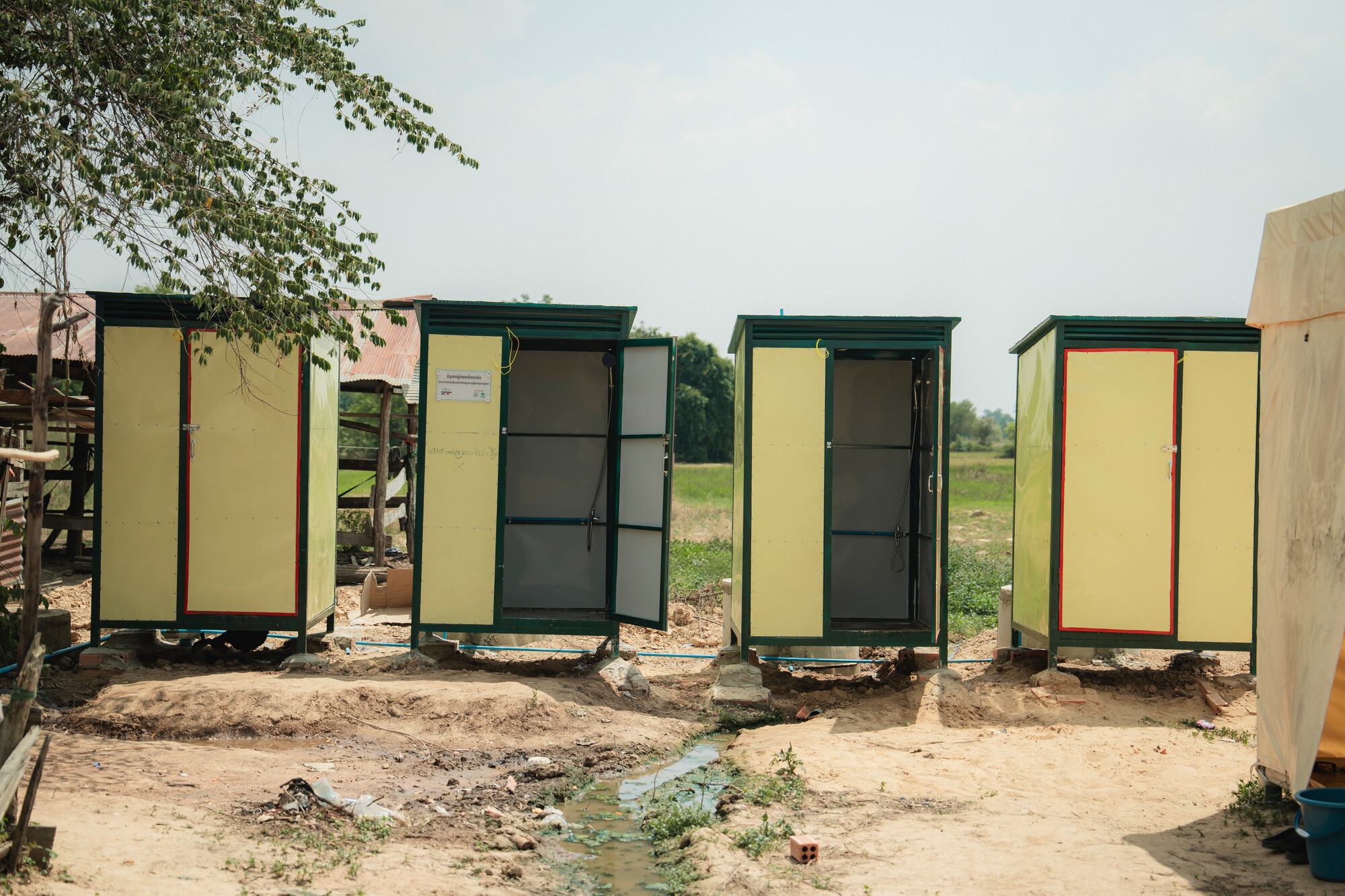
The latrines added another layer of hardship. Long lines formed at all hours, exposing the elderly, young children, and women to discomfort and safety risks particularly at night. Without reliable handwashing points or hygiene supplies, maintaining basic sanitation routines were nearly impossible. In cramped, hot tents, even a small illness can spread quickly. For caregivers like Nang and Sokea, the pressure of keeping 21 grandchildren healthy while grieving the life they left behind was relentless.
A turning point: Oxfam’s emergency support
From the first days of the displacement, Oxfam worked with local authorities and partners, including the Village Support Group, Coalition of Cambodian Farmer Community, Development and Partnership in Action, and Human Resource and Rural Economic Development to assess what families needed most urgently. Getting concrete data was essential to shaping an effective and immediate response.
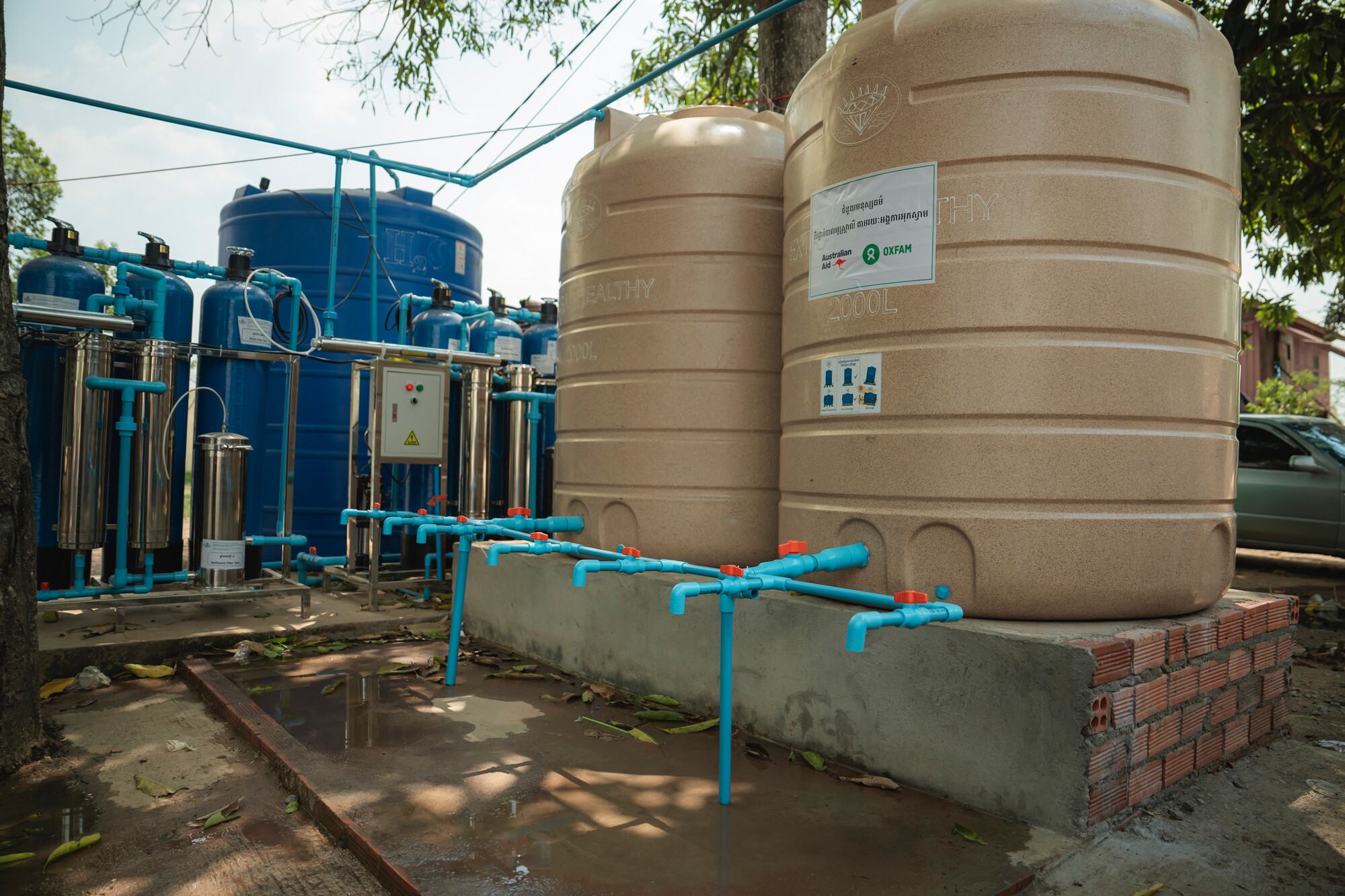
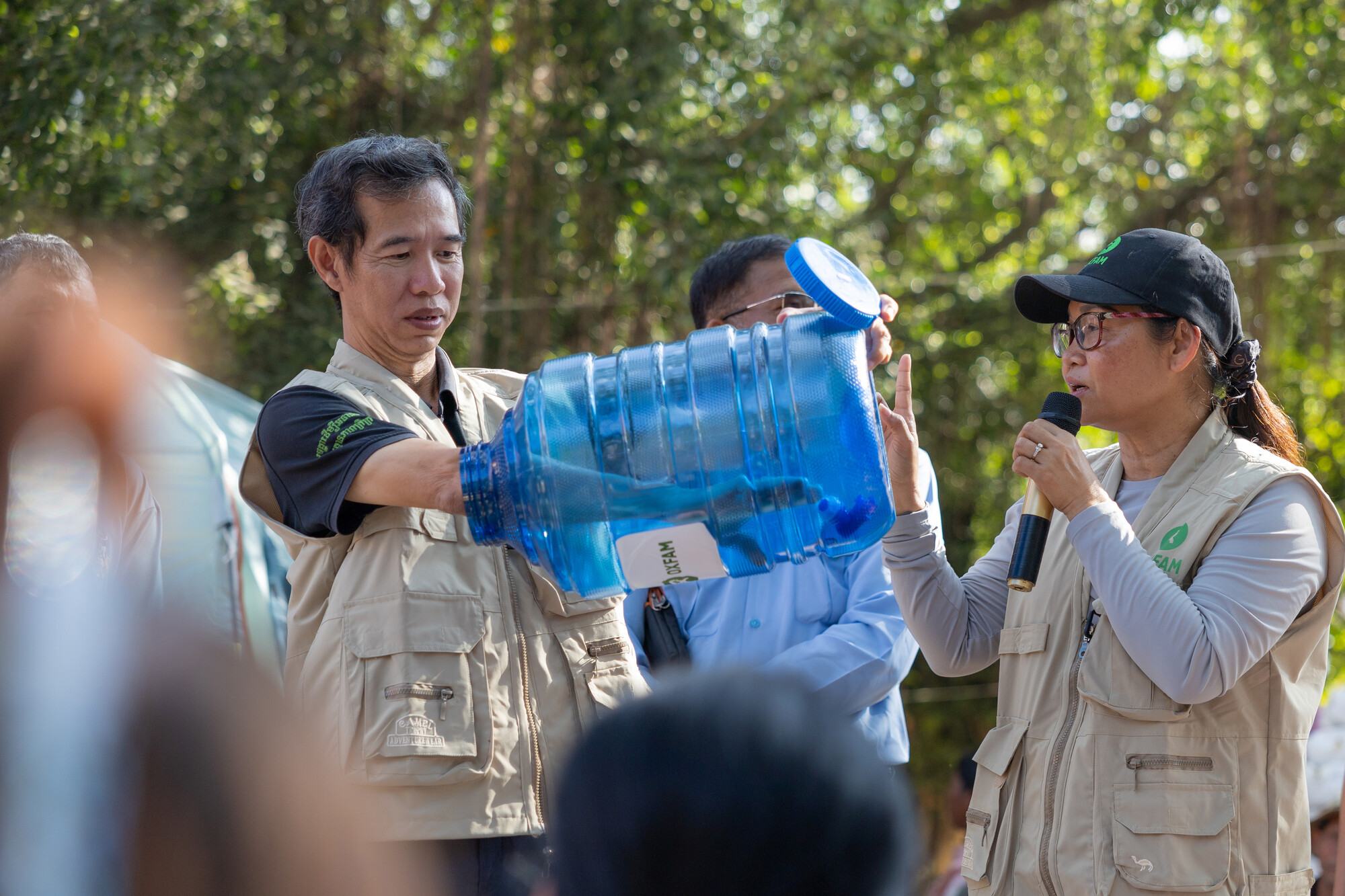
"People assumed food would be the most urgent priority. But what surprised us was what people told us themselves. They could manage a few days without food, but not without water,” said Chhorvivorn Ros, executive director of the Village Support Group. “Safe drinking water became our top priority, and we worked closely with Oxfam to drill a well with a pumping system and install a water filtration system.”
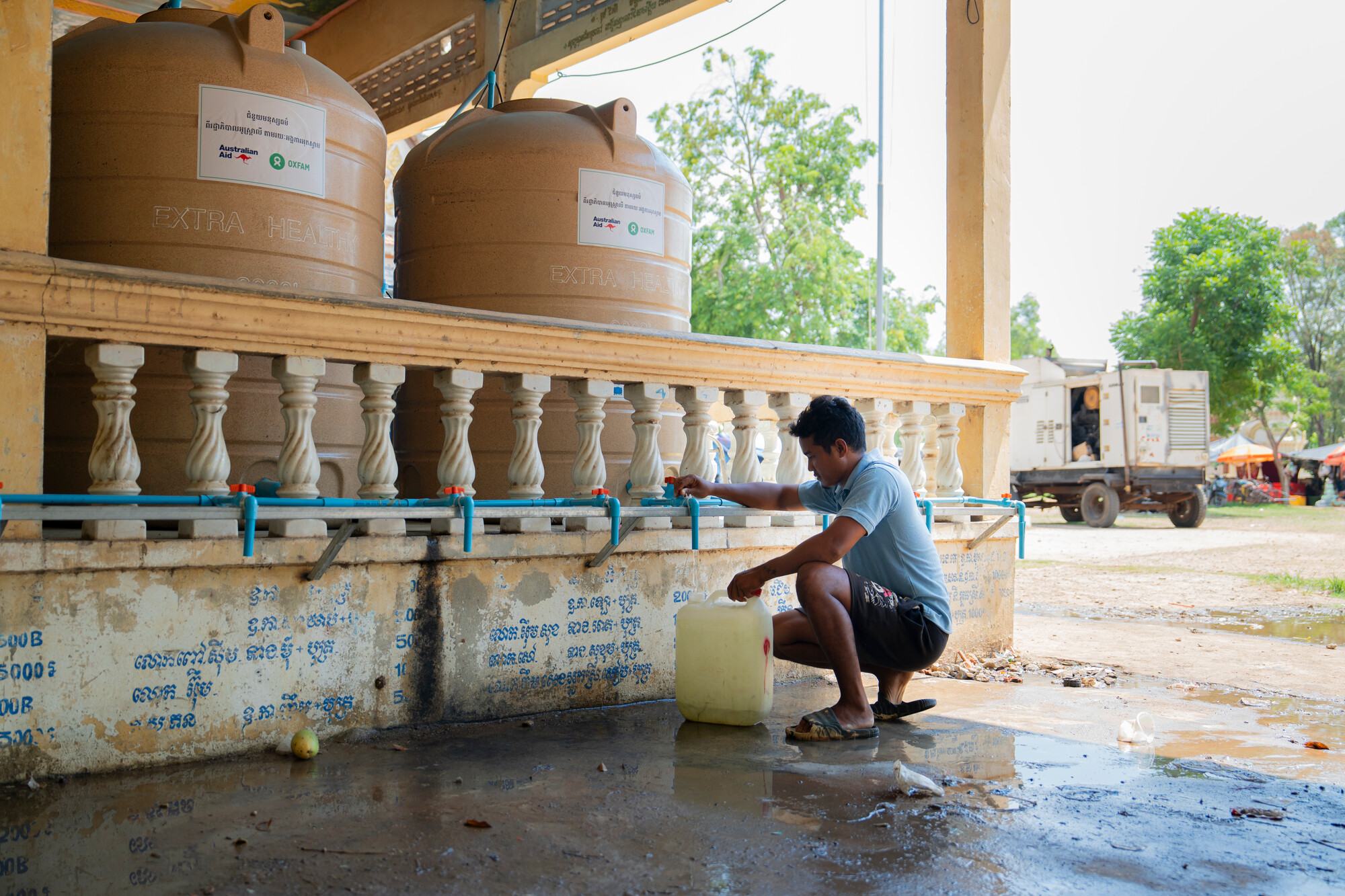
That support shaped everything that followed. By mid-March, safe water points were available in the camp, additional mobile toilets were deployed, and hygiene supplies were distributed, all of which strengthened the camp's water and sanitation facilities in ways families felt immediately.
"As gas gets expensive, it was not ideal to drive back and forth," Nang explained. "Then we got plenty [of water], within reach. Now the barrels are always full."
A step forward
The benefits reached beyond the physical. Where time and energy had been consumed by fetching water, parents now had breathing room. Some men began fishing or taking day jobs in nearby villages. Women managed cooking and childcare with less fear that a preventable illness would drain their fragile finances.
Nang’s family is counting the days until they move to provisional shelter in Slakram village, where temporary houses on allocated plots will offer more secure roofs and raised floors before heavy rains arrive. It will not be home, but it is a step forward.
"It will not be like our old home," Nang said, "but my children will sleep under a solid roof."
Since the first border dispute between Cambodia and Thailand in July 2025, Oxfam and partners—including the governments of Ireland, Australia, and Belgium—have provided emergency support for more than 23,000 families across four provinces of Cambodia, including Banteay Meanchey, Oddar Meanchey, Siem Reap, and Preah Vihear.
The support included cash assistance, clean water filtration and sanitation systems, mobile toilets, newly dug wells and pumping systems, water tanks, tarps, rooftop tents, privacy tents, rice, crop seeds, and gardening water systems.
In total, 3,290 households received cash assistance, while 12 water filtration systems were set up and 49 mobile toilets were installed. Oxfam and partners also set up five wells with pumping systems, distributed 6,500 dignity kits, supplied 6,500 rice packs, and delivered 4,850 water containers. In addition, nine clothes-changing tents were built, and 500 tarps were provided to families in need.
Looking ahead
The path to full recovery is long. Prey Chan is still a conflict zone. The fields can’t be ploughed. Rebuilding livelihoods will require de-mining land, seeds, livestock, and continued access to services.
In the meantime, everyday acts carry their own significance. Nang's grandchildren attend the camp school and come home clean. Mothers prepare meals without fear of waterborne illness. Elders rest knowing the children are hydrated and that latrines nearby are safe and give them privacy.
"We lost everything," Nang said softly, looking at the children gathered and laughing around his tent. "At least my family is together. At least my grandchildren can stay healthy."