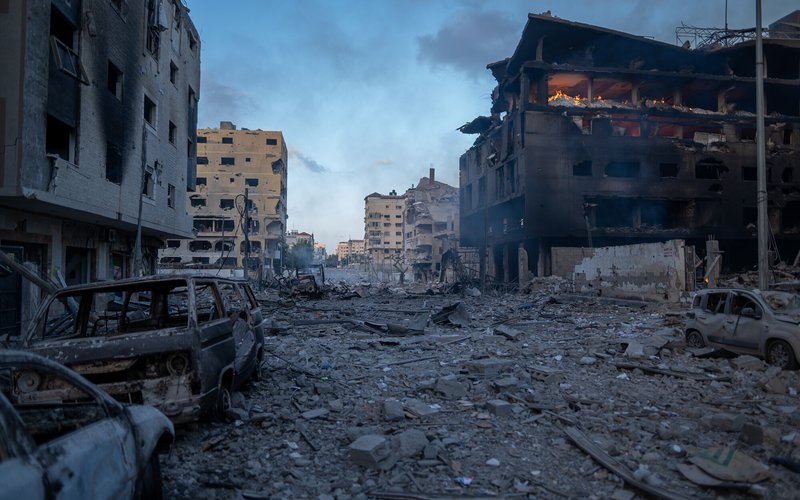
Oxfam partners are trying to get food, clean water, and medicine to desperate families. Here’s the latest, and what you can do to help.
Getting humanitarian aid into Gaza is a complicated mess—but it shouldn’t be.
Almost one year since a peace deal was agreed to in Gaza, Oxfam and other aid groups remain ready to scale up to deliver more food, clean water, and medicine to millions of Palestinians in need. Despite overwhelming needs, the Israeli government is still allowing just a fraction of the humanitarian aid needed into Gaza.
“The resumption of assistance since the ceasefire was announced last October has brought some relief– but conditions remain intolerable,” said UN Secretary General Antonio Guterres, at last month’s UN General Assembly. “International law, including international humanitarian law, is brazenly violated. Humanitarian access remains severely restricted, and the level of human suffering is still off the charts."
Oxfam is calling for unhindered access to vital aid in Gaza. We stand ready to scale up the delivery of humanitarian aid once access is granted.
Gaza’s urgent need for increased aid delivery
Palestinians in Gaza remain in urgent need of humanitarian aid as Israeli airstrikes continue, the vast majority of the population remains displaced, and the winter rainy season approaches.
The most pressing needs include food and nutrition assistance, healthcare, and shelter, as well as water, sanitation, and hygiene services (WASH) including menstrual products and waste management services.
- About 94% of the population urgently needs shelter, with 65% of households continuing to survive in tents and makeshift homes with little protection from the elements.
- While commercial shipments increased following the ceasefire, markets have remained highly volatile. The majority of the population still lacks reliable access to affordable, nutritious food. Also, much of the food that has entered via private sector channels has been goods like soda and candy, rather than protein and nutrient-rich food.
- Much of the infrastructure supporting essential water and sanitation services remains damaged or destroyed given restrictions on movement as well as the entry of key equipment and fuel. The inability to operate and maintain sewage and stormwater drainage systems poses flooding and public health risks, particularly for displaced people living in temporary shelters.

What is the current situation on aid entering Gaza?
The government of Israel has continued to severely limit humanitarian aid and maintained its arbitrary, opaque, and politicized system for humanitarian access in Gaza.
While the food security situation has improved somewhat since the ceasefire, the government of Israel is continuing to obstruct the work of dozens of international humanitarian organizations and severely limit UN operations.
The UN is now reporting that continued disruptions in the offloading of limited supplies at multiple border crossings has affected aid workers’ ability to consistently produce meals for families in need. Many restrictions remain on the volume and types of items that may be brought into Gaza, forcing humanitarian organizations to operate at levels far short of capacity and need.
- In September, UN partners assisted more than 220,000 families with monthly food distributions—at most covering only 50 percent of their daily caloric needs for about 10 days.
- These partners continue to prepare and deliver some 650,000 meals through more than 100 kitchens across Gaza.
- However, both daily hot meals and monthly food distributions are expected to slow significantly from October onwards due to ongoing restrictions and a lack of funding.
What is Oxfam doing to help aid get into Gaza?
Oxfam and other UN agencies are doing everything we can, through partners, to deliver life-saving aid. Oxfam has worked closely with our partners in Gaza to reach more than 1.5 million people with humanitarian assistance. Since October 2023, our water, sanitation, and hygiene programs have reached over 800,000 people.
Oxfam has continued to source materials within Gaza in order to scale up its work to assist partner organizations, people displaced by the conflict, and those on the move and choosing to return to their homes. This includes the installation of 600 latrines last year in southern Gaza, a major accomplishment.
With your support, Oxfam and our local partners are focusing on a range of emergency interventions including:
- Food
- Clean water
- Access to hygiene items, including menstrual products
- Rehabilitation of water and sanitation systems and wells
- Solid waste management
- Training and supplies for home gardens to help people grow vegetables
- Support for survivors of gender-based violence
The peace deal promised unimpeded humanitarian assistance, and we urgently need full access for all qualified humanitarian organizations.
"Nothing other than complete access to Gaza to deliver aid at scale can alleviate the conditions that people have been forced to live in," said Bushra Khalidi, Oxfam in the Occupied Palestinian Territory and Israel policy lead.