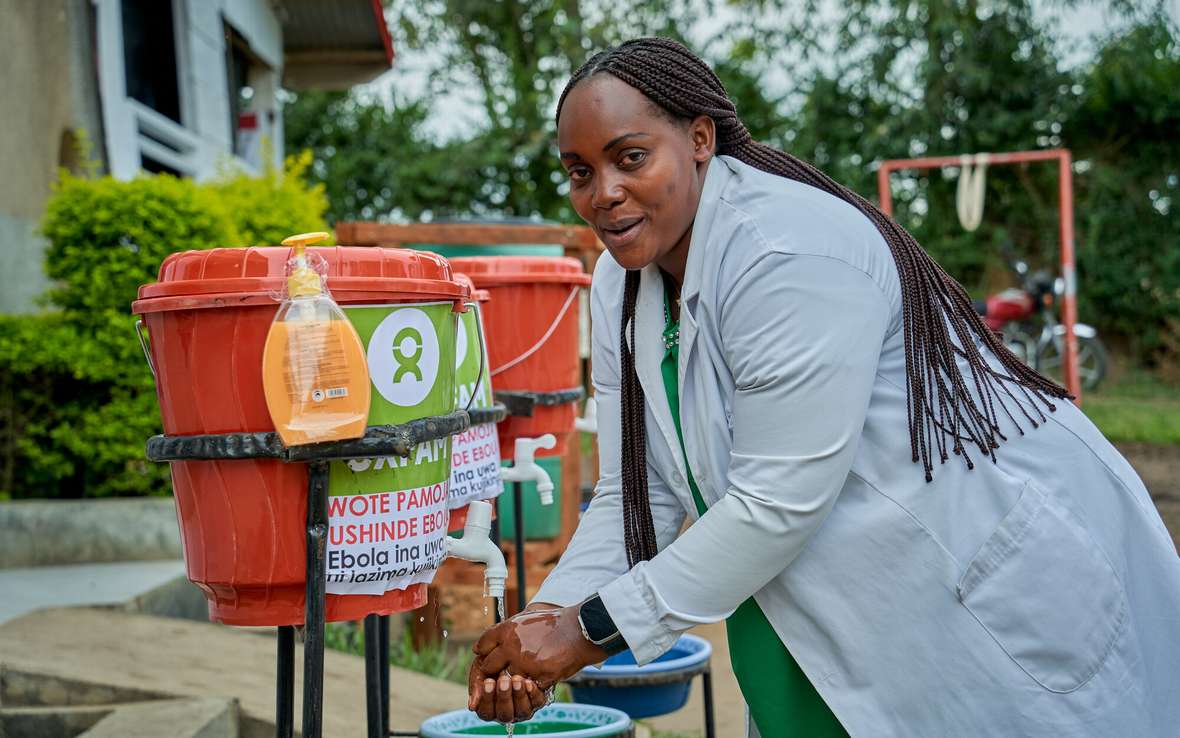
Learn how Oxfam is working with community leaders and setting up handwashing stations to contain an outbreak of Ebola disease in the DRC.
When Tibakanya Mireille realized her infant son was running a fever, she feared the worst. A neighbor had family members sick with Ebola disease, and everyone in her community was concerned about getting the disease.
So, she rushed her son to a clinic near her home in Shari, in the Democratic Republic of Congo’s Ituri province. After a quick stop at the handwashing station outside the clinic and having their temperature taken, her son was examined, and she got some relatively good news: He had malaria, a serious illness for young children, but better than Ebola.
“In my family, we haven’t had any cases of Ebola, yet, but we see our neighbors suffering from it,” Mireille says, outside the clinic. “That disease really scares us.”
Deadly Ebola outbreak threatens millions
The eastern provinces of the Democratic Republic of Congo (DRC), including Ituri and North and South Kivu, and, most recently, Haut-Uélé are enduring a serious outbreak of Ebola disease. By mid-July, more than 1,200 people have died and there are more than 2,900 confirmed cases, according to the Centers for Disease Control.
The disease outbreak comes during a protracted conflict in the eastern regions of DRC, where fighting between armed groups and government forces has displaced more than 5 million people in North and South Kivu and Ituri provinces. Oxfam staff in the DRC are concerned that as many as 2 million people are at risk of Ebola.
Recent cuts in aid budgets from the U.S. and other countries, as well as United Nations programs, have left DRC unprepared for a severe disease outbreak. Global humanitarian funding for the DRC was reduced by 46% — from $2.58 billion in 2024 to $1.4 billion in 2026, forcing aid agencies to drastically scale back, according to a press release from Oxfam. Local organizations, often the primary responders during outbreaks, have seen even larger reductions in funds.
How Oxfam is responding with local partners
Oxfam is working with local partner organizations in North and South Kivu to assist people affected by ongoing conflict, as well as the emerging Ebola disease outbreak.
In North Kivu and Ituri, we are focused on public health measures including water, sanitation, and hygiene. Reports from Oxfam staff indicate that most health centers in Ebola hotspots lack clean water and sanitation. Oxfam is identifying areas to install wells to serve health facilities, and community education to engage local leaders and help people understand how Ebola disease spreads, how to identify the symptoms of the disease, and where to get treatment.
Oxfam is working with 100 trained community health volunteers in Ituri province, and as of June has reached more than 70,000 people.
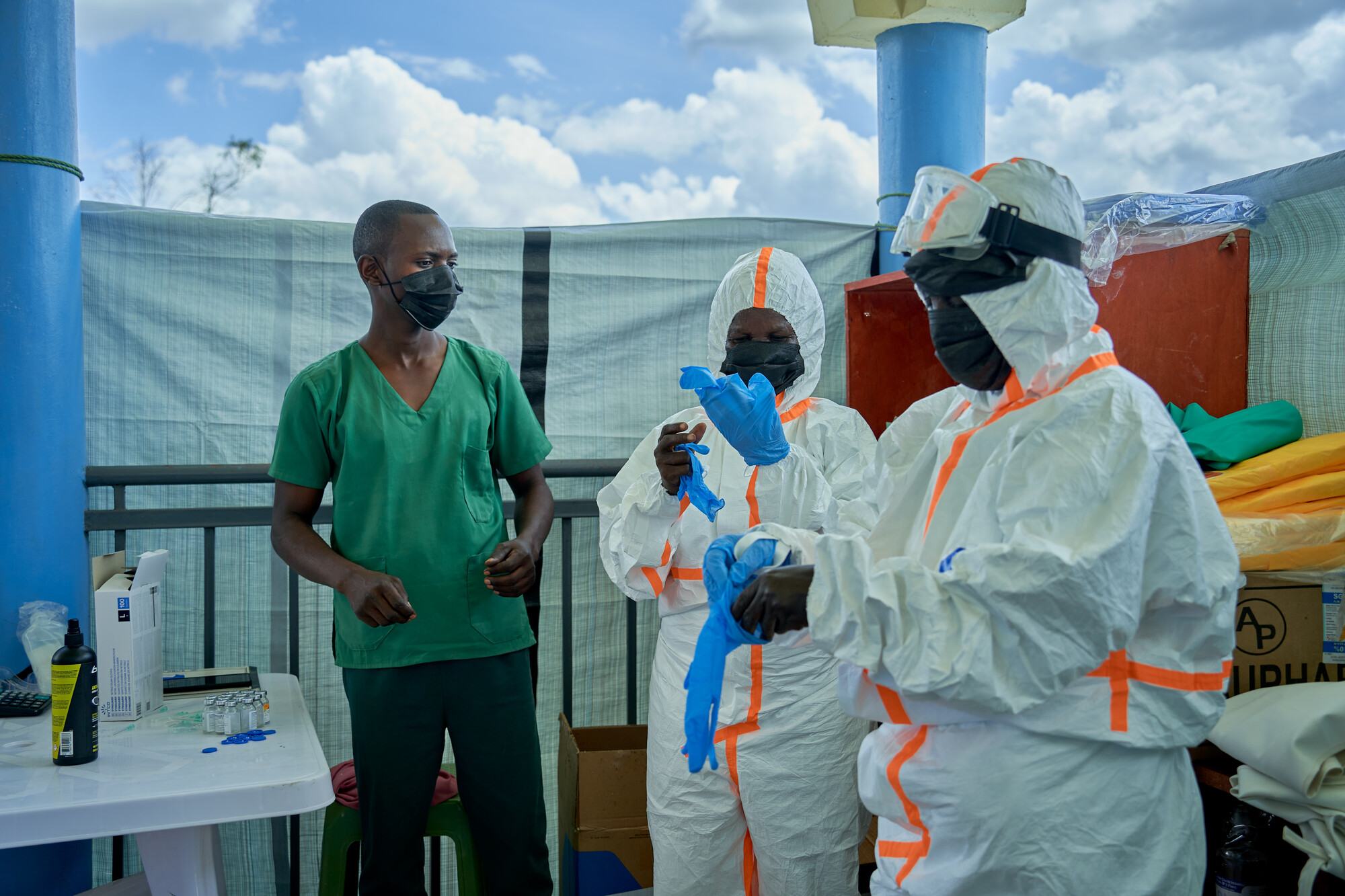
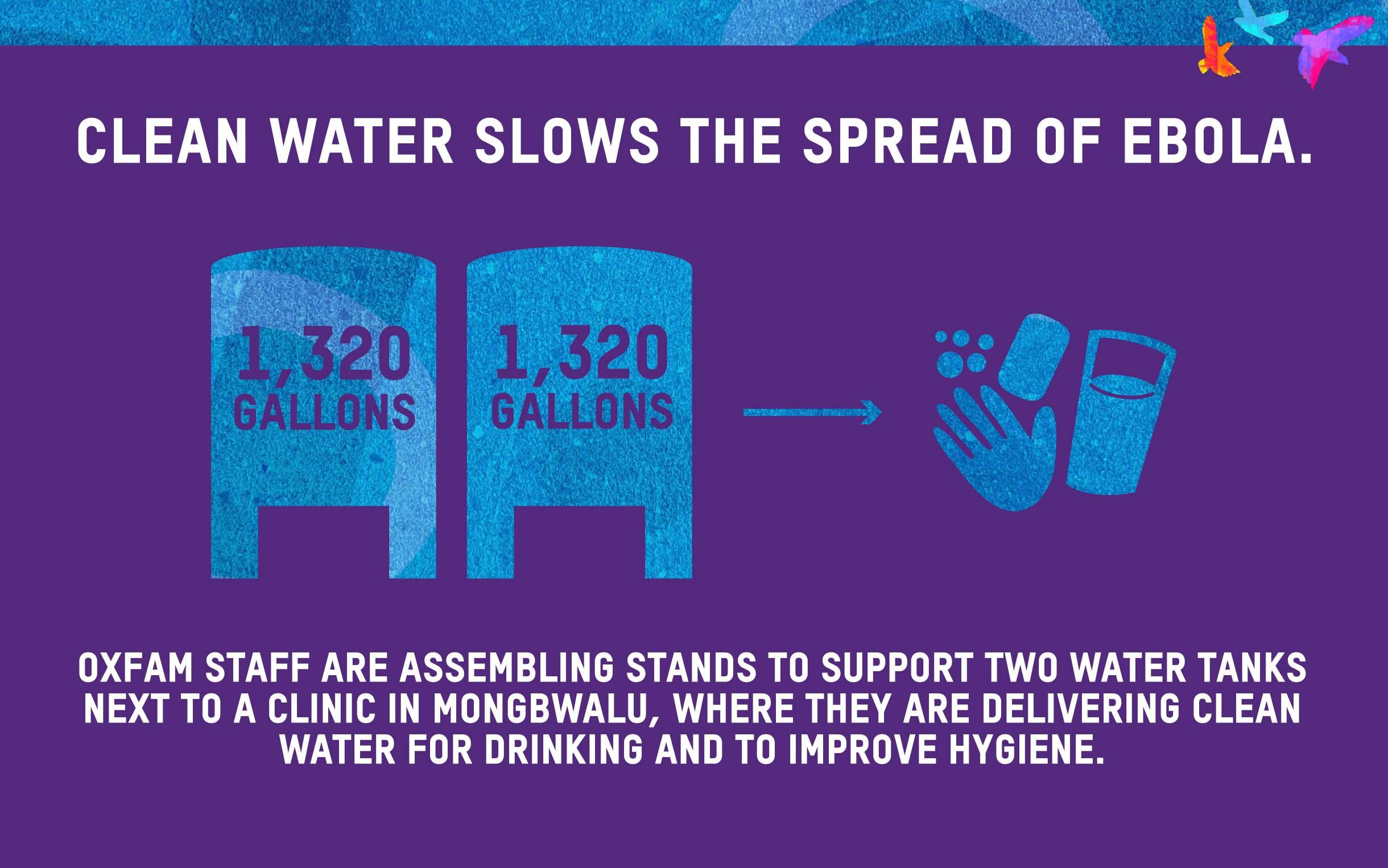
In Ituri province, Oxfam staff are assembling stands to support two 5,000-liter (1,320 gallon) water tanks next to a clinic in Mongbwalu , where they are delivering clean water for drinking and to improve hygiene. “One of the problems here in Mongbwalu is that health centers don’t have access to water,” says Manel Rebordosa, a public health promoter working for Oxfam in the DRC.
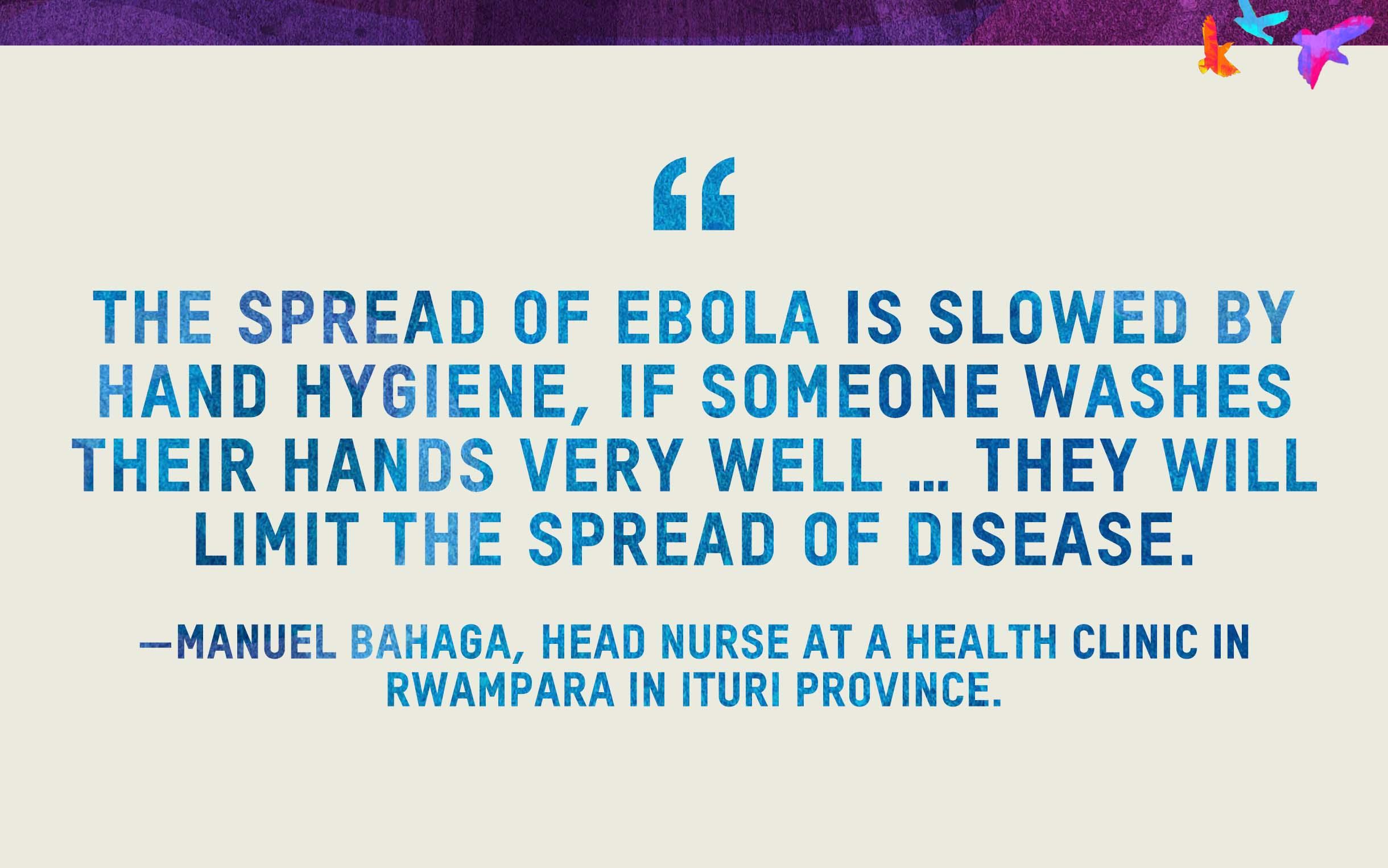
Oxfam is also setting up handwashing stations, including the one Mireille used when she entered the clinic in Shari. These consist of a covered water container on a stand with a tap, soap, and a basin underneath. “The spread of Ebola is slowed by hand hygiene,” says Emanuel Bahaga, the head nurse at a health clinic in Rwampara in Ituri province. “If someone washes their hands very well …. they will limit the spread of disease.”
Solomon Taga works with a volunteer public health promotion organization in Bunia, an area hit hard by Ebola in Ituri province. He says education about Ebola will help protect families and health workers, and reduce the spread of the disease.
“We will not accept the continued spread of Ebola,” he said after a community meeting with health officials and Oxfam staff. “We young people can take action.”