The chip company's history-making move risks amplifying an unequal economic system, says Oxfam America’s Senior Researcher Maria Atuesta.

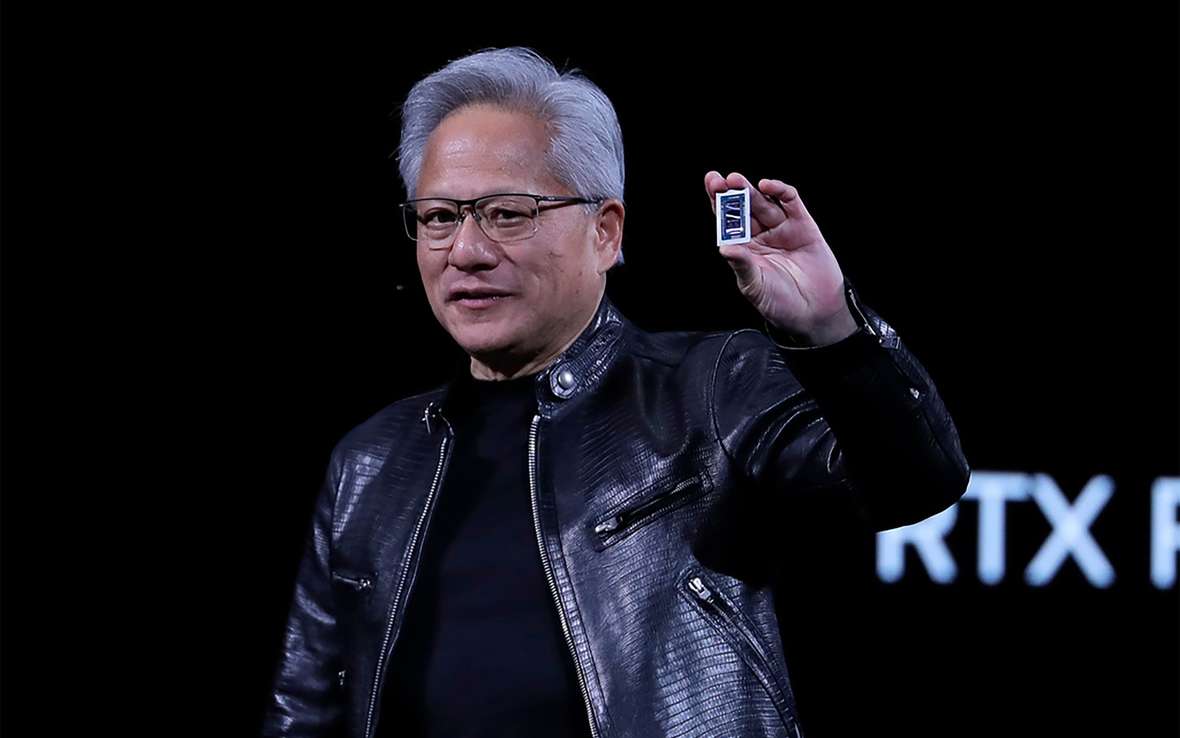
Last month, Nvidia—the largest maker of advanced computer chips for artificial intelligence—placed a record-breaking bet. The company’s board authorized billionaire CEO Jensen Huang to spend an additional $150 billion on stock buybacks.
Buybacks are financial transactions that help companies return profits to shareholders instead of spending it on other priorities, like bonuses for workers or investing in reducing the harm their operations may cause. Nvidia called the move the largest of its kind in history, bringing the total amount of money the company expects to spend on buybacks to $235 billion by the end of 2027.
The figure is staggering. Beyond its size, Nvidia's announcement raises a fundamental question about the AI economy: Who will benefit from the enormous wealth it is creating?
The answer depends not only on which companies succeed. It also depends on who owns their shares, and how those companies choose to distribute the wealth they generate.
Who gets rich off the stock market matters
There is a popular fiction about the stock market: It represents a place where savvy people make smart decisions about when to buy and sell, and their accumulated wealth is the result of their wits.
But the reality is that some families have a head start. Many White, wealthy families already own large amounts of stock and are in a better position to disproportionately benefit from stock market gains.
This is not an option for many people in the US who live paycheck to paycheck. They have little or no money to invest in the first place, and they are left out of these types of wealth-building opportunities all together.
Over time, this creates a growing divide because so many people never had an equal opportunity to invest in the first place. In fact, evidence shows that historically in the U.S., Black and Hispanic households have been disproportionately excluded from stock ownership.
What Oxfam’s new research reveals about stock buybacks
Today, stock buybacks are amplifying this divide. New Oxfam and PolicyLink research shows how this increasingly widespread corporate practice is worsening both wealth and racial inequality—a cautionary tale for Nvidia’s announcement.
In the U.S., stock ownership is heavily concentrated among White, wealthy households. White households own 86.8% of all stocks and mutual funds, compared with just 0.6% owned by Black households and 0.7% owned by Hispanic households. Our joint research finds that these disparities now account for more than 36% of the racial wealth gap, up from 14% in 1989.
Buyback programs contribute to this compounding inequality by disproportionately channeling resources to shareholders. In 2025, S&P 500 companies like Nvidia spent more than $1 trillion buying back their own stocks. That’s concerning in a country where the federal minimum wage has been stuck at $7.25 since 2009.
When trillions are routed into the market, the gains land where the shares already are.
What Nvidia could also be doing with its soaring profits
Nvidia’s announcement raises the stakes facing the AI economy: Will its extraordinary and booming wealth be broadly shared, or will it continue to enrich those who already have significant wealth?
The answer is not to pretend that companies should not return profits to shareholders. But corporate leaders including Nvidia should take meaningful steps to reduce the impact of buybacks on the racial wealth gap and reorient U.S. corporations toward sustainable social and economic prosperity.
It’s a question of balance, because there’s a lot you can do with $235 billion. Even a fraction of that amount could go a long way in supporting Nvidia’s workforce across its global chip-making operations. What about using some of that money to reduce the negative impacts of AI, critical mineral extraction, and AI infrastructure like data centers on workers and communities around the world?
We haven't seen any comparable announcements from the company about investing in raising wages or improving working conditions across its global operations, and we can't find any reporting from the company about how it will support workers and communities adversely affected by AI infrastructure.
That’s the next announcement we’re waiting for—and hope comes soon.