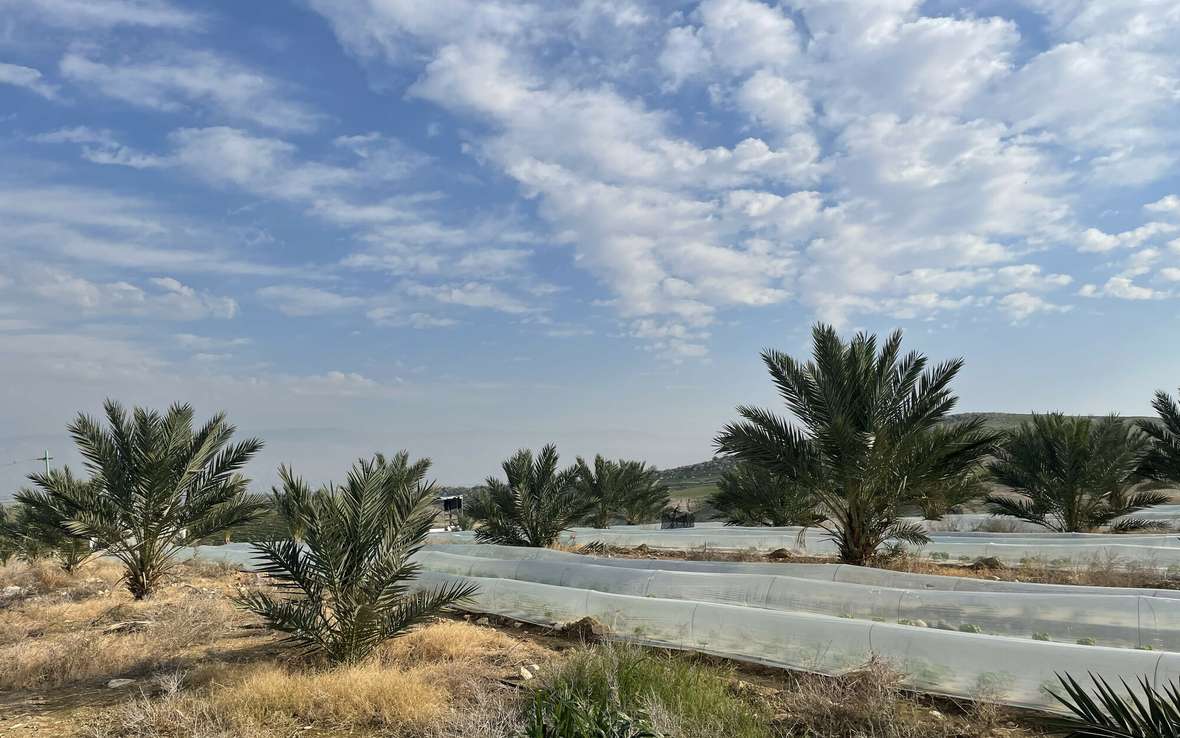
Here’s what you need to know about rising violence in West Bank, and how you can join with Oxfam to help Palestinians.
Key Facts
- Israel has occupied the West Bank since 1967. Palestinians there face military rule, settlement expansion, home demolitions, inadequate access to water, and extensive restrictions on movement.
- From October 2023 to the end of 2025, more Palestinians have been killed by the Israeli military and settlers in the West Bank than in the previous 17 years combined. Of the 1,244 Palestinians killed in this time period, 268 of them were children.
- Oxfam and Palestinian partners are helping communities protect their rights and livelihoods by supporting farmers, women’s rights organizations, and access to water.
From October 2023 to the end of 2025, more Palestinians have been killed by the Israeli military and settlers in the West Bank than in the previous 17 years combined. Of the 1,244 Palestinians killed in this time period, 268 of them were children.
Oxfam and Palestinian partners are helping communities protect their rights and livelihoods by supporting farmers, women’s rights organizations, and access to water.
Humanitarian needs are increasing in the West Bank due to intensifying operations by the Israeli military, continual settlement expansion, and settler violence.
At the same time, reductions in humanitarian funds are making it more difficult for aid organizations to respond to the increased needs.
The West Bank is becoming more violent in 2026: Israeli forces and Israeli settlers are killing and injuring Palestinian people more frequently. In 2020, an average of one Palestinian was injured every three days day by Israeli settlers; this increased to two people injured per day in 2025 to more than three injured per day so far in 2026, according to the UN.
What is the West Bank?
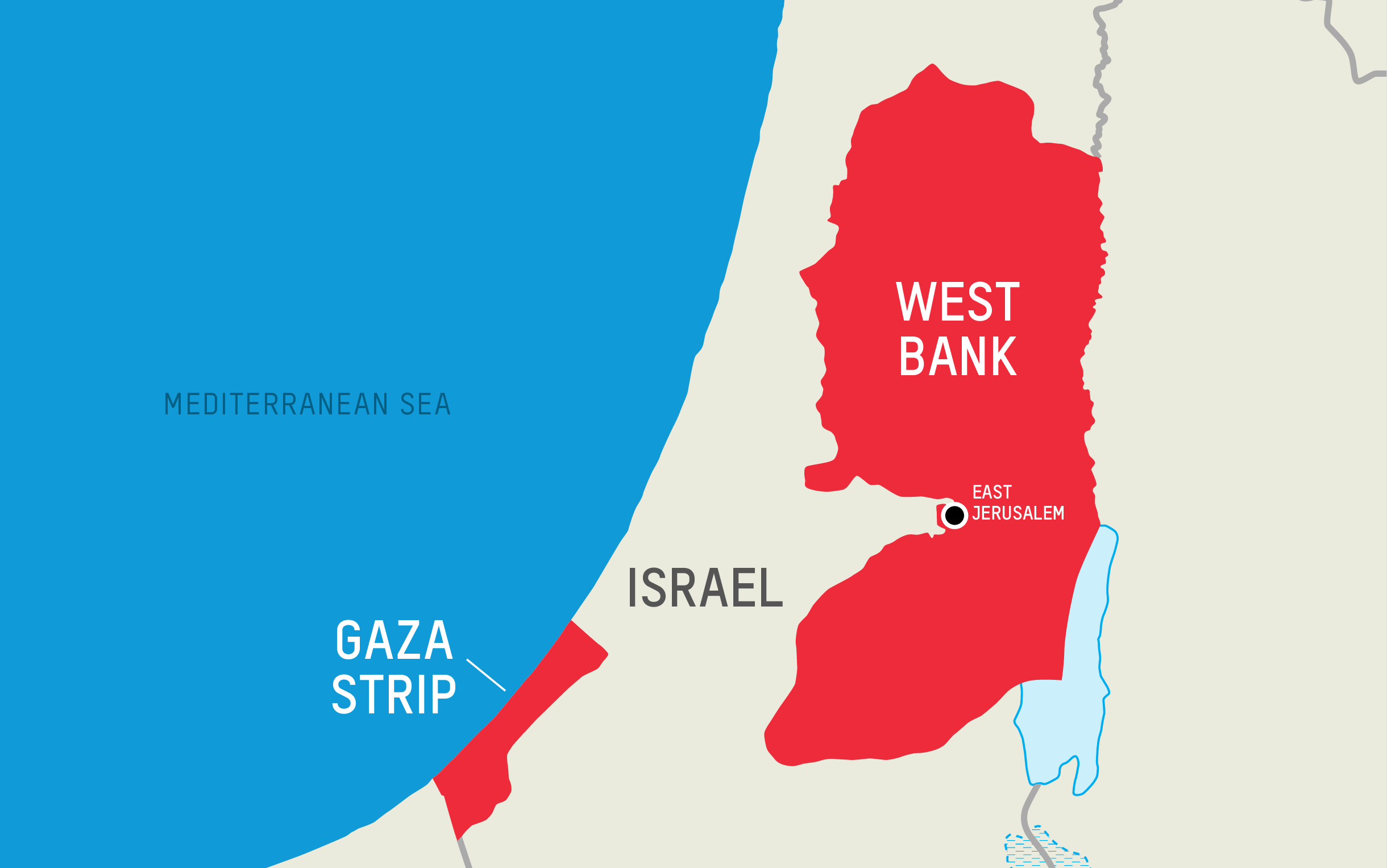
The West Bank is an area of about 2,185 square miles (nearly the same size as Delaware) lying just west of the Jordan river. It is part of the territory of Palestine established after World War II and subsequently controlled by Jordan following the 1948 Arab-Israeli war. Israel captured the West Bank in the 1967 Six-Day War and has held it under military occupation since then.
Who controls the West Bank?
The 1993 Oslo Accords established three areas of the West Bank:
- Area A: Under Palestinian Authority control (18%).
- Area B: Under joint Israeli/Palestinian Authority control; the PA oversees civil (education, health) governance and Israel controls security (22%).
- Area C: Israel maintains civil and military control over the largest (60%) part of the West Bank.
Is Jerusalem in the West Bank?
Jerusalem is a divided city; East Jerusalem is considered part of the West Bank. It was captured by Israel in the 1967 Six-Day War and annexed by Israel in 1980. Most countries do not recognize this annexation.
What is the population of the West Bank?
The West Bank is home for roughly 3.4 million Palestinians, and an additional estimated 750,000 Israelis living in illegal settlements.
What is the difference between Gaza and the West Bank?
Gaza and the West Bank, along with East Jerusalem, comprise the occupied Palestinian territory. Geographically, the narrow Gaza Strip lies along the Mediterranean coast; the West Bank is a larger area along the Jordan river bordering Jordan and Israel, about 30 miles east of Gaza.
Despite attempts to divide the territory and people from each other with road and border crossing closures, barriers, and other restrictions on the movement of people between communities by Israel, Gaza and the West Bank are one Palestinian territory. Many Palestinians have family members in both Gaza and the West Bank.
How do settlements impact Palestinian human rights in the West Bank?
The construction of Israeli settlements in the West Bank is accompanied by the displacement of Palestinian people from their homes and lands, the destruction of their homes, schools, and other buildings, widespread violence, and restrictions on their movements. These are all illegal under the Fourth Geneva Convention and violate the basic rights of Palestinian people.
The United Nations links settlement expansion with the increasing violence in the West Bank. A recent report on violence since the beginning of 2026 says 79 Palestinians (including 19 children) have been killed, and about 1,870 injured by Israeli forces or settlers. “Of these, 23 Palestinians were killed and over 1,040 injured in the context of settler attacks.”
In August 2026 the UN Special Coordinator for the Middle East Peace Process Dr. Ramiz Alakbarov made a statement to the UN Security Council, saying that “Israel, as the occupying power, must ensure that the civilian population is protected, and perpetrators are held to account.”
How does water accessibility affect human rights in the West Bank?
Israeli settlements in the West Bank have taken control of water resources in the West Bank, creating what Oxfam partner B’tselem describes as a “chronic water crisis” for Palestinians. Lack of water for growing crops and raising livestock is another factor depriving Palestinians of their basic rights to a sustainable livelihood.
As a result, B’tselem estimates that while 100% of Israelis in the West Bank have running water, only 36% of Palestinians have access to running water in their homes all year round.
A 2023 report by B’tselem says depriving Palestinians their right to water is “an intentional outcome of Israel’s deliberately discriminatory policy, which views water as another means for controlling the Palestinian population in the West Bank.”
Why are there refugee camps in the West Bank?
Numerous conflicts (including wars in 1948 and 1967) have displaced Palestinian people from what is now Israel, and from other parts of the occupied Palestinian territory into the West Bank.
As a result, there are now 934,000 refugees in the occupied West Bank, according to the UN. About 25 percent of them are living in 19 refugee camps.
Israeli government support for illegal Israeli settlements, and violent conflicts between settlers and Palestinians, continue to further displace people in the West Bank. One hundred and twenty-three Palestinian communities have experienced full or partial displacement since January 2023, with 47 of them completely displaced, according to UN reports.
What is Oxfam doing in the West Bank?
Oxfam has been working in Palestine/occupied Palestinian territory since the 1950s. Together with partner organizations we work with the most vulnerable communities on improving livelihoods and advancing the rights of communities living under illegal occupation.
To help farming communities better manage scarce West Bank water resources, Oxfam funded a project by the Economic and Social Development Center of Palestine to build and repair 22 water storage pools serving farms in the Jordan River valley. This effort improved access to water for 128 family farms.
What you can do to help people in the occupied Palestinian territory?
Make a donation
Your contribution to Oxfam will help support organizations in the occupied Palestinian territory providing humanitarian assistance to survivors of conflict. These programs provide water, decent sanitation (latrines, and repairs to sanitation systems), and hygiene items such as soap that will help families keep clean and avoid water-borne diseases. Oxfam partners are also helping farmers in Gaza and the West Bank with repairs to irrigation systems, and the seeds, tools, fertilizer, and other inputs they need to produce their own food and care for their livestock. Oxfam also works with women’s rights organizations that help survivors of violence get the services they need, and start small businesses.