Escalating conflict in the Middle East is again creating a humanitarian crisis in Lebanon.
As conflict across the Middle East expands, civilians are again being killed, injured, and displaced following air strikes by the Israeli military in southern areas of Lebanon, the Bekaa Valley, and areas near Beirut.
Hundreds of thousands of people were displaced from their homes in early March. Scores of towns have been evacuated. People are seeking humanitarian assistance in communal shelters, and need food, water, proper sanitation systems, and medicine. Hundreds of thousands of Lebanese civilians and Syrian refugees who were living long-term in Lebanon have been displaced to Syria in spite of the difficult conditions there.
Lebanon has faced crisis after crisis in recent years, including an influx of refugees from the Syrian civil war, the Beirut port blast in 2020, a cholera outbreak in 2022, and an ongoing economic crisis that has resulted in skyrocketing poverty and the collapse of essential public services. Armed conflict linked to the siege of nearby Gaza saw Israeli air strikes across Lebanon and a ground invasion by Israeli forces in 2024. Lebanese civilians struggling to recover from that conflict are again being severely affected in early March 2026.
Here’s what’s happening, and what you can do to help.

What is the conflict in Lebanon about?
Following air strikes against Iran by the United States and Israel, Lebanese armed groups and Israeli military forces have exchanged fire across Lebanon’s southern border. People in southern Lebanon and in the Bekaa and Baalbek el-Hermel governorates are most affected. The Israeli military forced Lebanese people to evacuate 53 towns, and by March 5th there were already more than 100,000 people in collective shelters.
This is a continuation of a conflict that started in October of 2023, when Lebanese and Palestinian armed groups exchanged cross-border fire with Israel, resulting in the displacement of people on both sides of the border. The attacks on communities in Israel led to attacks by Israel in Lebanon using pagers and walkie talkies before executing a series of aerial offensives in 2024 that caused the deadliest fighting in Lebanon since the 1975-1990 civil war.
What is the humanitarian situation in Lebanon right now?
On the first five days of fighting, 102 people were killed and 638 were injured. By the 6th of March, there were more than 100,000 people in more than 400 collective shelters.
Oxfam staff are reporting “massive waves of displacement” from areas affected by strikes, in southern Lebanon and in the capital Beirut’s southern suburbs.
Displaced people in Lebanon need food, water and sanitation support, medical care, and shelter in an area safe from bombardment.
Syrian refugees as well as migrants and migrant workers are at risk of exclusion from shelters and emergency support. These displaced people have already been facing the ramifications of Lebanon’s economic crisis and recurrent Israeli strikes, with limited access to basic needs.
What is Oxfam doing to help the people of Lebanon?
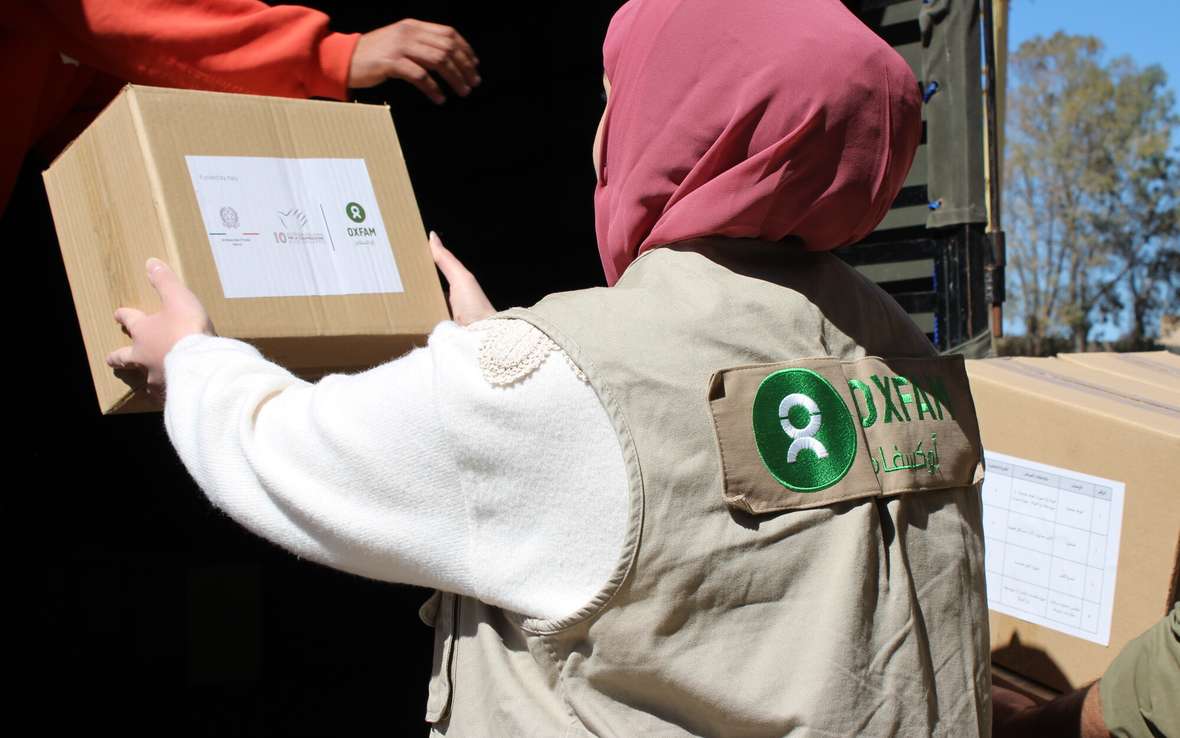
Together with people like you, Oxfam is urgently raising funds to support people with emergency cash, food, clean water, sanitation services, and hygiene and menstrual kits.
- Oxfam is working with the government and local partners South Lebanon, North Lebanon, Bekaa, Beirut, and Mount Lebanon to assess the needs of displaced people.
- Oxfam and partners are already distributing bedding (mattresses, blankets, pillows), bottled water, hygiene kits and menstrual hygiene kits in South Lebanon, Mount Lebanon, and Bekaa.
- After supplying bottled water to people in shelters in early March, Oxfam intends to shift to providing water by truck to 250,000 people over the next six months. We are already delivering eight cubit meters of water per day to four collective shelters in Tyre city.
- Oxfam staff and partners are repairing water tanks and other water and sanitation infrastructure in collective shelters.
Oxfam has worked with partners and local organizations in Lebanon since 1993. Today we work with 30 partner organizations in North Lebanon, the Bekaa Valley, and Beirut. We also work with Syrian and Palestinian refugees in Lebanon as well as Lebanese communities.
The partner organizations Oxfam works with in Lebanon deeply understand the needs of the communities where they work. This includes serving people with disabilities, refugees, and migrant workers.
What needs to happen now in Lebanon and the wider region?
Oxfam urgently calls on all parties to the conflict across the Middle East, and international leaders of the global community to
- Immediately end the violence, and mobilize every effort to prevent the destruction of lives and livelihoods of millions of civilians in Lebanon and across the Middle East.
- End all breaches of international law.
- Work towards de-escalation of hostilities and a lasting and just peace for all people in Gaza, Lebanon, and the wider region.
What you can do to help Lebanon
- Donate to our Middle East Crisis Appeal