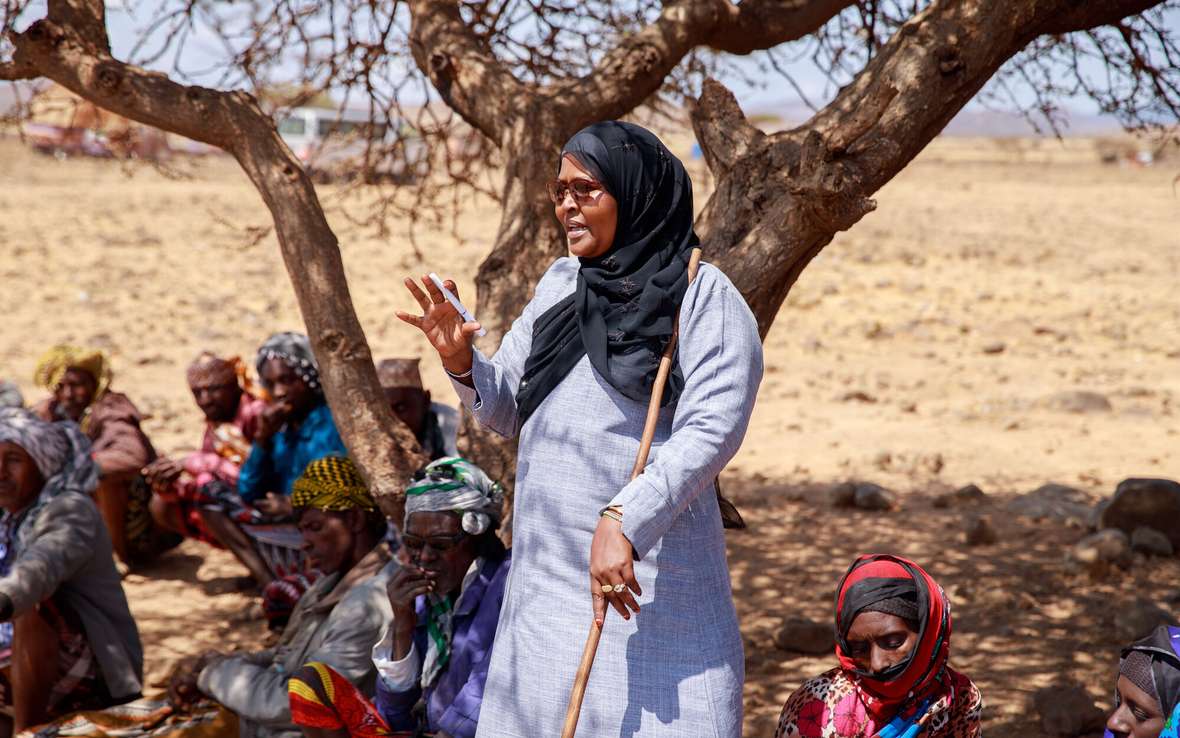
A visionary woman leader in northern Kenya pushes for equality and opportunities.
Darare Gonche Saldesa learned at a young age to point out the wrongs she could see in her society in Kenya’s Marsabit county.
When she was 21, she found herself between a child and a forced marriage: In a neighboring village, an 8-year-old girl had been promised to a man by her father. She was only in the fourth grade.
When Darare heard about it, she refused to stay silent. However, her attempts to reason with the girl’s father fell on deaf ears, so she took action. Darare went first to the girl’s school to report the incident to the administration, then to the police, and finally sought the help of lawyers who drafted letters of protest.
With this institutional backing, she returned to confront the father. He was arrested, and under pressure, agreed to release his daughter from the marriage. The girl returned to school, and Darare went on to a career defending the rights of women and girls.
“Standing up for the rights of the marginalized is my biggest passion,” Darare says smiling, with proud confidence. Inspired by Mother Teresa’s example of selfless service, she has made it her mission to stand with vulnerable members of the community.
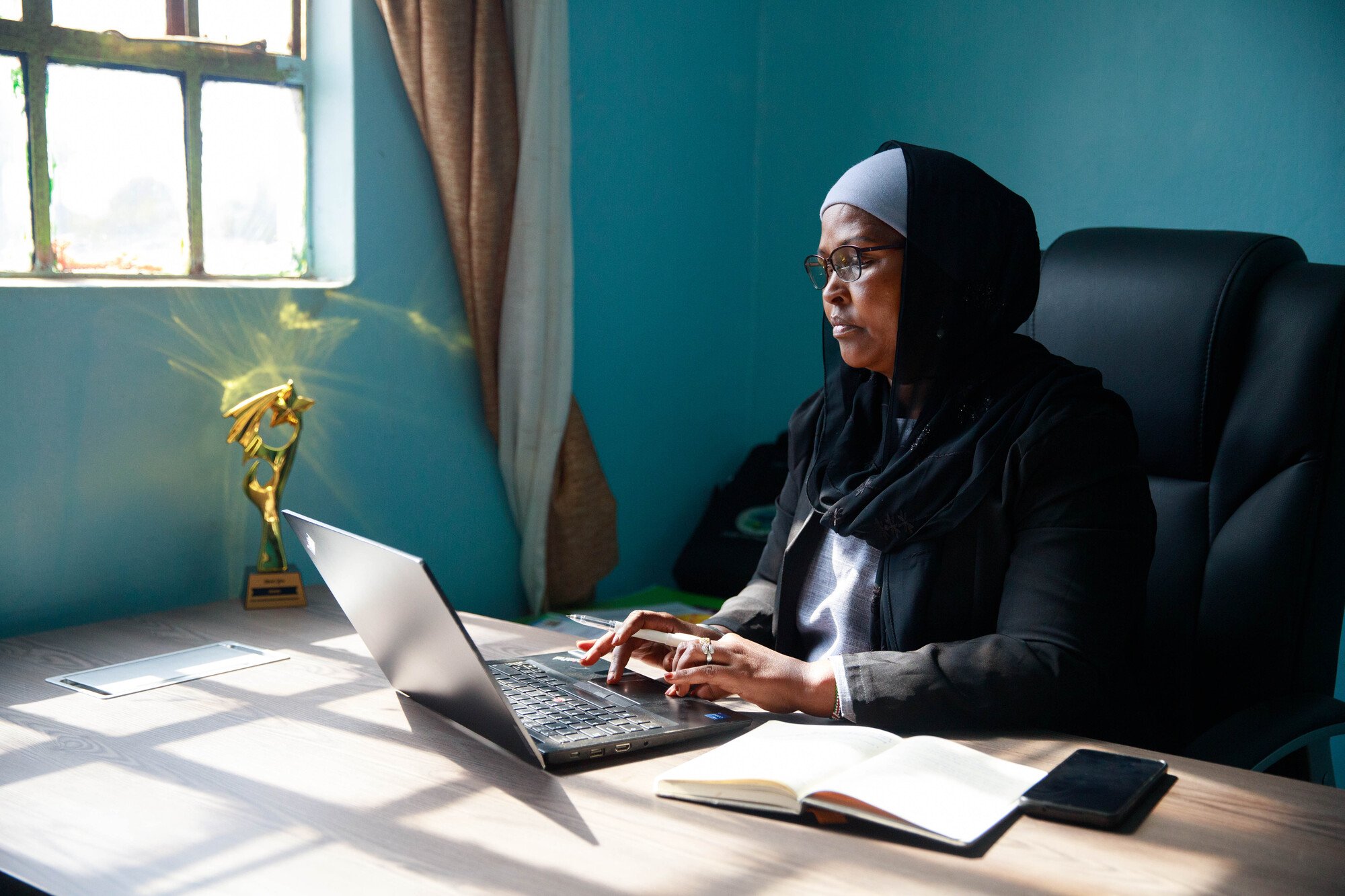
Delivering for her community
Marsabit, Kenya’s second largest county, stretches wide with rugged hills, dusty plains, and scattered villages that seem to stand against the odds of survival. For many families, raising livestock has been the backbone of their livelihoods, despite experiencing months-long droughts, and flash floods.
The communities in Marsabit are largely led by men, often confining women to the margins of decision making – leaving their voices absent from spaces where community choices are made. This system of patriarchy has left women with few opportunities for education, leadership, and economic independence. Respect for women’s rights is still a fragile pursuit.
Darare grew up in this male-dominated society, but has always found it hard to keep quiet in the face of unfairness. Now 55-years-old, and married with six children, Darare says she was concerned about the rights of women even before she knew they were called human rights. Her father’s decision to send Darare to school gave her the tools to imagine a different future for herself and the women in her community. She trained as a teacher, then as a paralegal and eventually, became a community leader.
For 13 years, Darare was a social development worker. In that role, she saw firsthand how women’s concerns were consistently overlooked, often side-lined in favor of broader community issues. Determined to change the status of women in Marsabit, in November 2013 Darare founded Indigenous Rights and Resource Management Organization (IREMO). Her goal was clear: to confront social injustices rooted in traditional laws and practices and to create opportunities for women to not only learn about their rights, but to also strengthen their livelihoods.
IREMO has partnered with a range of human-centered organizations to expand its reach over the years. Together, they have trained women on their rights, while also opening avenues for economic independence. Between 2021 and 2025, Oxfam worked with IREMO to provide small grants to help more than 6,000 women in 55 groups in areas in Marsabit such as Maikona, Kargi, and Turbi to re-stock their goat herds, and launch businesses (opening small stores) to diversify their income sources.
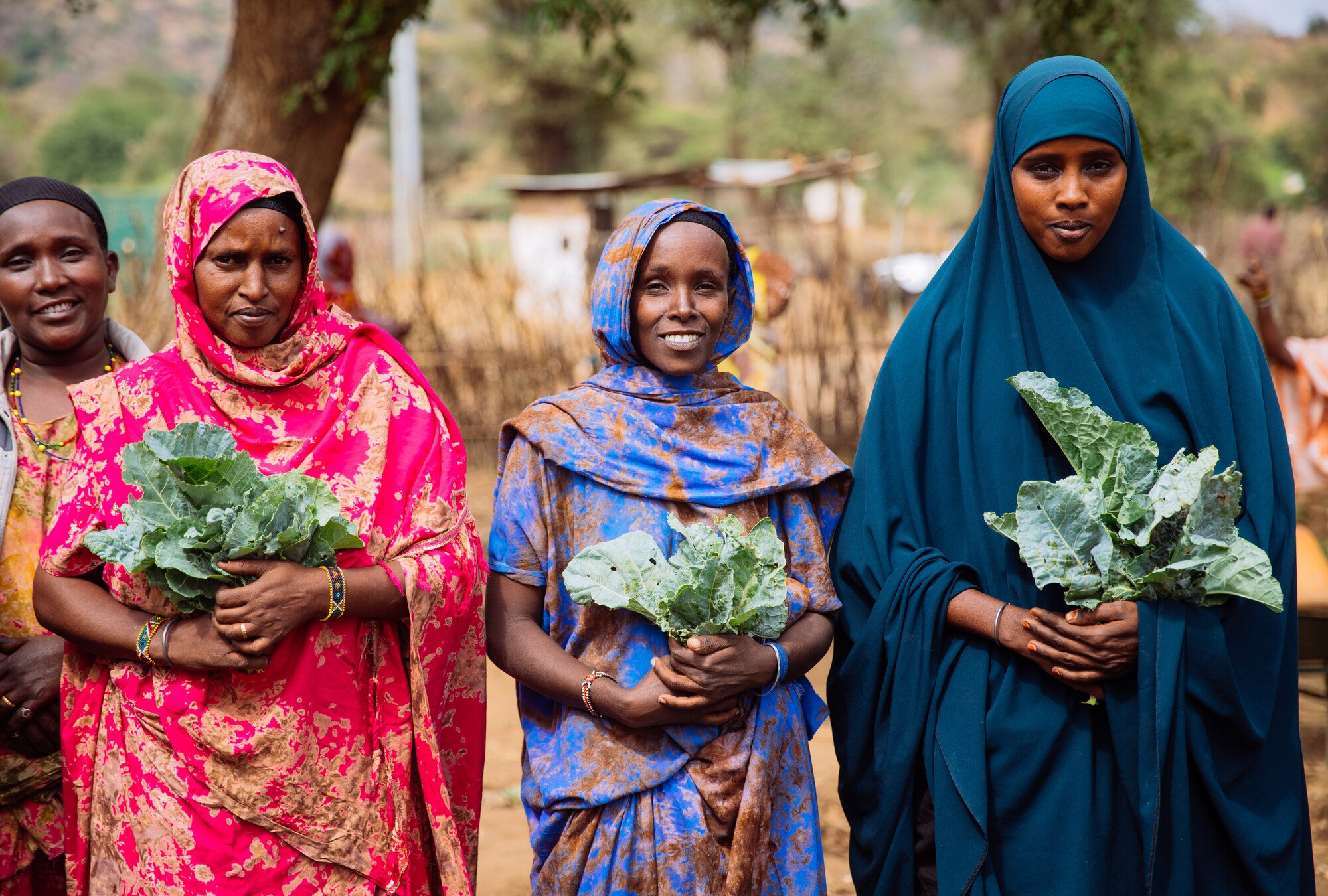
Undoing harmful cultural practices
As a grassroots leader, Darare’s courage to stand up for other women has not only inspired a change in mindset, but is also undoing decades of harmful cultural practices affecting women in Marsabit County. Her advocacy has resonated with other women so much so that they too are finding their voices in the community, like Tune, a 67-year-old traditional birth attendant in Horonder village.
Over decades of helping women through labor, Tune saw first-hand the deep harm caused by Female Genital Mutilation (FGM). “I stopped vouching for FGM because what we were taught by IREMO is true – it hurts women,” she says firmly. “The circumcised girls experience more pain during childbirth and often have to birth through C-section.”
“The first thing I learnt from IREMO was about our rights and the rights of our children and I told our people about it,” says Ilado Yattani. "I help shape the character of young girls, whether educated or not, ensuring that they all grow up with good values. Child marriages are no longer rampant, and the practice of FGM in our village has stopped." Recently selected by fellow women as chairlady of the Hargesa Women’s Group in Horonder village where she has lived for the past 10 years, Ilado has witnessed a shift. She notes that women are more involved in community decision making than in the past – a change she believes is not only positive, but transformative for the entire community.
Running for political office
In 2017, Darare made the bold decision to vie for the position of Member of County Assembly, stepping down as the Executive Director of her organization to pursue political leadership. Even though she did not win this election, she currently serves as the Partnership and Technical Advisor and is a nominated Member of the Marsabit County Assembly in the department of gender, where she continues to advance the rights and voices of women.
While the empowerment of women remains at the heart of her work, Darare is equally committed to ensuring that no member of the community is left behind – a vision of leadership rooted in compassion, justice, and inclusivity.
“In many villages, girls who gave birth outside of marriage were once banished from their communities, forced to live in isolation and shame in places they did not even understand the language.” says Darare. She started advocating for their inclusion and dignity. As a result, these young women have come together to form support groups. Today, there are at least seven groups with 30 members across the areas where IREMO operates – reclaiming their place in society and finding new paths for themselves. “Some of the girls have opened businesses in the same villages that banished them, and people buy from them. Seeing this interaction makes me happy because it means they are being accepted,” notes Darare.
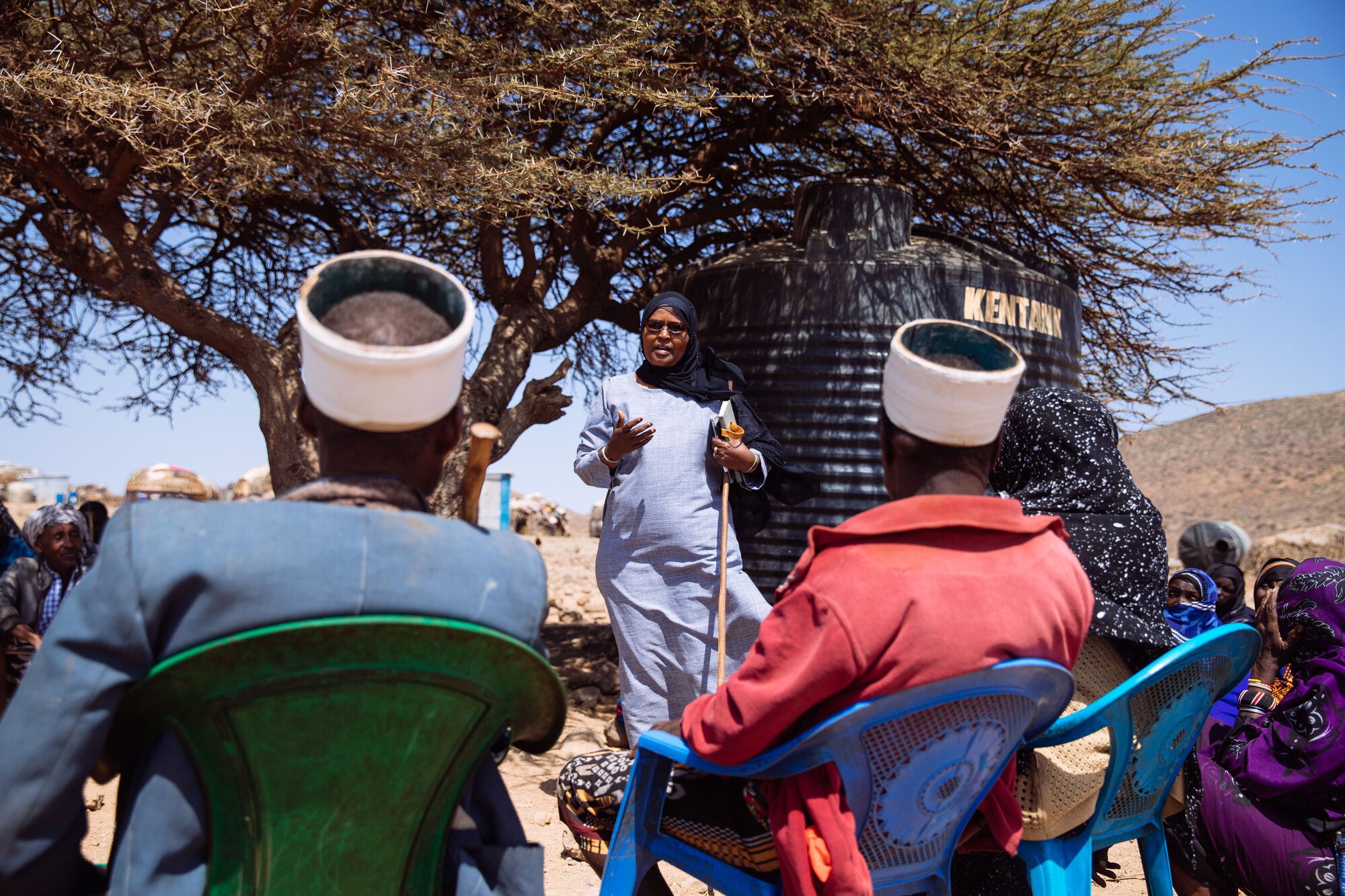
Transforming lives and communities
Darare is clear about the cost and rewards of leadership. Her work, and the lives changed because of it, are proof that when women lead from the grassroots, entire futures are rewritten.
One case in point is the young girl who avoided an early marriage 34 years ago. “I supported the girl through college where she went to train as a teacher”, says Darare proudly. Today, she is an early childhood development teacher in her village, and like Darare, has become a vocal advocate for the rights of girls and women.
The impact of women’s leadership is visible across Marsabit – women are transforming not just their own lives, but the destiny of their communities.
“As a woman, I took the risk to become a leader, and I do not regret it,” Darare concludes.