Community activists and state policymakers are stepping up where the federal government has failed to improve wages and worker well-being.
When you look at how the federal government has been championing corporations and billionaire CEOs, it can feel like a losing battle for workers’ rights. Even though things are looking grim on the federal level, meaningful progress is happening at state, city, and community levels.
We know this because we see it in the results of the work of Oxfam’s Resilient Communities and Partnership Program, built around a partnership model that centers community-based solutions and leadership. Through these local networks, we are advancing economic justice at the grassroots, local, and state-level in Mississippi, North Carolina, Georgia, and Louisiana. These states are notorious for prioritizing corporate profits over worker wellbeing—every year Oxfam releases an index of the best and worst states to work and every year, Mississippi, North Carolina, Georgia, and Louisiana are ranked at or near the bottom of the list.
Here are some the wins we’re celebrating with our local partners:
Accessing paid parental leave
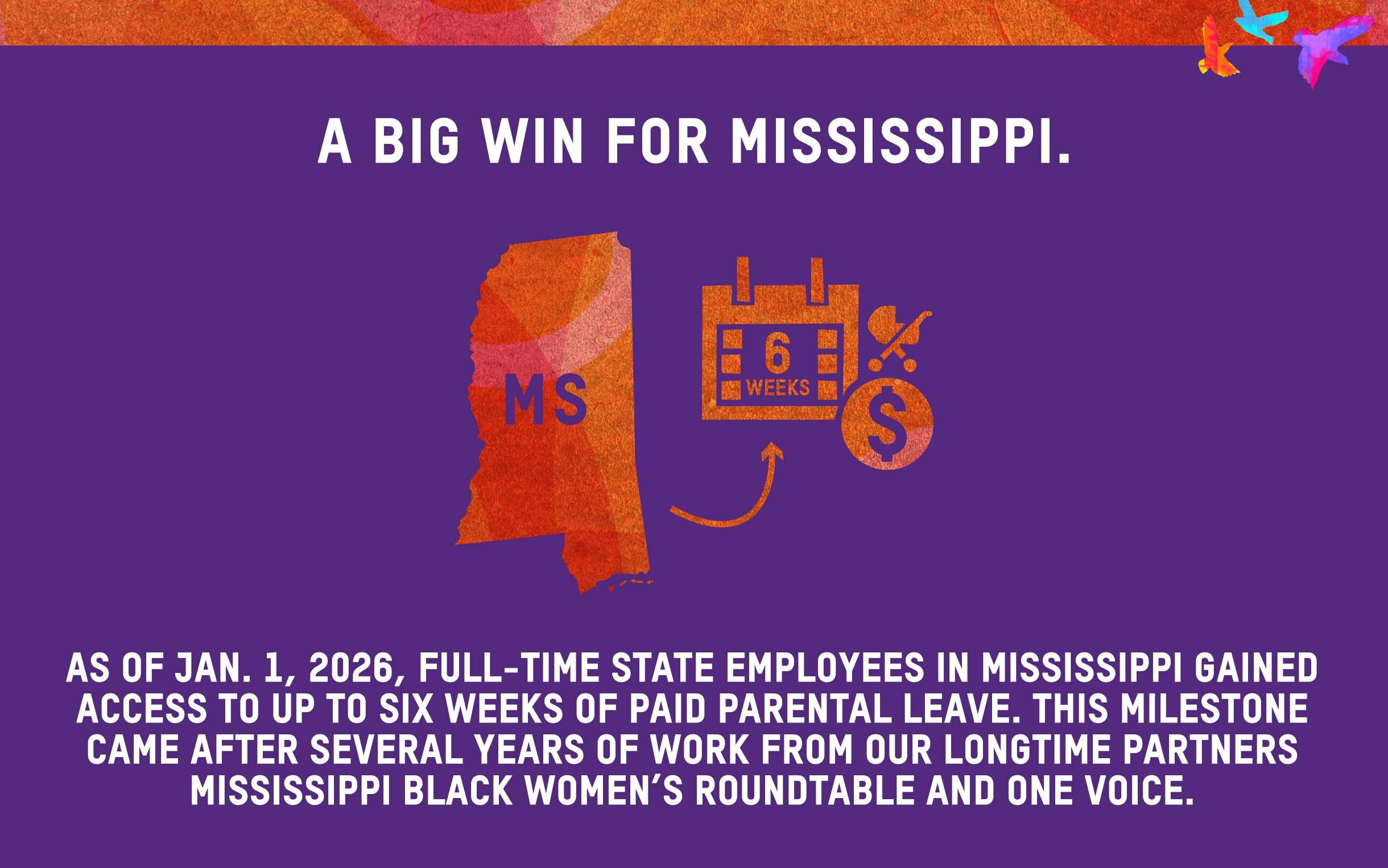
As of Jan. 1, 2026, full-time state employees in Mississippi gained access to up to six weeks of paid parental leave. This milestone came after several years of work from our longtime partners Mississippi Black Women’s Roundtable and One Voice.
Expanding the New Orleans Workers’ Bill of Rights
Following years of advocacy on the part of Oxfam partners Step Up Louisiana, Workplace Justice Project, Demos, Georgetown University, Loyola University, and The Data Center, the Workers’ Bill of Rights was passed in New Orleans in 2024. While this was a big accomplishment, the work did not end there. Advocates are now focused on incrementally strengthening the bill to expand protections. In October 2025, New Orleans voted to expand the bill of rights to include the Fair Chance Amendment, which extends protections to workers with arrest records.
Advocating for affordability
Louisiana Progress, Invest in Louisiana, and The Madina Group partnered with legislators to launch a 2026 Affordability Agenda. The coalition helped develop more than 15 bills. Seven of these bills passed in June’s legislative session, including a “click-to-cancel” bill, which requires transparent and fair subscription cancellation processes and a bill that limits the reporting of criminal justice debt to credit agencies, to help prevent formerly incarcerated people from being pushed deeper into financial instability. Louisiana Progress also supported healthcare affordability measures to increase transparency around prescription drug pricing and distribution and cap interest on medical debt from medically necessary care.
Strengthening paid leave
In Georgia, our partners are advancing a policy advocacy strategy centered on expanding paid leave as a cornerstone for strengthening the economy and improving conditions for workers, families, and communities.
Fighting “right-to-work” Laws
In North Carolina, workers and advocates successfully stopped a harmful proposal— deceptively called "Right to Work"—from advancing to voters. “Right to work” laws make it illegal for workers to be compelled to pay union dues as a condition of employment. While these laws claim to protect workers, they discourage workers from collectively bargaining for better wages, benefits, and working conditions. The bill passed the North Carolina Senate, but did not advance out of the House Rules Committee.
This outcome followed tireless advocacy from Oxfam partners, including the North Carolina State AFL-CIO, and other worker-justice advocates across the state. It is a powerful example of how organized workers and local advocates can defend the right to come together and collectively bargain for better wages, benefits, and working conditions.
Here are some recent strides in the fight for workers’ rights that we should celebrate.
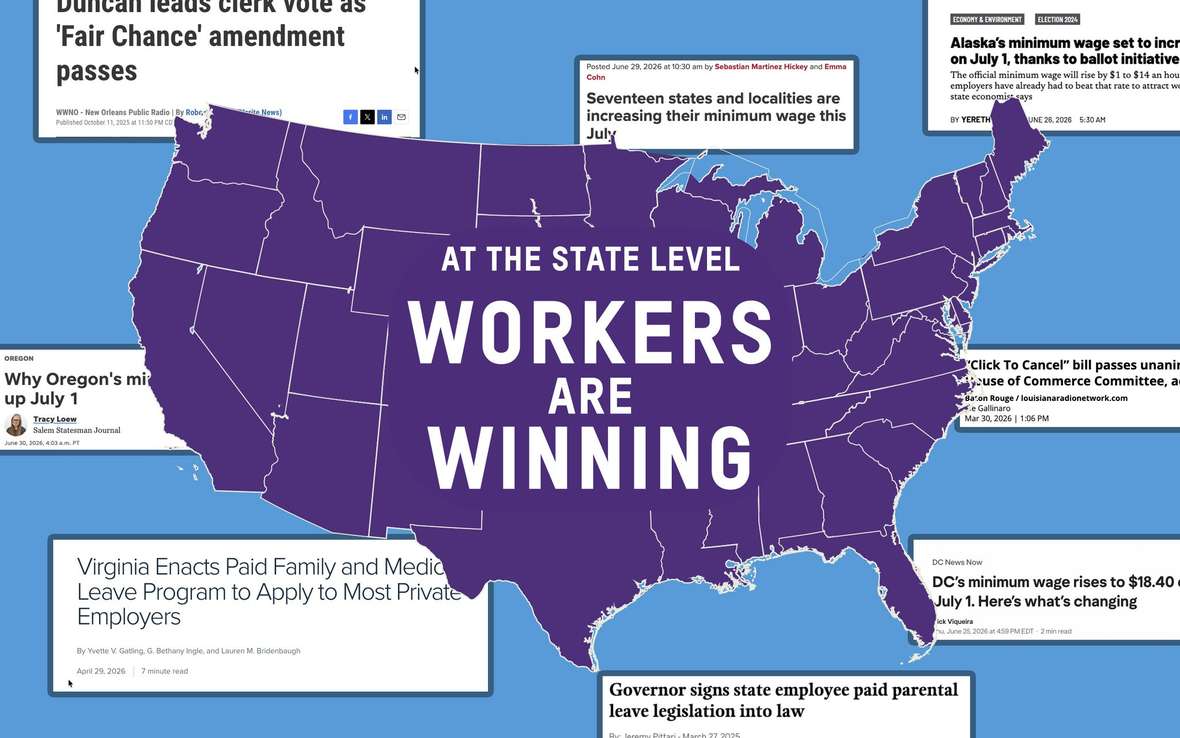
- Just in this month (July), 17 states and localities, including Washington, D.C., Alaska, and Oregon will raise their minimum wage.
- Virginia became the first state in the South to enact statewide paid family and medical leave.
- Georgia passed a law to eliminate the subminimum wage for workers with disabilities by 2027.
- Maine expanded minimum wage protections to farm workers.
- Colorado became the first state to provide paid leave for parents and caregivers of babies in the NICU.
Each of these wins is another step forward in the movement for economic justice and equality. These improvements serve as models for reforms that can be implemented at the federal level to help everyone thrive, not just corporations and the ultra-rich.
At Oxfam, we believe that all workers deserve strong wages, robust worker protections, and full rights to organize. In September, we will release our 2026 Best States to Work Index assessing labor policies across all 50 states, Washington, D.C., and Puerto Rico. We’ll look at where states are helping workers thrive, and where workers are left struggling to make ends meet. These reports are a resource for state policymakers and labor-rights advocates, and in recent years we've added recommendations for federal action. This year we'll focus on how state-level innovation can guide federal policy reform.
Stay tuned!