

The world’s first trillionaire used a rigged tax code, government support, and unchecked political influence to extract and protect his own wealth.
Elon Musk is now the world’s first trillionaire. After SpaceX launched its initial public offering (IPO), the net worth of the world’s richest man has finally crossed over a previously unthinkable threshold.
But how exactly did he make his money? Musk’s fortune is not simply the result of one man’s entrepreneurship and hard work.
In reality, its foundation rests on a U.S. tax code rigged in favor of the ultra-wealthy, a financial system that socialized the risks of his ventures while privatizing their long-term gains, and political access.
“Elon Musk’s rise to trillionaire status marks a new pinnacle of oligarchy and is a dark day for democracy,” said Nabil Ahmed, senior director of Economic Justice at Oxfam America.
Oxfam, the global organization that fights inequality to end poverty and injustice, has warned about the rise in billionaire wealth for more than a decade. So we’re going to paint a picture of some of the ways Elon Musk made his money.
How much is Elon Musk worth?
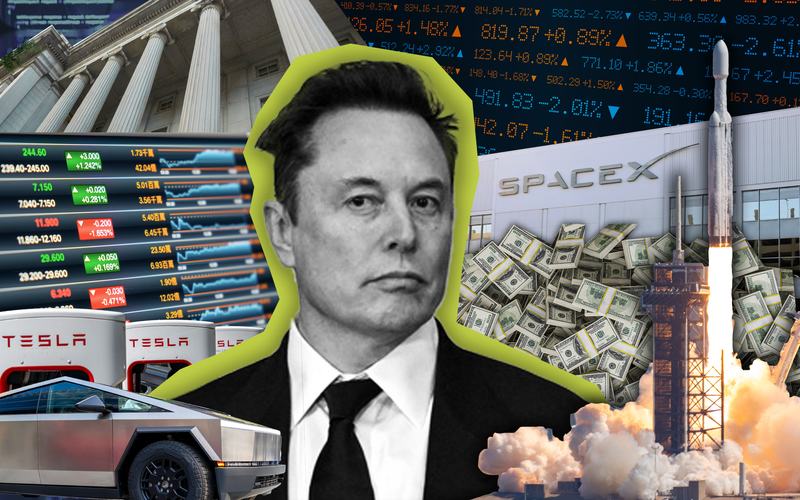
According to Forbes, Elon Musk has become the world’s first trillionaire. His net worth fluctuates based on the market conditions that affect the financial performance of his businesses in which he owns significant amounts of stock. On June 12th, his net worth crossed the $1 trillion mark.
To put his trillionaire status in perspective, Musk now holds more wealth than the bottom 46 percent of the world population, or 3.8 billion people.
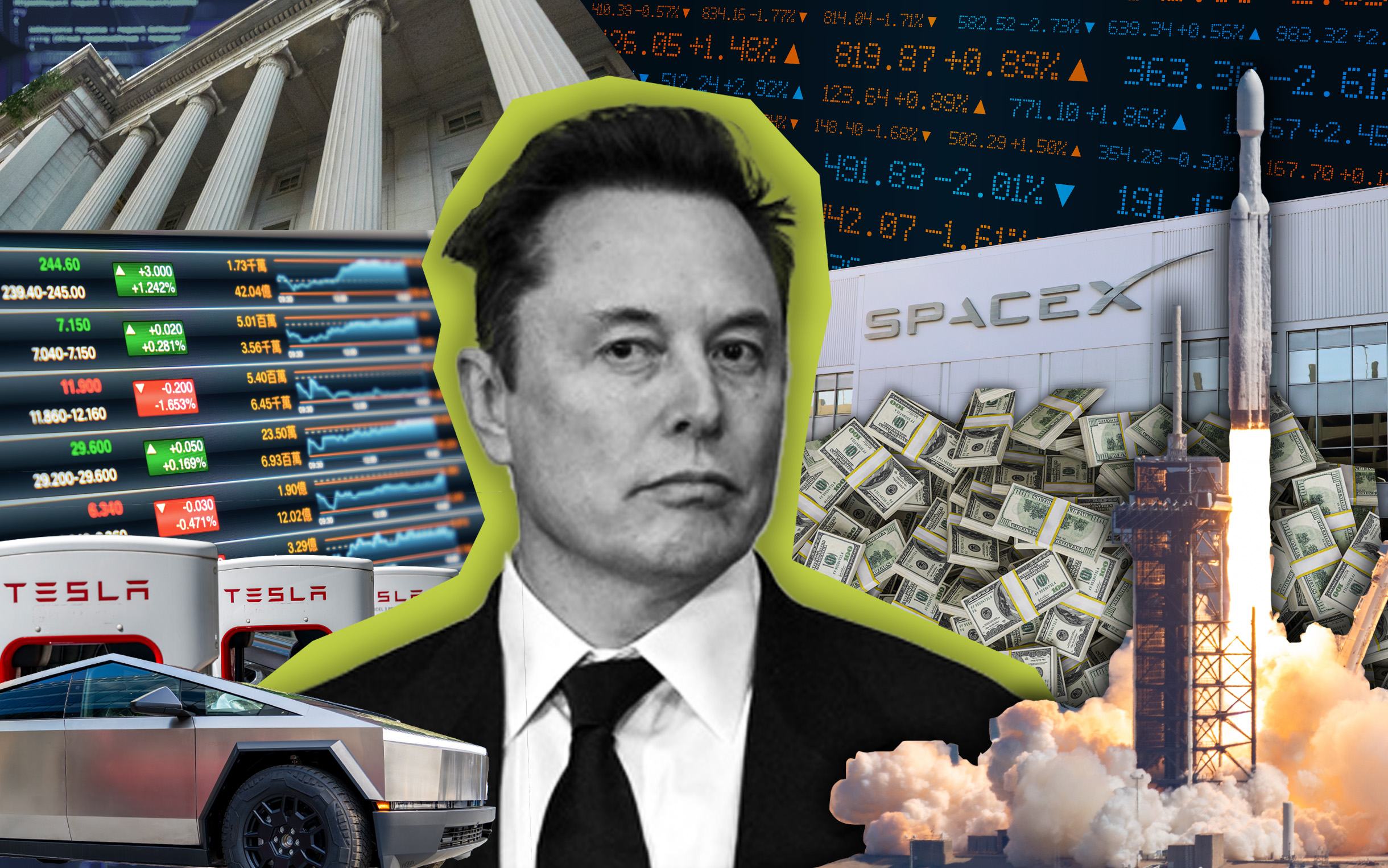
Much of his wealth comes from stock holdings across his major business ventures, including electric vehicle manufacturer Tesla, aerospace company SpaceX (which includes satellite internet service Starlink and artificial intelligence platform xAI), Neuralink Corp., and the Boring Company.
How did Elon Musk get rich?
Elon Musk did not become a trillionaire simply by “inventing things.” He exploited a tax system tilted toward the ultra-wealthy, relied on vast public subsidies while squeezing workers, and concentrated his wealth and power across a variety of companies and platforms that he has used to exert political influence and silence free speech.
Let’s dive into each piece of this complex puzzle:
1. Musk has avoided taxation of his wealth
Early in his career, Elon Musk founded and sold businesses that made him a multi-millionaire. He reinvested much of these windfalls into new ventures, giving him large amounts of stock in these new companies. By utilizing loopholes and material advantages for the ultra-wealthy in the U.S. tax code, he was able to use these assets to grow his fortune while paying very little in taxes.
- Musk owns a lot of stock, the gains on which are not taxed until sold. That’s why between 2014 and 2018, Musk’s fortune grew by about $13.9 billion, while he paid just $455 million in federal income tax—a “true tax rate” just over 3 percent—because most of his gains were in unsold Tesla and SpaceX stock.
- Musk borrows a lot of money against his stocks. Instead of selling shares and triggering capital gains tax, Musk has repeatedly borrowed billions against his Tesla stock, using asset‑backed loans (think mortgage-backed securities that brought down the global financial system in 2009) to fund spending and investments while loan proceeds remain untaxed under current U.S. rules.
- Musk’s companies also pay little in tax. According to a recent Oxfam analysis drawing upon data from the Institute for Taxation and Economic Policy, Tesla’s most recent annual financial report in the U.S. shows an income of $4.8 billion in 2025, but $0 paid in federal income tax. Over the last three years, Tesla paid a U.S. federal tax rate of just 0.47 percent— a shocking 45 times less than the statutory corporate tax rate of 21 percent.
“Much of Elon Musk's personal wealth is the direct result of a broken system rigged by corporate greed, exploitation, and extraction,” said Irit Tamir, Oxfam America’s senior director of Corporate Accountability and Worker Justice.
2. Musk benefited from massive public resources to fund his most successful ventures—but the rewards go to the few at the expense of workers
Elon Musk would not be a trillionaire if not for the U.S. government. Some of his work on electric vehicles, renewable batteries, and space exploration—the touchstone for his signature ventures—relied on massive public incentives, including subsidies, grants, tax credits, and government contracts. It’s why we say clearly: Musk is a government-backed trillionaire.
Together, these programs mean taxpayers absorbed a significant share of the early risk and demand creation for Musk’s businesses, while the long‑term gains—rising share prices, stock‑option windfalls, and the ability to borrow against a growing fortune—have accrued overwhelmingly to him and a small circle of investors.
- There is no SpaceX without NASA. SpaceX’s rise from startup to a dominant rocket producer relied on multi‑billion‑dollar contracts and grants from NASA and the U.S. Department of Defense. Both provided guaranteed revenue streams, making his early investments in rockets and vital infrastructure less risky.
- There is no Tesla without electric vehicle (EV) and clean‑energy incentives. Tesla has benefited from federal and state EV tax credits, regulatory credits, and clean‑energy subsidies, all of which made its products more affordable and its balance sheet stronger.
- Musk’s companies have undermined workers’ rights. Though both Tesla and SpaceX give workers stock options, Tesla pays less than the Big Three automakers and both do not have collective bargaining agreements with their workers. Tesla has been the target of discrimination cases, and SpaceX has sued the National Labor Relations Board—challenging its authority in cases alleging unfair labor practices such as unlawful retaliation.
In total, according to a Washington Post analysis drawing on Good Jobs First data, over roughly two decades Musk’s companies have received at least $38 billion in government contracts, loans, subsidies and tax credits. This government support often came at “critical moments” that helped them survive or scale.
3. Musk has used his extreme wealth to exert unchecked economic and political power
Like many an oligarch throughout history, Musk has used his extreme wealth and power to exert outsized influence over politics and society. His large ownership stakes in Tesla, SpaceX (including xAI and Starlink), and the social media platform X have given him unique abilities to exploit and extract wealth. His massive political donations and influence within the Trump administration have also given him opportunities to shape policy in ways that could benefit his bottom line.
- Musk exercises extreme control without traditional accountability. These large stakes, combined with his leadership positions, give Musk effective control over strategy, board dynamics, and major transactions across all of his companies. Many board members have mixed friendship and business for years with Musk, raising questions about their role in effective corporate governance. All of this concentrates extreme power held by one person and amplifies his overall wealth.
- Musk was in a position to profit from his front row-seat at the White House. According to Public Citizen, over 70 percent of the agencies targeted by the Department of Government Efficiency under Musk’s leadership presented conflicts of interests for Musk's businesses. Additional reporting has revealed that his tenure coincided with lucrative contracts being steered towards his companies, including SpaceX. That is of course after Musk spent over $290 million in contributions to Republican federal candidates, parties, political action committees, and other organizations during the 2024 elections.
In reality, Musk’s growing wealth has made him a troubling agenda-setter: Trying to influence the outcome of U.S. elections, to decide what people do or do not see on social media, and to keep workers from asserting collective bargaining rights.
CONCLUSION
Elon Musk’s fortune was not inevitable. In fact, his trillionaire status represents a policy failure: the predictable result of unfair tax rules, transforming public investment into private gain at the expense of workers, and poor corporate governance standards that together systematically channel wealth and power upward.
At a time when one in four people around the world don’t have enough to eat, Elon Musk is in a new league of his own.
“A trillion dollars in the hands of one man is incompatible not only with an affordable economy, but also with a healthy democracy,” continued Ahmed, senior director of Economic Justice at Oxfam America.
By not paying his fair share, socializing risk to the public for his ventures while privatizing the rewards, and transforming concentrated wealth into unchecked economic and political power, Musk’s money is an indictment of the rules and norms that have subverted the “American Dream.”