 Story
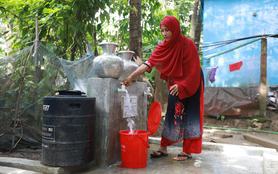
Rohingya refugees in Bangladesh: From survival to self-reliance
As the Rohingya crisis enters its 10th year, refugees in Cox’s Bazar are growing food, learning trades, and earning income. But funding cuts threaten that progress.


Multiply your support in Gaza, Somalia, and 70+ countries.
Search model: Articles | Story, Articles | Immersive story, Articles | News update, Articles | Legacy story, Articles | Legacy news update, Articles | Legacy immersive, Articles | Legacy policy update, Blog | blog post, Blog | legacy blog post
Search root:
Author: None
Topics:
Policy topics:
Locations: location/Bangladesh
Tags:
Use data-feed: /datafeed/?m=11&m=7&m=10&m=79&m=78&m=77&m=87&m=118&m=119&perpage=3&location=Bangladesh
Story
As the Rohingya crisis enters its 10th year, refugees in Cox’s Bazar are growing food, learning trades, and earning income. But funding cuts threaten that progress.
 Politics of Poverty
Women and girls experience heightened vulnerability in emergencies, but often their knowledge, skills, and agency are not recognized or appreciated, and their needs not adequately addressed. Ironically, the very organizations best equipped to respond to these realities, women’s organizations, remain marginalized and underfunded in the humanitarian system. How can we resolve this critical problem and save more lives? Enter SHIFT Asia, a project meant to support the leadership of women’s organizations in humanitarian action.
 Story
A multiyear project in Bangladesh aims to help coastal communities become more resilient to climate disasters.