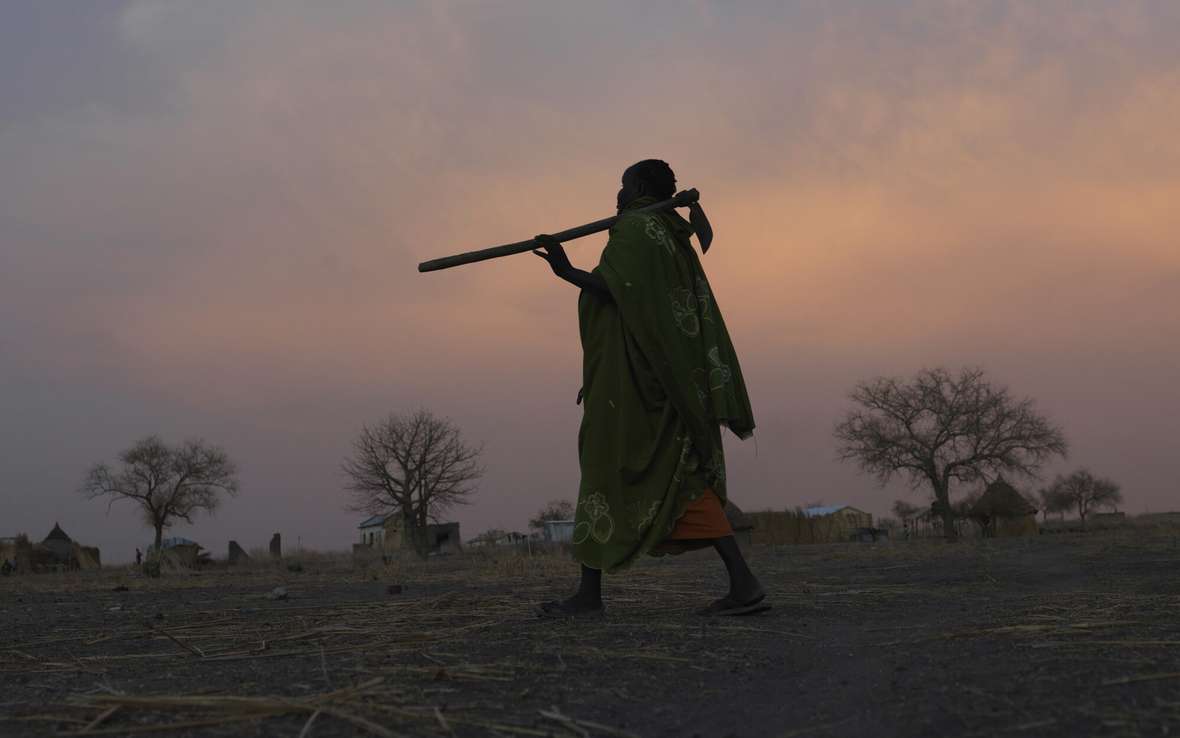
Cuts in aid programs limit resources to help people affected by conflict as well as those fleeing war in Sudan.
Aluel Mayar Chuol decided to flee Khartoum, the capital of Sudan and a battle zone in a three-year-long civil war, after periods of artillery shelling and drone attacks.
One of her children was killed in a bombardment and Chuol and other family members were left “suffering from shrapnel injuries...”. Fearing for their lives, they made their way to South Sudan, where they found safety.
Now Chuol and many others are facing different struggles: She says they are suffering “from a lack of food, and have no place to stay."
They are not alone.
More than 1.1 million people fleeing violence in Sudan have entered South Sudan since 2023, many of them arriving in the area near the town of Renk in Upper Nile state. In late 2025, Oxfam estimated that every day 1,000 people were crossing the border into South Sudan. These figures include Sudanese refugees and South Sudanese citizens returning to their home country.
Transit centers overwhelmed by need
By late 2025, media sources reported there were 44,000 displaced people in and near Renk. Nearly 10,000 of them were at a transit center designed to host half as many people. They are sharing overburdened water and sanitation systems.
Oxfam estimated that more than 400 people were sharing one water tap in the transit center—providing well under the humanitarian standard for water and creating a serious risk of increasing cholera and hepatitis E outbreaks.
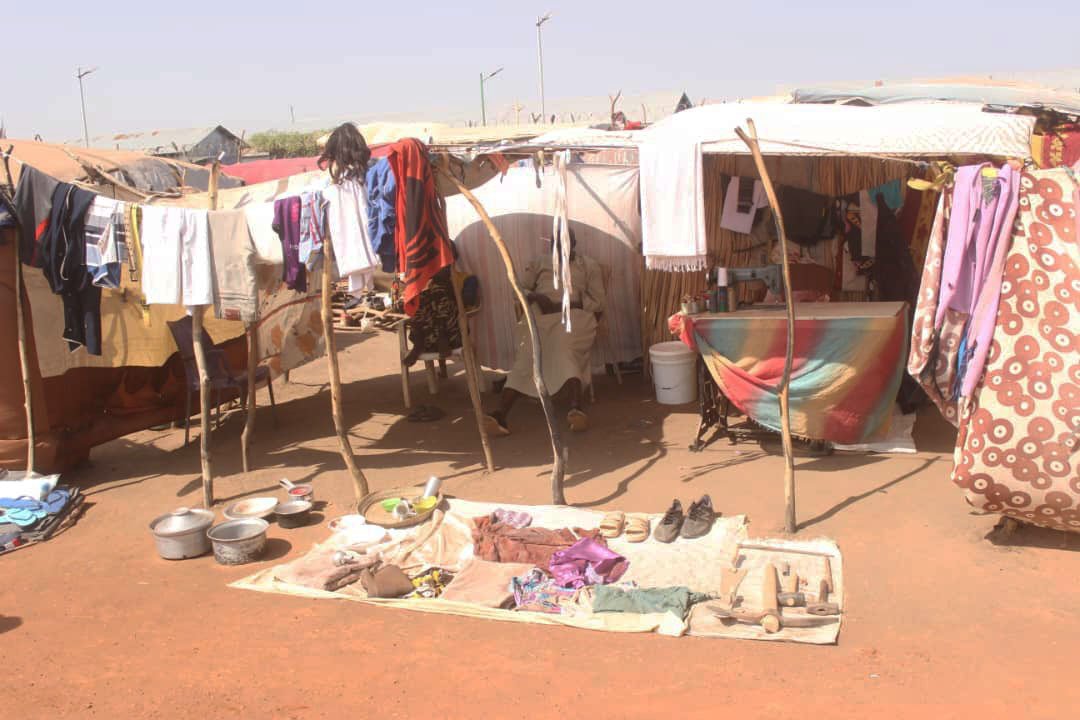
People at the transit center live in makeshift shelters made with tarps and other fabric along fences and drainage channels. Many are selling clothing, firewood, and other things in front of their shelters, as they are in dire need of money for food and medical care.
What Oxfam is doing in South Sudan
Since South Sudan became an independent country in 2011, Oxfam has helped people survive ongoing civil conflict that has displaced millions of people across South Sudan and into neighboring Ethiopia, Sudan, and Uganda.
In recent months, the crisis in Sudan, as well as fighting and heavy rains that flooded other areas of South Sudan, are stretching the ability of aid organizations in the country to assist people in need. Out of the 13.4 million people in South Sudan, 7.7 million (more than 40 percent of the population) are facing crisis levels of food insecurity, according to the Integrated Food Security Phase Classification. Fighting in Jonglei state in early 2026 has displaced more than 280,000 people and is precipitating a major humanitarian crisis. As many as 10 million may need humanitarian assistance in 2026, according to U.N. estimates.
Oxfam continues to work with local organizations that are supporting education, agriculture, and assisting survivors of sexual violence and promoting the rights of women. Oxfam also provides urgent food and water to communities displaced by years of flooding and conflict in areas to the south, including Jonglei state.
Up until the end of 2025, Oxfam built and repaired latrines, installed water points, and carried out hygiene promotion campaigns for refugees and returnees crossing the border and seeking assistance in South Sudan near Renk. Despite funding constraints, Oxfam will continue to assist survivors of violence and others at risk of sexual assault, distribute dignity kits (containing underwear, menstrual items, soap, and solar powered flashlights), and provide cash assistance to refugees and others entering South Sudan.
Oxfam is also implementing water, sanitation, and hygiene assistance and providing cash in Abukhadra, a new integration area for the refugees and returnees along the Eastern Corridor. We are rehabilitating three hafirs (traditional water reservoirs) that will provide water to refugees and the host community, desludging latrines, and installing communal latrines. In December 2025, Oxfam provided cash to 90 families as well as 31 individuals in need of protection assistance.
Cuts in aid resources for South Sudan
Aid cuts by the United States, Great Britain, and the European Union have reduced the resources available for aid organizations working to feed, cloth, shelter, and transport people from Renk to other areas of South Sudan. The U.S. alone has reduced its humanitarian assistance to South Sudan, which was more than $700 million in 2024, by 60 percent.
Although Oxfam America does not accept funds from the U.S. government, lack of resources is affecting humanitarian programs across South Sudan. The implications are dire for those seeking shelter in Renk and fleeing the conflict in Jonglei state.
“These aid cuts are catastrophic for the millions of people already grappling with extreme hunger and disease,” says Oxfam’s South Sudan Country Director Shabnam Baloch. “We are now confronted with the heartbreaking reality of having to scale back our humanitarian response,” Baloch said in late 2025. “It is as though the world is turning its back on those who need help the most, at the very moment when their survival hangs in the balance.”
Nargis Peter, a young woman who fled the Sudanese city Medani to escape conflict, shared her hopes just after crossing the border into South Sudan. “We are now looking for a fresh start and are safe, but we are suffering in difficult humanitarian conditions and need shelter and food,” she said, while waiting for transport from a border crossing to the transit center at Renk. “We are trying to remain patient in the hope the situation will improve.”