About us
The future is equal
Oxfam's mission and vision
Oxfam is a global organization that fights inequality to end poverty and injustice. We offer lifesaving support in times of crisis and advocate for economic justice, gender equality, and climate action. We demand equal rights and equal treatment so that everyone can thrive, not just survive. The future is equal.
Inequality is the most pressing issue of our time. And for 80 years, people like you have fueled our work to end poverty and injustice. From the highlands of Central America and the corn fields of Uganda to the shores of the southern Gulf Coast in the US, Oxfam and our supporters are fighting to guarantee a life of dignity for every person in crisis and to challenge billionaires, corporations, governments, and international financial institutions to do better.
The story of our future starts with you. Join Oxfam today and let’s build a more equal future—together.
Oxfam’s history: A brief timeline

The 1940s
In 1942, Oxfam campaigned for food to be sent to hungry women and children in Greece during the Second World War. Over time, our humanitarian work grew alongside programs designed to achieve equitable, sustainable development through the power of people.

The 1970s & 1980s
When US government policy in Central America and Southeast Asia supported political repression, armed conflict, and human rights violations of the rural poor, Oxfam sounded the alarm with supporters in the halls of Congress and at the White House for change.
The 2000s
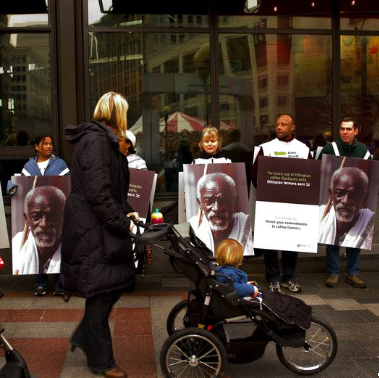
At the turn of the century, we fought to end trade policies and practices that harmed low-income nations. We built support for corporate accountability.
The 2010s
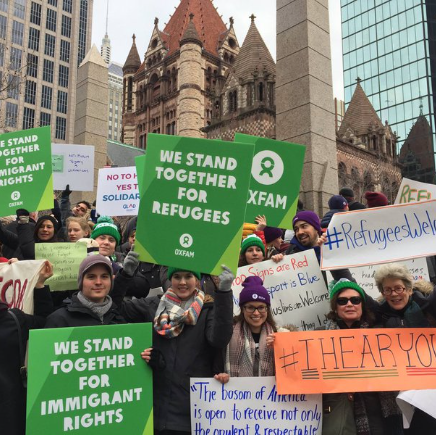
In 2017, when the Trump administration launched a flagrant assault on immigrants, refugees, women, communities of color, and climate science, Oxfam took to the streets, went to court, and called on Congress and the administration to ensure that the US lived up to our ideals.
How does Oxfam fight inequality?
We offer lifesaving support to people in times of crisis—right now.
Oxfam works with a global network of local organizations to address urgent humanitarian needs and protect lives when disaster strikes.
We deliver clean water, food, cash, and information to communities made vulnerable by climate change, gender-based violence, exploitation, illness, and war—working closely with local leaders who know how best to help people in need.
We tackle the root causes of poverty—for the long term.
Oxfam works to dismantle unequal systems that perpetuate poverty and injustice, rejecting the extreme concentration of wealth and power that drives inequality.
We fight for everyone to pay their fair share of taxes and for companies to provide a living wage. We work to solve the care crisis and push for climate action, for a healthy and sustainable food system, and for the rights of workers, women, and farmers who source the food and make the products we enjoy.
What are Oxfam's focus areas?
Inequality sits at the intersection of our work. We critically examine how this root cause of poverty and injustice shapes disparities around gender, race, and wealth. We make lasting change happen by bringing people together, connecting legislators and leaders in the private and public sectors with communities directly affected by poverty and injustice.
Climate action
Oxfam demands wealthy polluters take urgent action to avert catastrophic climate change. We advocate for a just and feminist energy transition that benefits the people most affected by and least responsible for the climate crisis. Learn more.
Economic justice
Oxfam advocates to shift power from the ultra-wealthy to ordinary people around the world. We want the U.S. to set an example for the world, ensuring the ultra-rich and large corporations pay their fair share of taxes so that we can fund schools, health care, and decent work. Learn more.
Humanitarian response
Oxfam offers lifesaving support in times of crisis and advocates for the rights of people searching for safety. We work with local leaders who are best placed to respond when disaster strikes their communities and best placed to alleviate suffering caused by climate impacts, economic injustice, and violence. Learn more.
Women’s rights & gender justice
Oxfam advocates for gender equality so that every person can thrive regardless of their gender identity or sexual orientation. We advance transformative feminist leadership, we support girls’ education in countries affected by conflict, and we support men to challenge harmful gender stereotypes. Learn more.

Where we work
With more than 80 years of experience, working in more than 75 countries, Oxfam has a massive reach. Each year we reach tens of millions of people directly.
See where

Our impact
In 2024-2025, Oxfam reached more than 14.26 million people with the help of almost 2,400 local organizations and international allies.
Check out our 2025 annual report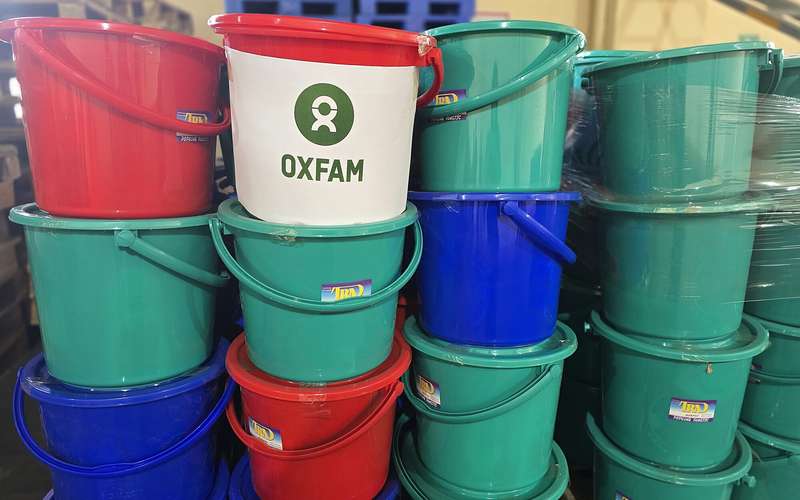
Our charity ratings
Oxfam America's charity ratings demonstrate our commitment to transparency and accountability. But don't just take our word for it.
Our ratings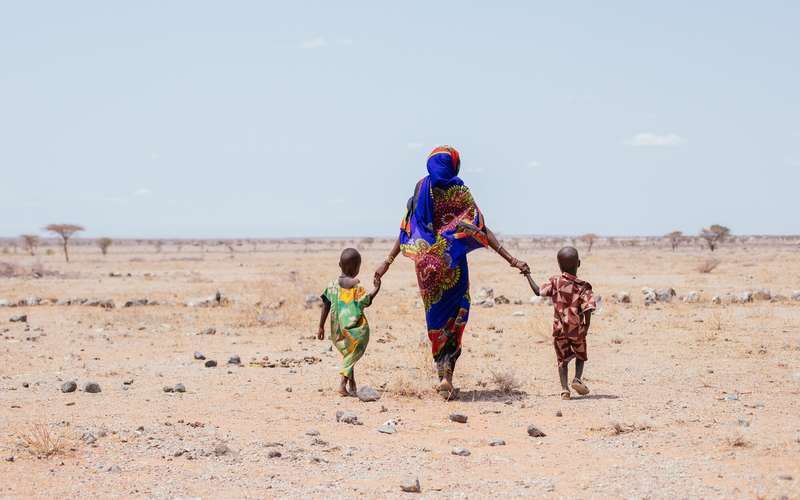
How we spend your money
Oxfam America works hard to make sure that not a penny is wasted in our work to end poverty and injustice.
How every $1 you donate is spent
What is global inequality?
An unequal world makes ending poverty harder—and puts the chance at a good life out of reach for too many people.
Learn more
Financial information
Learn how your donation is spent to help people lift themselves out of poverty.

Safeguarding
The prevention of sexual exploitation, abuse, and harassment—of and by Oxfam staff—is critically important for our organization.

FAQs
Have questions? Check out these frequently asked questions and answers about Oxfam America.

Our leadership
Get to know what inspires our senior leadership team, our board of directors, and our leadership council to work toward a more equal future.
Meet the team
Ambassadors
Meet the public figures, musicians, and political leaders joining Oxfam’s effort to fight inequality to end poverty and injustice.

Careers
Put your passion and skills to work supporting Oxfam America's vision of a more equal future.

Contact us
Connect with Oxfam America by email, phone, or mail.