Oxfam aids survivors of Pakistan floods

Oxfam and partners are supporting rescue services and working to prevent outbreaks of deadly disease.

Red Marker Pakistan
30.6000938736 70.224609375
Document Actions

In response to one of the largest floods in Pakistan in 35 years, international agency Oxfam has started relief operations to assist the affected population in the provinces of Khyber Pukhtun Khwa, Punjab, and Balochistan.

The death toll has already climbed to more than 1,000 people, according to news accounts, and about one million more have reportedly been affected--with more monsoon rains on their way.

"This flood is of an overwhelming size and its impact is only slowly emerging," said Iftikhar Khalid, Oxfam's country program manager in Pakistan who has just returned from an assessment trip to to the worst-hit district in Punjab. "The water has swept away everything. Families are desperate about the loss of their loved ones, their belongings, and their livelihoods. Water sources and crops are destroyed."

Khalid said people are in need of food, clean drinking water, shelter, and toilets to avoid a public health crisis.

Saif Khan, a relief worker with Oxfam's partner IRSP, recounted a similar sea of devastation on his visit to Usmanzai in Charsadda district.

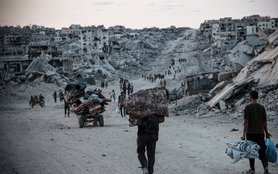
"Hundreds of families are displaced and the commercial market in the town is completely submerged, the water touching the roofs of shops," he said. "People are searching for their precious belongings from the rubble of their houses."

Working closely with partners, Oxfam has identified the 13 most affected districts and is supporting rescue services there where possible. Over the course of the next three months, the agencies will provide water, sanitation, and hygiene services to nearly 400,000 people in 13 districts, and will help many flood survivors who have lost their livelihoods begin to earn an income once more.

According to the National Disaster Management Authority's statement of July 31, so far  9,447 houses have been  damaged. These figures do not include Khyber Pukhtun Khwa Province, where assessments have been severely hampered due to the breakdown of communication networks and damage to roads and bridges.

The true extent of the damage will only become clear once the rains have ceased and communications lines have been restored. The weather forecast for the affected area calls for more rain in the first week of August.

Though the rains triggered this disaster, existing infrastructure has contributed to the damage in Rajanpur.

“The water coming from the Hill Torrents cannot be accommodated in the canals, though they were built for this purpose,” says Jamshed Farid, relief worker with Help Foundation, an Oxfam partner based in Rajanpur. “The funds allocated for widening and lining the water courses last year were misappropriated.”

Oxfam is working closely with its local partners Help Foundation, Doaba, Beej, Lasoona, Sabawon, Shangla Development Society, and Integrated Rural Support Program to respond to this disaster.

Document Actions