Disasters & conflicts

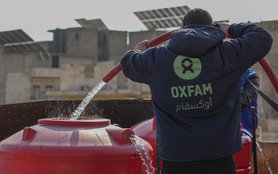
As a humanitarian organization, our mission is to do whatever we can to reduce suffering and save lives during emergencies—whether they are caused by conflict or by natural events such as earthquakes, floods, or drought. To move fast and efficiently, we partner with local groups who know the people, the land, and the political context of the region in which the disaster strikes. Our network of partners stretches around the world.

Even before a disaster strikes, Oxfam is working in innovative ways to reduce people's vulnerability to emergencies by helping them prepare to respond and to build their resiliency. When disaster strikes around the world, we and our partners respond quickly with life-saving assistance. Once the immediate danger has passed, we work to rebuild lives and reduce the risk of future disasters.

Oxfam is developing a public health program that will allow us to use scientific data to design better ways of responding to emergencies. We will be carrying this initiative into our regional offices and working with local partner organizations. We will also be building new relationships with academic institutions both in Boston and abroad.

The term "livelihood" means how people make their living: how they reliably earn money and get food to meet their family’s basic needs. Livelihoods are central to how people get by in normal, nonemergency times, but they are also a key part of how people cope in disasters and how people recover afterward.

Responding to disasters when they occur is a crucial part of Oxfam's humanitarian mission. But finding ways to help communities prepare for emergencies and prevent natural events from becoming disasters is the cutting edge of our work.

In the years following the Indian Ocean tsunami of 2004, Oxfam supported a series of studies on topics that ranged from vulnerability to HIV to restoring incomes to reducing the risk of future disasters.

Tell Congress: Don't cut aid. It's working.
American poverty-fighting assistance saves lives and helps millions of people lift themselves out of poverty, all for less than 1% of the federal budget. Cutting aid won't close the budget gap -- but it will close the door on a better future for the world's most vulnerable communities. Speak up with us now: Tell Congress to oppose any cuts to lifesaving foreign aid.
Speak up now: Be a voice for peace in Sudan and South Sudan
After a year of independence in South Sudan, the world’s newest country is in the midst of deepening humanitarian disaster. We’re standing with the people of Sudan and South Sudan for stability, development and a lasting peace. Join us.
Ask President Obama to make the Arms Trade Treaty bulletproof!
The irresponsible arms trade fuels serious human rights abuses, armed violence, poverty, and conflict around the world. In many areas of the world, armed conflict and poverty go hand-in-hand. Tell President Obama and his negotiating team you want a robust arms trade treaty that puts human rights first.
Support effective, efficient aid programs – they save lives.
Right now, forty percent of the world’s population – more than 2.5 billion people – live in poverty, struggling to survive on less than $2 per day. The persistence of global poverty poses a challenge to the security, prosperity and values of the United States. Cuts to the world's most vulnerable communities have real impacts. Tell Congress we won't stand by while they make cuts that will cost lives.
Fight hunger: Invest in women farmers!
The people who grow the world’s food are going hungry. Women grow the majority of food in developing countries, but due to unequal access to resources like land and credit, they can’t feed their families. Today, almost one in every six people worldwide suffer from hunger, a problem expected to worsen as climate change disrupts weather and farming cycles.
Host an Oxfam America Hunger Banquet® event
Raise awareness and help fund Oxfam's work by hosting a Hunger Banquet® in your community! Few experiences bring to life the inequalities in our world more powerfully than an Oxfam America Hunger Banquet® event. Organizers and participants alike can experience firsthand how our decisions affect others in the world.
More actions
Darfur Crisis Fact Sheet
An overview of the continuing humanitarian crisis in Sudan.
US Gulf Coast Recovery Program Fact Sheet
An overview of Oxfam America's continuing effort to rebuild the Gulf Coast
Haiti Progress Report 2010: Summary
Oxfam's relief operation in Haiti following the January 2010 quake has been one of the organization's largest and most complex efforts. This report summarizes our progress.
Oxfam Fact Sheet: Food Crisis in East Africa
Across Ethiopia, Kenya, and Somalia, a severe drought and food crisis have ensnared more than 13 million people. Get the facts and find out what you can do to help.
Crisis in Darfur
In Darfur, Sudan, few of those who were uprooted by conflict a decade ago feel safe to return to their villages, and violence is still driving people from their homes.
Haiti Progress Report 2011: Summary
This report summarizes Oxfam's continued response to the 2010 earthquake in Haiti.
Earthquake in Haiti Fact Sheet
In the months following the devastating earthquake in Haiti, Oxfam's urgent mission has been to help the people of Port-au-Prince, and beyond, meet their basic needs—not only to ensure their survival but to uphold their dignity.
Food crisis in West Africa
The Sahel region of West and Central Africa is in the grip of a food crisis. Oxfam and our partner organizations are working throughout the region to get help to struggling communities.
More publications
Getting It Right
Arms and bullets continue to destroy lives, yet there is still no effective international regulation of the global arms trade.
The truth about the Arms Trade Treaty
Get the facts on an international treaty that will keep weapons out of the hands of human rights abusers around the globe.
Mali's Conflict Refugees
Responding to a growing crisis
Summary: Mali's Conflict Refugees
Responding to a growing crisis
Viv Tankou Moun
Viv Tankou Moun (a Kreyol phrase meaning "to live like a human being") is a survey of 16 camps of Haitian people displaced by the 2010 earthquake. This is an executive summary of the survey results in French followed by English.
Salt in the Wound
The urgent need to prevent forced evictions from camps in Haiti
Commodities of War
Communities speak out on the true cost of conflict in eastern DRC
Planting Now (2nd edition): Summary
Revitalizing agriculture for reconstruction and development in Haiti
Planting Now (2nd edition)
Revitalizing agriculture for reconstruction and development in Haiti
'We are prepared'
In Peru’s biggest city, where earthquakes are a constant threat, Oxfam helps women and young people learn how to protect their families.
Food Crisis in the Horn of Africa Progress Report, July 2011 - July 2012
Haiti land rights, land tenure, and urban recovery
More than two years after the earthquake in Haiti, hundreds of thousands of internally displaced persons (IDPs) remain in tents and informal settlements in the earthquake zone. The reasons for this vary, but land rights and land tenure are central.
Tackling the food deficit in the world's newest country
A year after South Sudan became the world's newest nation, half of its 9.7 million citizens are struggling to meet their basic food needs. Internal conflict, clashes with Sudan, poor harvests, and complex population movement have all contributed to the current crisis.
Hygiene promotion: determining what works
In the aftermath of disasters, Oxfam undertakes a host of hygiene-promotion activities in order to prevent the outbreak and spread of disease. But which are the most effective?
Saving lives: Oxfam partners take center stage
Oxfam invests in the strengths of local communities and partners. When rainfall from a tropical depression triggered a massive emergency in El Salvador, our approach was put to the test.
A Shift in Focus: Putting the interests of Somali people first
More than six months after the UN declared a famine, Somalia is still in the throes of its worst humanitarian crisis in decades, with 31 per cent of the population estimated to be in crisis.
Fighting hunger in Mogadishu
In Somalia, Oxfam's partner SAACID is saving the lives of thousands of children.
Crises in a New World Order: Challenging the humanitarian project
The growing number of vulnerable people, the rise in disasters, and the failure to put most fragile states on the path to development, will significantly increase needs.
A Dangerous Delay: The cost of late response to early warnings in the 2011 drought in the Horn of Africa
More than 13 million people are still affected by the crisis in the Horn of Africa. There were clear early warning signs many months in advance, yet there was insufficient response until it was far too late.
Haiti Progress Report 2011
Two years after the most powerful earthquake in Haiti in 200 years, Oxfam remains committed to rebuilding with the people of Haiti.
Haiti: The slow road to reconstruction
Two years after the earthquake
In need of a better WASH: Water, sanitation, and hygiene policy issues in post-earthquake Haiti
This research initiative examined Haiti’s water, sanitation, and hygiene (WASH) sector before and following the January 12, 2010 earthquake, and the work of the WASH cluster following the earthquake, in the context of effectiveness, equity, and accountability.
A place at the table
Safeguarding women's rights in Afghanistan
Promoting the accountability of the Afghan National Security Forces
Follow up briefing to No Time to Lose report
Saving lives, seeking solutions
Oxfam America's response to drought in Ethiopia, 2008-2011
Pakistan floods progress report
A report on Oxfam's response to the floods in Pakistan between July 2010 and July 2011.
Ready or Not
Pakistan's resilience to disasters one year on from the floods
In war-torn Darfur, a stove with a mission
For the women of Darfur who live in camps for displaced people, simply feeding a family can present extraordinary risks.
No Time to Lose
Promoting the Accountability of the Afghan National Security Forces
Horn of Africa Risk Transfer for Adaptation (HARITA) quarterly report: October 2010–December 2010
Rural resilience series
High Stakes
Girls' Education in Afghanistan
Whose Aid is it Anyway? Politicizing aid in conflicts and crises
Six months into the floods
Resetting Pakistan's priorities through reconstruction
Beyond Sudan's big day
What next for one of the least developed places on earth?
From relief to recovery
Supporting good governance in post-earthquake Haiti
Haiti Progress Report 2010
Oxfam was one of the first agencies to respond to the devastating earthquake in Haiti--one of the largest and most complex emergency programs that Oxfam has ever been involved in.
Ghosts of Christmas past
Protecting Congolese civilians from the LRA
Horn of Africa Risk Transfer for Adaptation (HARITA) quarterly report: July - September 2010
In this report we share detailed information on the results of this second annual offering of weather insurance, integrated into the government's social safety net for the most vulnerable populations in drought-prone Ethiopia.
No will, no way
US-funded security sector reform in the Democratic Republic of Congo
Nowhere to Turn
The Failure to Protect Civilians in Afghanistan
A fresh look at the green economy
Jobs that build resilience to climate change
From the ground up
Strategies for scaling up community-based disaster risk reduction
Impact of climate change on response providers and socially vulnerable communities in the US
Federal disaster programs, plans, and policies seldom address climate change or social vulnerability. Homeland security policy could be revised to accommodate climate change impacts on socially vulnerable populations.
Now we know
A collaboration between local citizens’ committees and officials in Peru shows how communities can create lasting change by holding governments accountable.
Planting Now
Agricultural challenges and opportunities for Haiti's reconstruction
Pakistan floods crisis: response hindered by lack of funds as public health crisis looms
Oxfam is advocating for the leadership, coordination, and funding levels that this huge emergency requires.
HARITA progress report: Jan 2010 - Jun 2010
Rural resilience series
HARITA Project Report: Nov 2007 - Dec 2009
Rural resilience series
Promises, promises
A briefing paper for the Kabul Conference on Afghanistan
Afghanistan Reintegration Briefing Note
Yellow alert: Taking action to prevent disasters
Months of community education and preparation saved lives when floods struck El Salvador.
Now, the world is without me
An investigation of sexual violence in eastern Democratic Republic of Congo
Reconstructing Haiti
A summary of recommendations for moving forward following the January 12, 2010 earthquake.
Why are humanitarian advocates leading on aid reform?
AidNow series
Rescuing the Peace in Southern Sudan
The next 12 months will be critical for the future of Sudan. As the country marks the fifth anniversary of the signing of the 2005 Comprehensive Peace Agreement that ended a devastating civil war, southern Sudan has seen a major upsurge in violence.
The Cost of War
Afghan experiences of conflict, 1978-2009
Protect and serve or train and equip?
US security assistance and protection of civilians
Band aids and beyond
Oxfam calls for a shake-up in the way the world deals with food crises in Ethiopia and beyond.
Missing pieces? Assessing the impact of humanitarian reform in Pakistan
A Portrait of Louisiana
Louisiana Human Development Report 2009
The new adaptation marketplace
Climate change and opportunities for green economic growth
Waking the Devil
The impact of forced disarmament on civilians in the Kivus
Building Common Ground
How shared attitudes and concerns can create alliances between African-Americans and Latinos in a post-Katrina New Orleans
The Aftershock of Cyclone Nargis
Credit Crunch in the Delta
One Year On
Oxfam reports on its emergency and reconstruction projects
The Right to Survive
The humanitarian challenge for the twenty-first century
Caught in the Conflict
Civilians and the international security strategy in Afghanistan
Oxfam Impact April 2009
Tackling a deadly cholera outbreak in Zimbabwe with clean water—and song
Meeting humanitarian needs on the Kenya border with Somalia
Collaboration in Crises
Summary report: Lessons from the Oxfam International tsunami research program
Ten Point Plan to Change Course in Afghanistan
Oxfam America's memo to President Obama
A Portrait of Mississippi
Mississippi Human Development Report 2009
Oxfam Impact January 2009
Altering the course of water—and women's lives.
Tsunami Fund end of program report
Oxfam's final report on its four-year response to the tsunami disaster of December 2004.
Listening to disaster-affected communities
An executive summary of "Collaboration in Crises"
Reducing vulnerability to HIV before and after disasters
Tsunami research brief: An exploration of how the tsunami and its aftermath led to an increase in vulnerability to HIV in coastal India.
Deepening community engagement
Tsunami research brief: A study of disaster preparedness programs in Sri Lanka that points to the importance of listening carefully to communities.
Lessons in disaster management
Tsunami research brief: An examination of the Sri Lankan government's disaster management policies, which contributed to planning and reform.
Sheltering people after disasters
Tsunami research brief: An assessment of shelter conditions in India that led to the release of government funds for repairs.
Improving livelihoods after disasters
Tsunami research brief: Studies of paddy agriculture and the coconut fiber industry in Sri Lanka point to ways aid providers can help improve incomes.
Ending the R&D Crisis in Public Health
Out of Site
Building better responses to displacement in the Democratic Republic of the Congo by helping host families
For a Safer Tomorrow
This report, based on Oxfam International's experience in most of the world's conflicts, sets out an ambitious agenda to protect civilians in times of warfare.
Mission incomplete
Why civilians remain at risk in eastern Chad
Mirror on America
How the state of Gulf Coast recovery reflects on us all—Oxfam's report on the status of Gulf Coast recovery three years later.
Oxfam Impact April 2008
Where the ground remembers the rain
In Her Own Words
Iraqi women talk about their greatest concerns and challenges.
Community Peacebuilding in Afghanistan
A case for a national strategy
Afghanistan: Development and Humanitarian Priorities
Oxfam International Third Year Report on the Tsunami Response
Sink or Swim
Why Disaster Risk Reduction is central to surviving floods in South Asia
Rising to the humanitarian challenge in Iraq
Oxfam Impact April 2007
MIRA makes a difference
Between Hope and Fear in Northern Uganda
Challenges on the ground and an urgent need for peace
Understanding the Effect of the Tsunami and its Aftermath on Vulnerability to HIV in Coastal India
A tsunami research journal article
Gender Mainstreaming During Disasters
A tsunami research journal article
A Fragile Future
Why scaling down MONUC too soon could spell disaster for the Congo
Oxfam International Humanitarian Policy Notes
These policy notes, which are updated regularly, describe key issues for humanitarian organizations in the twenty-first century and provide recommendations derived from our experience working in the field as well as in the policy arena.
Arms Without Borders
Why a globalized trade needs global controls
Free, Quality Education for Every Afghan Child
With the establishment of democracy, the main symbol of Afghanistan's regeneration lay in the dream of educating every child–boy and girl. However, there remain many obstacles to achieving this dream.
The Coir Industry in the Southern Province of Sri Lanka
A tsunami research journal article
Disaster Management Policy and Practice
A tsunami research journal article
Oxfam Impact September/October 2006
Rebuilding the Gulf Coast: A Year Later
Forgotten Communities, Unmet Promises
An unfolding tragedy on the Gulf Coast
Causing Hunger
An overview of the food crisis in Africa
Consequences of the Proliferation and Misuse of Small Arms and Light Weapons
Ammunition: The Fuel of Conflict
Oxfam Impact Special Report
Oxfam in East Africa
Cuba: Weathering the Storm
Lessons in risk reduction
Afghanistan Education Report Card
More research
Crisis in Darfur
In Darfur, Sudan, few of those who were uprooted by conflict a decade ago feel safe to return to their villages, and violence is still driving people from their homes.
Rebuilding our economy, restoring our environment
How the emerging restoration economy offers new and expanded opportunities for Gulf Coast businesses and communities
Food crisis in West Africa
The Sahel region of West and Central Africa is in the grip of a food crisis. Oxfam and our partner organizations are working throughout the region to get help to struggling communities.
Haiti Progress Report 2011: Summary
This report summarizes Oxfam's continued response to the 2010 earthquake in Haiti.
Oxfam Fact Sheet: Food Crisis in East Africa
Across Ethiopia, Kenya, and Somalia, a severe drought and food crisis have ensnared more than 13 million people. Get the facts and find out what you can do to help.
Recommendations to the Gulf Coast Ecosystem Restoration Task Force
Enhancing the resilience of the most vulnerable communities and building the restoration economy
Haiti Progress Report 2010: Summary
Oxfam's relief operation in Haiti following the January 2010 quake has been one of the organization's largest and most complex efforts. This report summarizes our progress.
Darfur Crisis Fact Sheet
An overview of the continuing humanitarian crisis in Sudan.
Earthquake in Haiti Fact Sheet
In the months following the devastating earthquake in Haiti, Oxfam's urgent mission has been to help the people of Port-au-Prince, and beyond, meet their basic needs—not only to ensure their survival but to uphold their dignity.
In harm's way: Oxfam America's game on rethinking natural disasters
US Gulf Coast Recovery Program Fact Sheet
An overview of Oxfam America's continuing effort to rebuild the Gulf Coast
Take Action: Democratic Republic of Congo
According to Jan Egeland, the UN humanitarian chief in DRC from 2003-06, casualties in Congo amount to "a tsunami every month, year in and year out, for the last six years." Yet since Egeland made this statement in 2005 about the crisis in Congo, the situation remains grim, and the Congolese people are being subjected to unrivaled brutality.
More tools for activists
Hunger in the Sahel
Farmers, herders, and displaced people in West Africa are struggling to survive a food crisis.
Senegal: Food crisis response
Bad weather and a poor harvest have left farmers in eastern Senegal short on food and seeds. Oxfam America is working with local groups to help growers plant, and survive the lean season while their crops grow.
A new well for Nawoyatir
Helen Ewoton used to walk an hour and a half each way to fetch water for her family. Now, her village in Kenya has its own newly drilled well--thanks to Oxfam.
Survival strategies in the Sahel
In the Sahel region of West Africa, where more than 18 million people are facing a food crisis, people in Burkina Faso are digging for flecks of gold to sell. What they earn is enough to buy only a small amount of food.
Sahel food crisis puts 18 million people at risk
You have the power to change the future. Now is the time to act, and ensure that families in the Sahel region of West Africa get the help they need to weather this crisis.
West Africa food crisis 2012:15 million at risk
As a funding for the crisis lags, millions of people will be left hungry in the coming months unless the gap is filled.
When I'm hungry, my heart beats quickly
In the face of a looming food crisis in the Sahel region of Africa, Oxfam is supporting an array of projects, including women-run cooperative market gardens.
The Sahel: a food crisis looms
Low rainfall, poor harvests, and high prices are creating serious problems for herders and farmers in West Africa.
A new way of life on the Dawa
Drought is making it difficult for herding families in southern Ethiopia to earn a living from their livestock. Some people have decided to try a new approach: irrigated farming. And they are tapping the Dawa river for water.
Anquan Boldin and Larry Fitzgerald team up with Oxfam
NFL superstar wide receivers Anquan Boldin of the Baltimore Ravens and Larry Fitzgerald of the Arizona Cardinals are teaming up once again on a mission to bring attention to the ongoing drought in East Africa.
More multimedia

Features Subscribe | View All

Screaming out loud: Syrian women tell stories of war and struggle

Screaming out loud: Syrian women tell stories of war and struggle

Citizen journalists elevate the voices of their refugee communities.

Read more

Top 10 things you need to know about Oxfam

Top 10 things you need to know about Oxfam

Here are the most important facts about Oxfam America: what we do, how we do it, and how you can get involved in our mission.

Read more

Sowing the seeds of a better future

Sowing the seeds of a better future

In Haiti’s lush Artibonite Valley, combating hunger and rural poverty may come down to a four-letter word: rice.

Read more

For Syrian refugees, a long-awaited trip to the store

For Syrian refugees, a long-awaited trip to the store

Many Syrian refugees in Lebanon are living with little protection from extreme winter temperatures. An Oxfam partner is providing essentials—and choices.

Read more

In Haiti's struggle with emergencies, a new partnership

In Haiti's struggle with emergencies, a new partnership

Oxfam’s Salvadoran partners are helping communities reduce disaster risks—in Haiti.

Read more

Families flee as new waves of violence grip eastern Democratic Republic of Congo

Families flee as new waves of violence grip eastern Democratic Republic of Congo

Since April, rebel groups have been tightening their grip on the region as civilians suffer profound abuses.

Read more

In the wake of Sandy, Oxfam distributes cholera kits and steps up prevention

In the wake of Sandy, Oxfam distributes cholera kits and steps up prevention

The potential for cholera outbreaks is just one of the concerns Haitians have following the heavy rains.

Read more

Hurricane Sandy lashes Haiti; Oxfam aims to prevent cholera outbreaks

Hurricane Sandy lashes Haiti; Oxfam aims to prevent cholera outbreaks

Authorities issued a state of alert across all 10 departments of the country.

Read more

Sahel food crisis: "Now I have peace"

Sahel food crisis: "Now I have peace"

Rather than distribute food to the hungry in Senegal, Oxfam partners are providing something even more valuable in an emergency: cash.

Read more

Solidarity and sharing: How Chadians cope in a food crisis

Solidarity and sharing: How Chadians cope in a food crisis

When one family in a community receives food during a distribution, many others often share a portion of it.

Read more

Food-for-work program allows families in El Salvador to recover from disaster

Food-for-work program allows families in El Salvador to recover from disaster

Oxfam, together with five local organizations and the World Food Programme, helped communities recover while they prepare.

Read more

Sahel food crisis: Waiting for water--and the garden to grow--in Burkina Faso

Sahel food crisis: Waiting for water--and the garden to grow--in Burkina Faso

Women in Burkina Faso are growing produce to feed their families and to sell, but getting access to enough water for the enterprise is a daily challenge.

Read more

Sahel food crisis: Senegalese singer Baaba Maal performs benefit concert

Sahel food crisis: Senegalese singer Baaba Maal performs benefit concert

Maal visits drought-affected communities to raise awareness in growing Sahel crisis

Read more

Sahel food crisis: Dry times in 2011 threaten ability to plant in 2012

Sahel food crisis: Dry times in 2011 threaten ability to plant in 2012

A farmer recounts the struggle to grow food and prepare for the 2012 growing season

Read more

Sahel food crisis: Farmers cope with food shortages

Sahel food crisis: Farmers cope with food shortages

Confronted with a poor 2011 harvest, farmers find creative ways to earn money to buy food.

Read more

In Kolda, Senegal, farmers are struggling to feed their families

In Kolda, Senegal, farmers are struggling to feed their families

The last harvest of peanuts, a major cash crop in this region, plummeted by 60 percent leaving families with little money to buy the food they need.

Read more

As food crisis looms, the lean season hits early in northern Senegal

As food crisis looms, the lean season hits early in northern Senegal

An Oxfam team assesses the conditions around a group of small villages where many of the food reserves are now exhausted.

Read more

Haiti: a grain milling operation offers an economic lifeline for women

Haiti: a grain milling operation offers an economic lifeline for women

To help tackle unemployment and ensure families have access to food, Oxfam is working with a women's group to modernize and expand a service center.

Read more

Haiti: Reducing the risk of flooding in Artibonite

Haiti: Reducing the risk of flooding in Artibonite

A local mayor enlists support from Oxfam to address major flooding in his community in rural Haiti.

Read more

Ethiopian farmers get a payout, easing effects of drought

Ethiopian farmers get a payout, easing effects of drought

With cash from the weather insurance policies they bought through an innovative program, farmers from Tigray can now plan for the future.

Read more

» More stories «
Document Actions