What Oxfam is doing
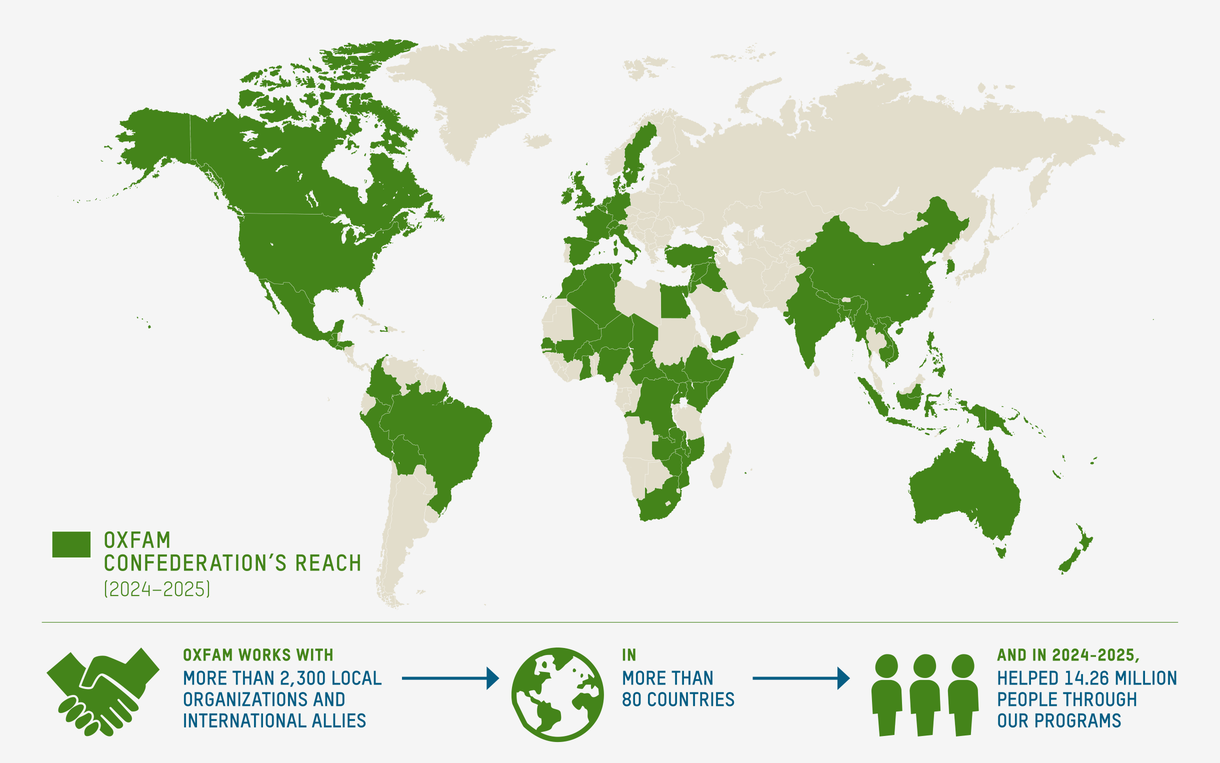
Oxfam America works in six countries in West Africa: Burkina Faso, The Gambia, Ghana, Guinea-Bissau, Mali, and Senegal. The West Africa program was established in 1991 and is based in Dakar, Senegal.
Livelihoods
Oxfam America helps rural women through an innovative microfinance program called Saving for Change in Mali, Senegal, and Burkina Faso. Women in poor rural communities organize themselves in self-help groups, mobilize their own savings as loans to fund income generating activities. Oxfam America funds the training of these self-help groups, which also includes how to prevent malaria for improved family health.
Oil, gas, and mining
In West Africa, Oxfam advocates respect for the fundamental rights of local communities, including the right to participate actively in decisions regarding oil, gas, and mining projects. Oxfam encourages governments and companies to observe these rights and to promote sustainable development. To this end, Oxfam has launched the Right to Know, Right to Decide campaign, which pushes for the implementation of a common set of mining laws for all members of the Economic Community of West African States (ECOWAS).
Equity for cotton farmers
Since 2004, Oxfam has been leading an intense campaign aimed at ending certain categories of US agricultural subsidies, which are of little help to rural Americans while causing great harm to African farmers—especially cotton farmers. By uniting American farmers with their West African counterparts, and with the efforts of activists across the world, this campaign has helped place the interests of small farmers high on the agenda of governments and international trade negotiations. Oxfam America and Oxfam Great Britain have teamed up with Malian and West African cotton farmers to increase their revenues and improve their lives.
Reducing vulnerability to disasters
The impact of poverty, and climate change have combined to create a two-fold threat to peace and stability in the region. This is particularly true in The Gambia, where conflict across the Senegal border has brought refugees to communities that were already struggling. Furthermore, climate change has shortened the rainy season, resulting in hunger and uncertainty for many farmers involved in subsistence agriculture. Oxfam provides immediate support in the form of food and of water, and longer-term assistance for communities to plan and prepare for future crises.
Increasing political participation
Despite the promise of democracy throughout the region, most West Africans are have little voice in decision-making bodies. As a result, government programs that could make a tremendous difference in fighting poverty—education, health care, and local government practices—have little input from the people who would benefit the most.
Nevertheless, the number of citizen organizations committed to improving the accountability of government is increasing, and Oxfam America is supporting their work representing the interests of farmers, female entrepreneurs, youth, and others who are traditionally excluded. Our partners in this effort include human rights monitoring groups, peasant farmer associations, women’s rights groups, and youth organizations.
Preventing conflict
The unfortunate reality of conflict in West Africa—both widespread war and the more common and insidious low-intensity violence—is responsible for holding back the work of Oxfam America and our partners. Any of our efforts to overcome poverty will fail if we do not find the root causes of conflict and develop ways to overcome it.
Oxfam America helps organizations that do just that: develop ways to overcome small-scale strife, resolve conflicts, and train people to manage disputes before they become violent. Oxfam funds the research and documentation of effective traditional conflict management methods, the role of women in conflict prevention and survival, and peace-building exchanges between community organizations. Efforts are also being made to reduce the presence of small arms throughout the region
For example, Oxfam America's work to ban the trade in illegal small arms led the government of Senegal to invite Oxfam to be part of a National Commission on Illegal Arms. Oxfam represents the civil society coalition of organizations in Senegal that has been calling on the government to curb the illegal arms trade.


Follow us online